Blogs

TRANSITIONING FROM CAPI TO CATI: A GUIDE TO ADAPT TO PHONE SURVEYS USING CATI IN UNPRECEDENTED TIMES LIKE COVID-19

How we can adopt new ways of data collection during the COVID-19 crisis? This blog focuses on Computer-Based Telephonic Interview (CATI) to optimize efficient and relevant data collection.

COVID-19 has changed the lives of people across the globe and has forced mankind to acclimatize themselves to the current worldwide crisis. The vulnerable sections of the society are being affected more than others. Since virus such as COVID-19 is likely to spread in overcrowded conditions/ poor hygiene pockets where there is little infrastructure or sparse resources to respond to it effectively. Hence, as we all grapple with our lives in this situation, it is important to keep an eye out for information of the communities who are vulnerable so that relief could be doled out on time.

Previously a key method to gain insights about vulnerable or communities at a disadvantageous position was by conducting field interventions with in-person interviews. However, the unprecedented times that we are in does not leave us with that choice. Hence, as a social enterprise and data collection firm, Outline India has been reflecting on its past experiences and has commenced transitioning to other modes of primary data collection. Since we still believe that raw numbers from the field are pivotal for data-centric informed decision making, more so in times like COVID-19.

In this article, we tried to put together our 8 years of field experience, possible issues on logistics and technological innovation to ease this transition. This article may contribute towards helping other data collection agencies, research organizations and donors to understand how we can still go ahead collecting quick data to keep up the momentum.

One of the most rational way of going ahead is transitioning from in-person to virtual surveys. This will ensure that we are able to maintain social distancing and still be able to gather some numbers. There are a couple of online survey techniques that are available like web surveys, email surveys, phone surveys so on and so forth.

Of the available remote sources, phone/ mobile surveys can be a good way of engaging with respondents. Mobile surveys can further, be categorized under 3 heads especially for administering it for low- and middle-income country research:

1.    Computer-Assisted Telephone Interviewing (CATI), which consists of interviewer-administered phone surveys

2.    Interactive Voice Response (IVR) surveys, automated voice surveys

3.    Short Message Service (SMS) surveys that use text messaging.

CATI or Computer Assisted Telephone Interviewing is a telephone survey process wherein an electronic device (computer/tablet/mobile) displays questions on its screen and the interviewer reads them to a respondent over a phone call and directly enters the responses into the electronic device. It not only helps to establish a connection with the probable respondents but also provide a better chance of getting accurate information from the respondents.

Of the different modes, we suggest using a combined targeted approach to ensure data reliability and meeting the target sample size for a survey. Using CATI along with reminders over SMS can be an effective way forward. Using software, to track and manage the calls and data to be collected could be a good idea as it uniquely minimizes data entry and management hassles.

The broad set of activities to be undertaken by research organizations/ data collection firms include:

1.    Identifying & accessing respondents: Obtaining a list of valid phone numbers to get started with the phone surveys is the first step in this process. However, this can be a tedious task. Designing studies around CATI could be beneficial for cases where contact details of the potential respondents from the previous round of data collection (either midline or endline) are available. However, if there is no such data available one can also procure lists of valid phone numbers from the telecom companies or private market research firms. However, these lists often need to be purchased or negotiated. This can prove to be time-consuming in a rapid response situation like COVID-19. The lists may not represent the entire population. Moreover, the lists obtained might not be representative of the entire target group.

2.    Research objective: After procuring lists, it’s important to focus on the research design and objectives. As CATI would be a remote data collection technique, only priority objectives should make it to the final research variable sheet. In case there are multiple objectives, one can allow some time for ranking the objectives in terms of priority and focus on the most important ones.

3.    Questionnaire design: Since the survey will be administered over the phone, the questionnaire should be short and crisp, prioritizing the most relevant questions. Ideal survey duration in CATI ranges between 8-10 minutes which can at max be stretched to15 minutes (based on project requirement).

Do keep in mind: 10 minutes is likely to translate into 20-30 questions in flat lay and all follow up questions should be counted as separate questions since it will also take some time for the enumerator to explain it to the respondent.

4.    Training of enumerators: It is prudent to conduct elaborate enumerator training, developing easy to comprehend training materials for them. It could be helpful to create scripts, FAQs, call checklists for training.

5.    CATI Software: As mentioned earlier, using software to manage data, collect data and track the overall progress of the study is a great way to keep things on track; especially in a time, when we are all working from home and are spread out across different locations. One such easy to use the software is SurveyCTO. This is also helpful for the organizations who have been using CAPI for data collection earlier. Using SurveyCTO makes the transition all the easier! The primary steps involve:

6. Combined Targeted Approach: Only making phone calls can result in low response rates. It can so happen that due to lack of prior information the target respondent is not available during the time of the call. Hence, sending SMS prior to making calls can be a good medium of informing respondents of the scheduled interview.

7. Things to remember:

o   There is an important gender gap in mobile phone ownership in many countries. Phone ownership is also lower in rural areas, which can be additionally exacerbated by localities/ regions where mobile phone coverage is patchy or non-existent.

o   A significant point to note for COVID-19 is that some people who are most affected by COVID-19 could be no longer be reachable by phone. Consequently, firms that are under lockdown might not be able to provide lists/ numbers of the respondents.

o   People who are suffering from financial strain may not top up their phone credit.

o   Even though mobile penetration in India has increased, however, one family might be using a single phone across 5 family members. Hence, multiple phone calls could be required to survey the target respondent within a family.

o   There is absolutely NO alternative to rapport building & briefing respondents about the study to ensure they consent to complete the survey.

o   Back checks have become all the more important to maintain data quality.


The situation around is critical and CATI has become more relevant in the social sector research than ever. It is the call of the time to explore possible modes of data collection and CATI easily stands a chance to be a showstopper in this case. Using CATI is easy, rationale, and effective!!

We hope this piece helped you to get an overall idea of transitioning to CATI and adapting to changes due to COVID-19. Do let us know if you would like us to include anything specific in our next blog. Happy transitioning and be safe!!

Read More

SDGS - A GUIDE TO HOLISTIC PROGRESS

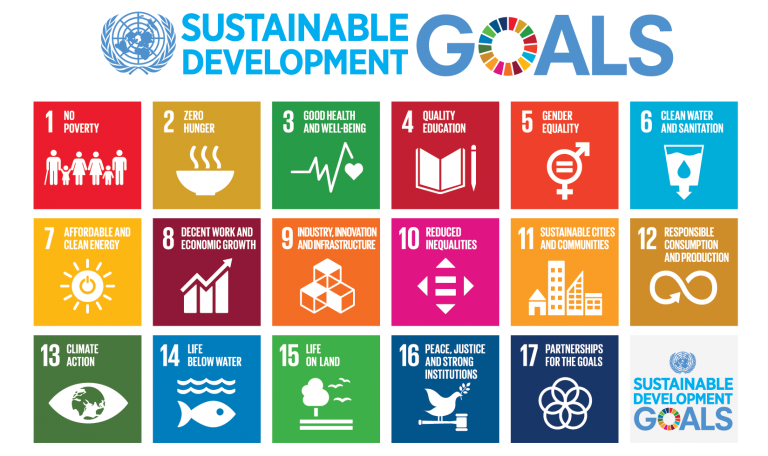
The Outcome Document by the United Nations’ Conference on Sustainable Development (2012), also called the Rio+20, was released under the title, “The Future We Want”. The document focused on the future plans post-2015 development agenda. Another document was finalized, alongside the aforementioned, outlining 17 objectives to be achieved by 2030, the Sustainable Development Goals (SDGs). Some of the SDGs include no poverty, zero hunger, quality education, sustainable cities & communities, along with industry, innovation & infrastructure, among others. Each goal comes with multiple indicators and statistical data to monitor progress, inform policy and ensure accountability of all stakeholders. The goals look at ensuring a better future for life on Earth. The targets are indicative of underlying issues that are ongoing in the world, such as gender inequality, unemployment, lack of universal access to healthcare, water, education, energy, and the internet, among others.

Read More

FIELD STORIES FROM RURAL INDIA: THE VOICES THAT MATTER

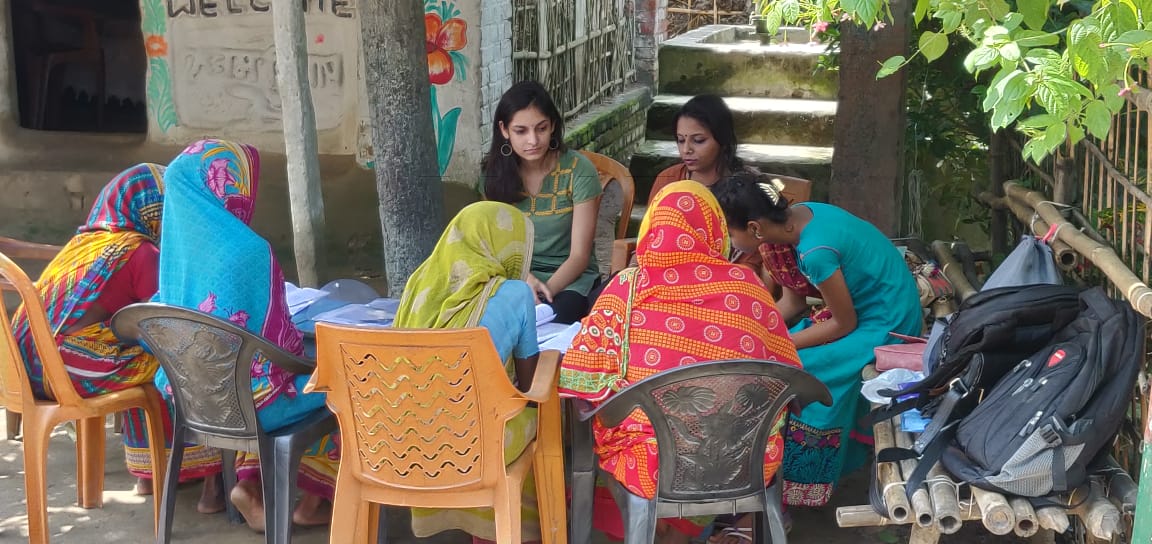
Fieldwork in India can be daunting as well as an exhilarating experience. My first field experience was a bit of both. Our team conducted a study on the lives of young women and the issues faced by them, in rural India. Needless to say, given the cultural context in India, issues faced by them are topics of absolute taboo. To be able to facilitate a nuanced conversation with the women about the intricacies of the state of their health and the precautions that they take is a task in itself. But moving beyond this challenge was in many ways necessary as it gave us a peek into the lives of those who do not have the power of a voice. This story is about the voiceless; for whom the decisions are taken without seeking their permission. This story is about the women of rural India.

Read More

INDIA DEVELOPMENT REVIEW: IMPORTANCE OF MULTI-STAKEHOLDER ENGAGEMENT IN DATA COLLECTION

Outline India (OI) undertook a nutrition study in association with a global funding agency and its local implementation partner. This study was conducted in Jehanabad district of Bihar. The respondents consisted of implementation agency associated SHG women who have children between the ages of six months to two years. Initially, data collection was to happen in March but it was eventually conducted in the first week of June 2019 due to the implementation of the Code of Conduct for the General Assembly Elections in India. This had some unforeseen consequences on operationalizing the study but was resolved due to a strong relationship that was built by the research team and the multiple ground-level stakeholders who were involved with the implementation agency. 

Read More

'KASHMIR' THROUGH THE LENS OF HALF-WIDOWS

“Gar firdaus bar-rue zamin ast, hami asto, hamin asto, hamin ast.” (If there is a heaven on earth, it's here, it's here, it’s here…)

The above phrase of Amir Khusrao often resonates and reminds one of the picturesque beauties of Kashmir alluring ardent travellers to visit this ‘abode of God’. As a young solivagant researcher, who reveals herself in the act of wandering alone in destinations and locations she has not previously visited. I felt a sudden frisson of excitement and thrill post my field induction site was finalised as Kashmir.

Chilla-i-Kalan[1] embraced me as soon as I reached Srinagar. The valley had turned into an unbelievable dream, covered in a blanket of snow. I was welcomed or ‘Khatir madarat’ as Khala would say, by partially frozen pine trees and snow-clad peaks in the backdrop of Lal Chowk.

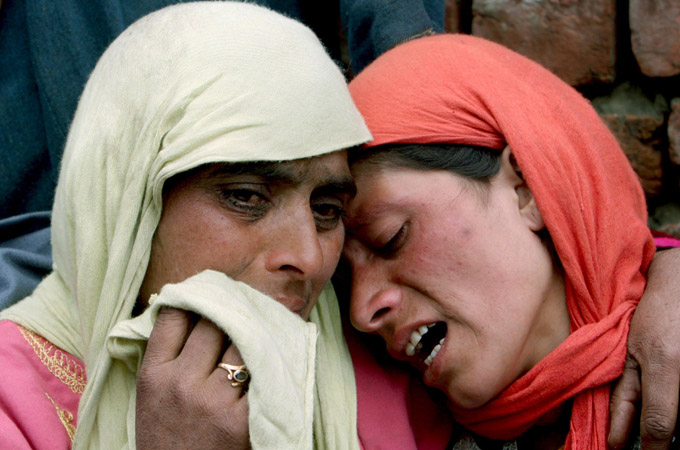
Post reaching ‘home’ for the next two months, Khala (the mother of a dear friend with whom I stayed in Kashmir) quickly gave me a hot water bottle and Kanger[2] to fight this cold. Mesmerised as I was by the snow-capped peaks of the Himalayas at a distance, I couldn’t help but notice a group of people largely women, sitting on the road with placards and pictures of ‘men’. On enquiring I learnt that these women took part in sit-ins every month in Srinagar to seek the whereabouts of their loved ones who were subject to enforced disappearance. Enforced disappearance is a phenomenon where a person is secretly abducted or imprisoned by a STATE or POLITICAL ORGANIZATION, or by a third party with the authorization, support, or acquiescence of a state or political organization, followed by a refusal to acknowledge the person's fate and whereabouts, with the intent of placing the victim outside the protection of the law.

The picturesque Kashmir Valley often acclaimed as the paradise on Earth has witnessed the death of more than 90,000 people and the disappearance of 8,000 people in the last thirty years. Of which a little more than 1,500 people who disappeared were married. Hence, it is not wrong to assume that at least 1,500 ‘half widows’ or ‘half wives’ have been residing in the valley sans 1989.

Read More

URBAN PLANNING AND THE SLUMS IN DELHI

The journey from a refugee colony to a global city

Lying, on the banks of the ancient river Yamuna, New Delhi is one of the fastest-growing urban agglomerations in the world and is the seat of power for the Indian government[1]. Hence, Delhi has witnessed a meteoric rise in population from the 1965s to the contemporary era. Delhi played as an important refugee settlement post-partition. This led to the creation of the first master plan which sought to rehabilitate the refugee families into different spaces. These turned the earliest fusions of present day authorized housing colonies of post-partition Delhi and the contemporary city that we know of today. Authorization of colonies and access to state services has played a crucial role in the lives of the residents of Delhi. The fact that an inhabitant was able to get access to public services was a significant step for that person to lay claim as the citizen of this city. The laws around claiming residency and citizenship have changed and played a vital role in shaping the spatial development of Delhi.

The first master plan of Delhi legitimized the refugee resident colonies and demarcated areas for official spaces and paved the way for future residential projects. A significant move was to shift hazardous chemical-based factories to the fringes of the city which were then further pushed to areas such as Bawana, Mongolpuri and Mayapuri to name a few. As industrial areas burgeoned a significant population of workers who resided in slums had to move closer to the factories. This played into a shrewdly developed move to legitimately clear out slum areas out of the city space to the peripheries. This process actually highlights the ambivalent nature of the city comes to the fore as the populace not deemed fit to be a part of it.

Unauthorized colonies, slum areas and Jhuggi Jhopri clusters have been as much a part of Delhi as the regularized colonies. They serve as residences for immigrant populations who come from different parts of the country in hope to find employment and perhaps in search of a better quality of life. The people in these slums and JJ clusters are part of the humongous informal sector providing vital ancillary tasks for the cities, employed often as maids, housekeepers and helpers in various commercial and residential spaces. 

Fast forward to 2019, Delhi has been built on two significant master plans which have focused on rapid infrastructural development further pushed by its increased visibility on the global stage towards the last decade of the previous century, with the advent of the liberalization, privatization and globalization era the city of Delhi was vying for the spot as a global city. It is with that goal in focus that the current master plan of 2021 aims to change the landscape of this city, into a slum-free city. This decision jeopardizes the lives of around 1.4 million people still living in such settlements and their fate is in a state of limbo, without a tangible solution in sight.

The Slum dweller in an ambivalent city environment and the right to the city

The slum in the context of Delhi has been defined with very specific parameters, in fact, a slum has more legitimacy than a jhuggi jhopri camp (squatter settlement), often in a slum area there will be land which will be designated as a Jhuggi Jhopri camp, and it is this particular area that we will focus on because regardless of the state and private bodies vying to gain control over the slum areas, the judiciary stepped in to give rights to the slum dwellers, this, however, does not include the people who stay in Jhuggi Jhopri clusters.

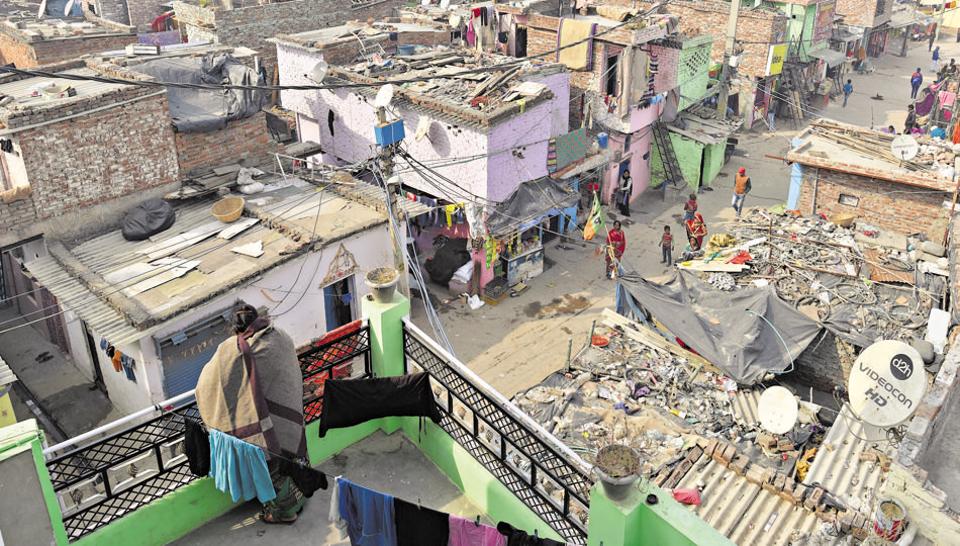
Majboor Basti JJ camp is located in Mandawali-Fazalpur colony in the eastern part of Delhi. The residents here highlight the problems of access and acceptance that is commonly witnessed in areas where Jhuggi Jhopri camps are prominent in Delhi. Interestingly, the electricity line that was made permanent due to the entry of a private sector power company which in order to maintain business has provided nearly all areas with a permanent connection, regardless of the status of registry of the houses. This may seem like a step up for all the residents in the JJ camp however it does little to prevent the state from exercising its right to remove and re-locate them at no moment’s notice.

The significant chunk of the residents of Majboor Basti is home to third-generation inhabitants who were born and raised in Delhi, however, in this city environment, they are still alien residents not part of the city space, rather the gentrified population in the gated colonies and authorized colony spaces often see these jhuggis to be a hot-spot of crime and nuisance, unhygienic conditions, and a cesspool of diseases. Enforcement agencies patrol these locations and often complaints related to theft, are traced back to these areas. With the aim to be a truly global city, how do we address the issues aforementioned and find a co-creative space.

Moving away from Aesthetics

City planners in their grand blueprint of the master plan 2021 have tried effectively to give Delhi a makeover, at least aesthetically. The notion of a slum-free city also stems from the desire of both public and private sector real estate developers, who see these slums and JJ clusters to be land that has been illegally encroached by unlawful means, without highlighting the fact of the true profits that they hope to gain by removing these people from the places where multiple generations have resided albeit under a constant threat of eviction. Perhaps this is part of the reason why the jhuggi residents have never taken ownership of the space that they stay in, because they know that it has become impossible for them to exercise any right or control in the situation of their residential status.

The way forward constitutes re-designing of the master plan by moving away from the need of superficial aesthetical model[2]. Participation can be a key tool to facilitate development in the city, participatory processes can be made inclusive by ensuring equal representation from different areas. It may not be an end to the spatial problem rather it will lay the foundation to an inclusive process in the legislature by ensuring that the “illegitimate population” of the city has a greater say in decisions concerning their lives. The population in the unauthorized areas/JJ clusters/ have and still are actively playing a huge role in making Delhi a diverse place and giving these populations rights to be a part of the decision-making process may ensure afar greater ownership and security, which will be the first true step of transitioning into a global city.


[1] Major Agglomerations of the World - statistics and charts in maps, diagrams and tables. (n.d.). Retrieved from http://citypopulation.de/world/Agglomerations.html

[2] Ghertner, D. A. (2015). RULE BY AESTHETICS: WORLD-CLASS CITY MAKING IN DELHI. New York: Oxford University Press.

Read More

Newsletters