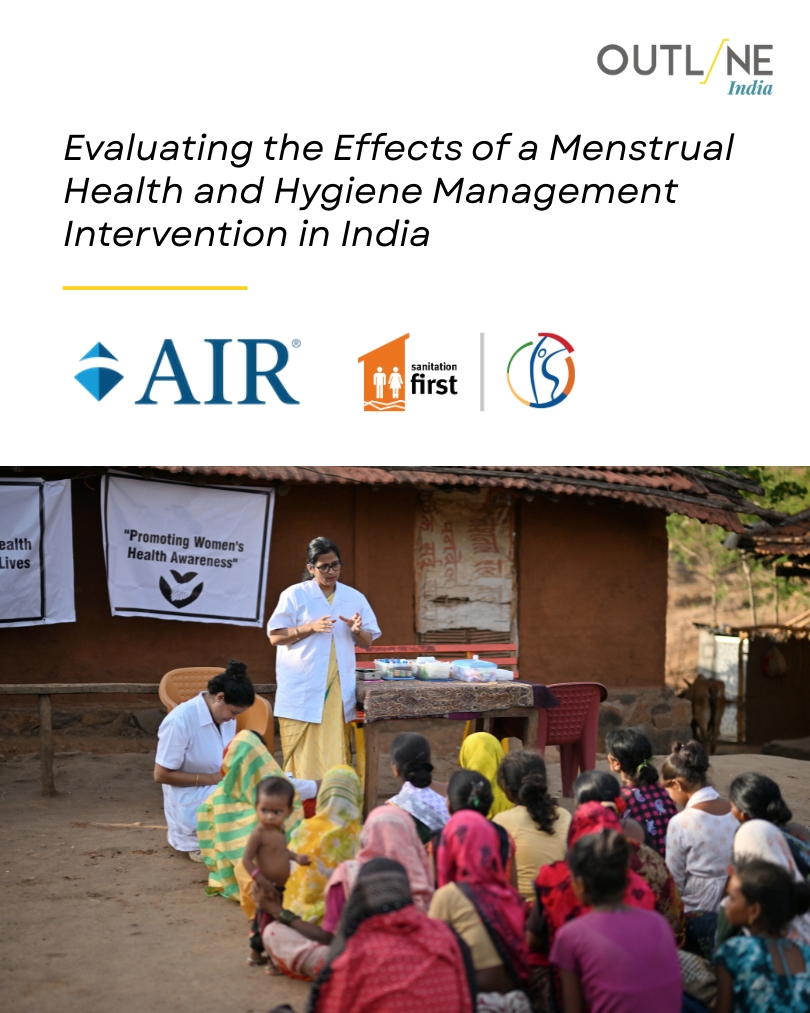
The report “Evaluating the Effects of a Menstrual Health and Hygiene Management Intervention in India” examines how a holistic menstrual health and hygiene programme can influence adolescents’ knowledge, behaviours, attitudes, and well-being in government schools in Tamil Nadu. The study evaluates Sanitation First’s Happy Periods programme, which combines puberty and menstruation education with the distribution of reusable antimicrobial sanitary pads and hygiene materials. Focusing on students in Grades 8–9 during the 2024–25 school year, the evaluation used a prospective matched-comparison design and mixed-methods approach to assess changes in MHH practices, knowledge, social norms, school attendance, and mental well-being. The findings contribute to the limited evidence base on MHH interventions in India and offer insights into how education and access to appropriate menstrual products can help reduce stigma and strengthen adolescents’ ability to manage menstruation with greater knowledge and dignity. Outline India supported the research as the field data collection and evaluation partner.
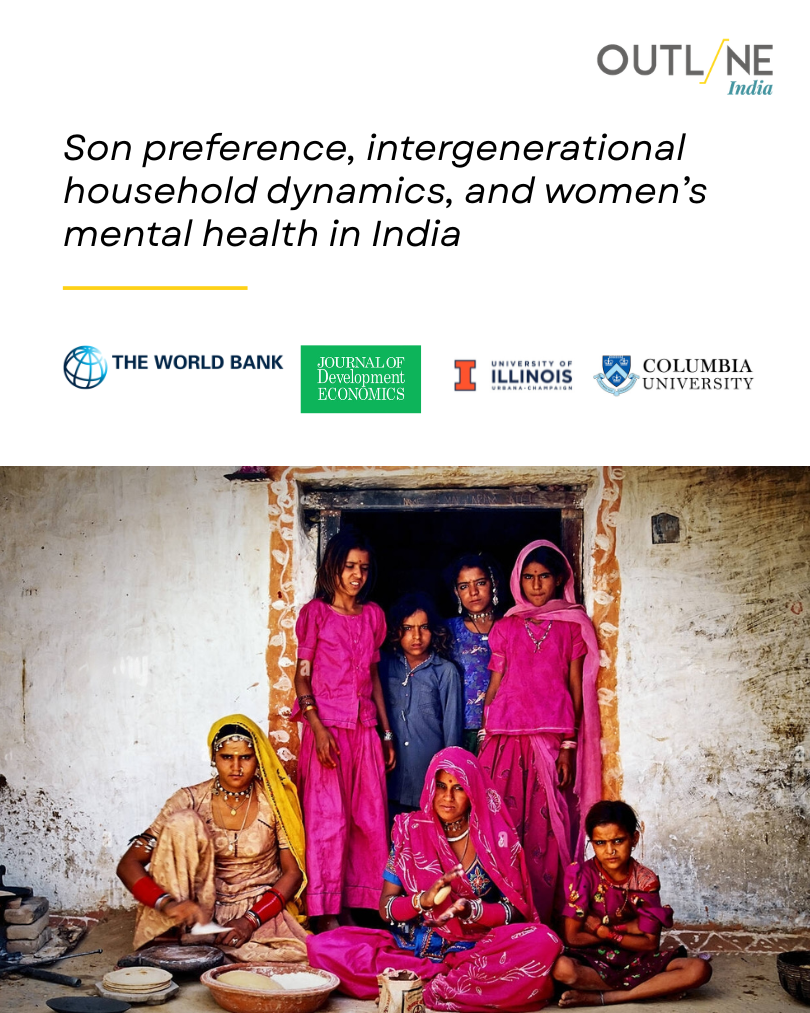
A new study published in the Journal of Development Economics examines how son preference and intergenerational household dynamics influence women’s mental health in rural India.
The study draws on primary data from 1,572 mother-in-law and daughter-in-law pairs across 103 villages in Jaunpur, Uttar Pradesh, exploring fertility preferences, household relationships, women’s autonomy, childcare, employment and mental health.
Outline India supported the field implementation and primary data collection for the study, working with the research team to gather this extensive household-level evidence from rural Uttar Pradesh.
The findings highlight how deeply gender norms and family dynamics can shape women’s well-being—and why understanding these realities requires listening to women within the households and communities where they live.
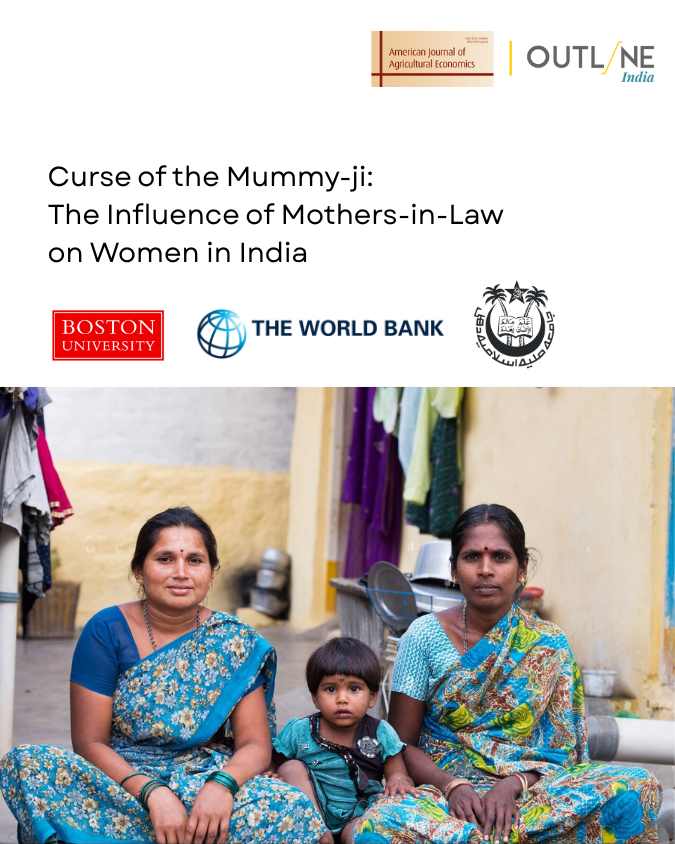
The report “Curse of the Mummy-ji: The Influence of Mothers-in-Law on Women in India” examines how intergenerational power dynamics within patrilocal households shape young married women’s mobility, social networks, and reproductive choices in rural Uttar Pradesh. Using rich primary data from Jaunpur district, the study shows that co-residence with a mother-in-law significantly restricts women’s freedom of movement and their ability to form close social ties outside the household, particularly around sensitive issues like fertility and family planning. These restrictions, driven largely by misaligned fertility preferences between mothers-in-law and daughters-in-law, are associated with lower likelihood of visiting family planning clinics and reduced use of modern contraception. The paper highlights how women’s access to supportive peers can help overcome mobility constraints and normalize family planning, making social networks a critical pathway to reproductive autonomy. Outline India served as the Data Collection and Impact Evaluation partner for this study, leading field implementation, survey management, and evidence generation.
This report examines the current state of child labor in the scrap mica supply chain in India, with a particular focus on Jharkhand, where earlier studies have highlighted the prevalence of child labor in the mica industry. It also maps the supply chain of scrap mica within India and its links to importing countries.
ICF Macro, Inc. prepared this report under the terms of its contract with the U.S. Department of Labor. The research team extends sincere thanks to all contributors for their valuable support throughout the study.
Funding for this research was provided by the U.S. Department of Labor under contract number GS-00F-189CA and task order 1605C2-22-F-00060. The findings and interpretations presented here do not necessarily reflect the views or policies of the U.S. Department of Labor, nor does reference to trade names, commercial products, or organizations imply endorsement by the U.S. Government.
This study was prepared by ICF, with Outline India serving as the primary data partner responsible for field-based data collection across India.
This flagship study by Outline India, conducted in collaboration with C-LAB/India Child Protection, brings village-level evidence on the prevalence, drivers, and reduction of child marriage across 757 villages in five high-burden states - Assam, Bihar, Karnataka, Maharashtra, and Rajasthan. Using a multistage sample and data from frontline workers, PRI members, teachers, and local leaders, the report documents sharp declines in child marriage (55 - 84% for girls) over the last three years, shaped by legal action, community mobilisation, and awareness campaigns like Child Marriage Free India and Bal Vivah Mukt Bharat.
The study highlights key determinants such as poverty, cultural norms, school dropout patterns, and awareness gaps. It also analyses reporting behaviour, effectiveness of enforcement, role of NGOs, and regional variations. The report concludes with evidence-backed recommendations on strengthening law enforcement, improving reporting systems, building capacities, enhancing girls’ education, and leveraging technology to move India closer to a child marriage-free future.
Asian Development Bank and LinkedIn prepared a joint report on the state of skills in Asia, focusing largely on digital skills for new technology occupations. Outline India undertook a multi-country research across India, Indonesia, Bangladesh, the Philippines, and the USA. The survey assisted in gaining a better understanding of how traditional and degree/certificate-based qualifications are being supplemented or replaced by new online, non-degree credentials.
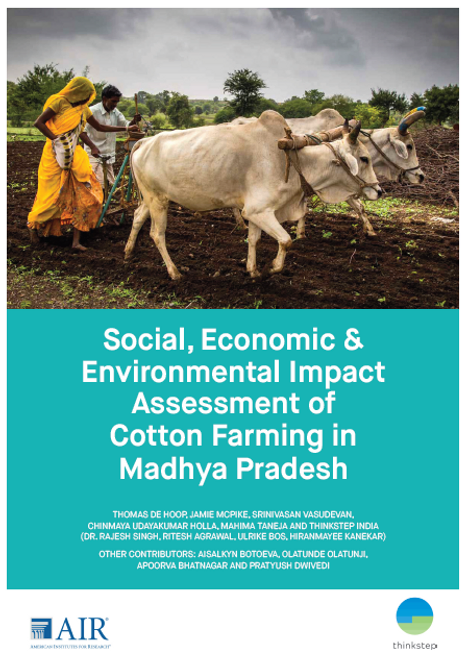
Outline India was commissioned to undertake a study aiming to compare outcomes across organic cotton farmers, better cotton farmers, and conventional cotton farmers in Madhya Pradesh.
This study aims to provide insights into the potential effects of voluntary certification cotton production on farmers well being. To achieve this goal, different aspects of education, health, and socioeconomic outcomes were measured.
Outline India was responsible to design and implement a study with a sample of 4,500 households. In addition, we conducted quantitative research with in-depth qualitative research to examine perceptions among cotton farmers.
To access the full report write to us on contact@outlineindia.com
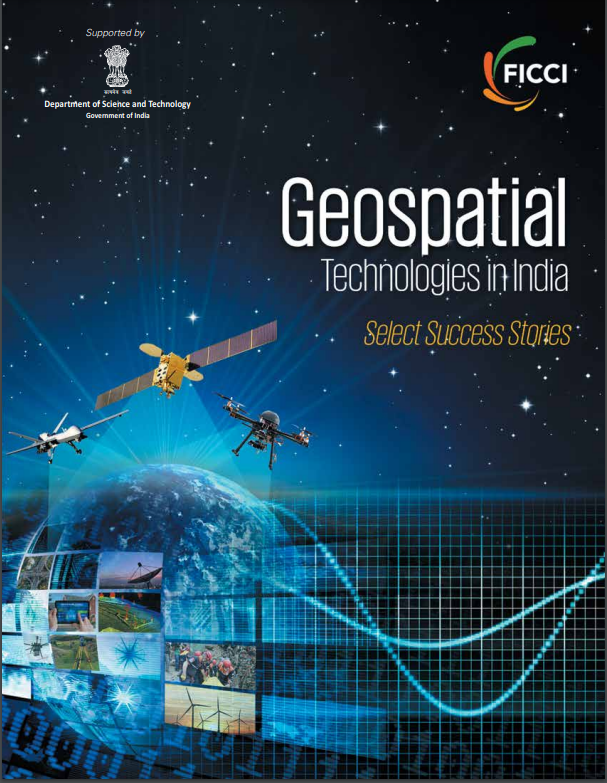
Outline India served as the partner for FICCI for Geospatial Technologies in India. Outline India’s work was conducted in rural parts of India which are either unavailable
on Google Maps or lack geo-spatial details. Due to limited or unavailable data on Google Maps and connectivity issues, their work faced challenges. To address this, we utilized drones to create geo-referenced aerial and 3D maps. These advanced maps aided social science research and government programs. Additionally, integrating this data into Google's database enhanced understanding of the landscape and infrastructure.
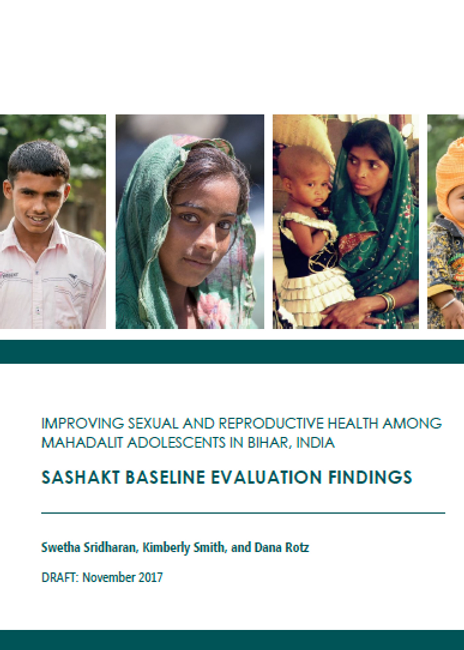
The pilot of the Sashakt program targets the SRH needs of unmarried and married Mahadalit adolescents (15-19 years old) in six blocks across three districts of Bihar. Note: Program Implementing Agency - Pathfinder International
The evaluation seeks to improve knowledge of and attitudes towards healthy timing and spacing of pregnancy, demand for contraceptive services for both married and unmarried adolescents, improve access to contraceptive and maternal health services among married Mahadalit adolescents, strengthen government capacity to deliver and sustain quality SRH services and behavior change programs for Mahadalit adolescents.
The program will support the government‘s rollout of the Rashtriya Kishor Swasthya Karyakram (RKSK) program by providing technical assistance and program monitoring support to block and district officials.
To access the full report write to us on contact@outlineindia.com
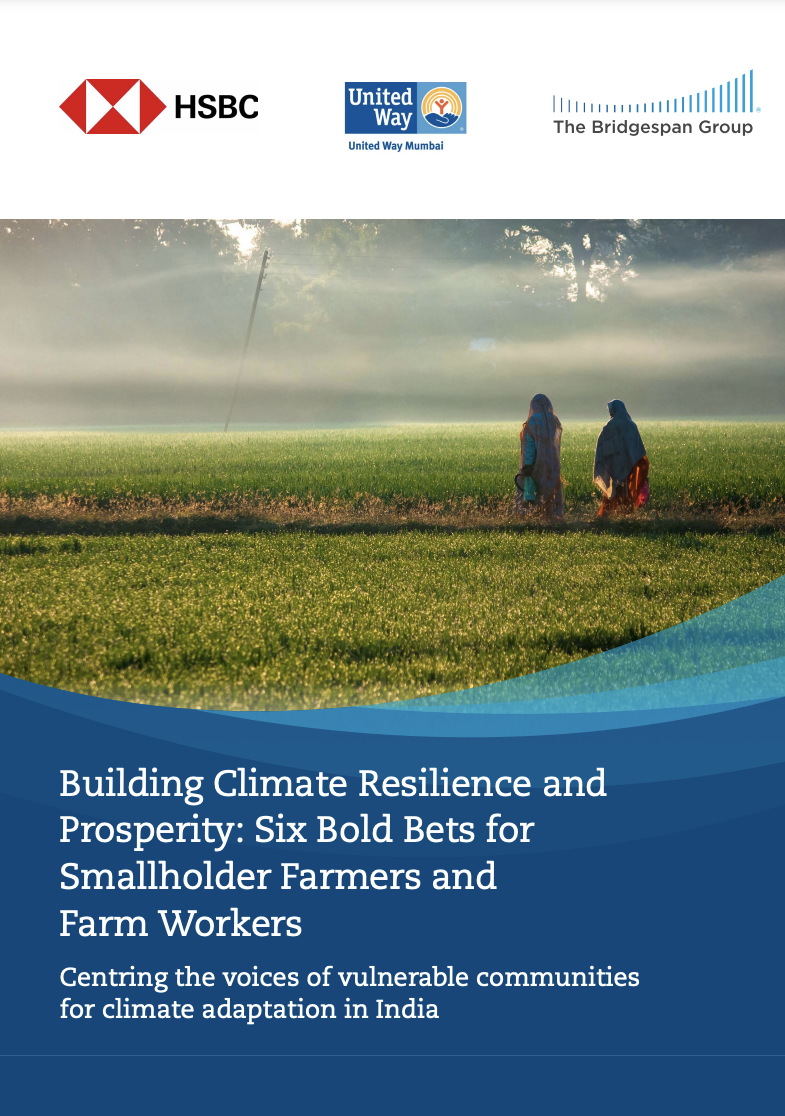
Climate change is one of the biggest
challenges faced by humanity today,
and its burden falls disproportionally
on vulnerable communities, who
have contributed the least to
global emissions. In India, recurring
heatwaves and droughts, erratic
rainfall and floods, and other climate
calamities have severely impacted
the lives and livelihoods of farmers
and agricultural labourers. This report elevates the voice of vulnerable communities, recognising that the community
knows best what it needs in order to adapt to climate change. Farmers and farm workers
possess traditional knowledge and understanding of the local context which are often
overlooked in decision making and design.
Outline India was the Data Collection partner for the Economist Impact and was acknowledged in the Health Inclusivity Index Report, highlighting strides towards equitable healthcare access worldwide. The study focused on health inclusivity in 40 countries across the globe to understand the inclusivity and accessibility of healthcare facilities for vulnerable populations including women and people with disability. The data collection exercise was also set to explore health inequalities along with the efforts to expand access to health care for the target populations.
The study titled, ‘Youth India’s perception on political engagement, internationalism, education and society’ indulges in debates pertaining to education, employment and entrepreneurship as generated during Focus Group Discussions and interviews conducted among the respondents between the said age-group. The study touches upon discussions on art and culture, tourism, and entrepreneurship, as international agendas that could concern them. e India undertook an assessment of the five states in India which performed above average in the water and sanitation domain, to explore the motivating factors that were instrumental in the success of the sanitation policies across these states. The study vitally supported the client’s advocacy on the national, as well as at the state level, accelerating the implementation of Swachh Bharat Mission interventions.
To access the full report write to us on contact@outlineindia.com