
When development programs require primary data collection across Indian states—whether for baseline assessments, impact evaluations, or ongoing monitoring—the success of research objectives depends fundamentally on field execution quality. Outline India serves as a specialized data collection partner for foundations, multilateral donors, government agencies, and international NGOs implementing development interventions across India.
With documented field operations in over 25 states, a trained enumerator network exceeding 2,000 researchers, and a cumulative reach of more than 2 million respondents since inception, we provide the methodologically rigorous primary research infrastructure that development sector clients require for evidence-based program management and accountability.
Our approach combines academic research standards with operational field capacity specifically calibrated to the Indian development context. From probability-sampled household surveys covering 10,000+ respondents across multiple districts to qualitative fieldwork in remote tribal areas, we deliver clean, verified datasets that meet international donor reporting standards and withstand academic peer review.
End-to-End Data Collection Services for Development Programs
1. Household and Community Surveys
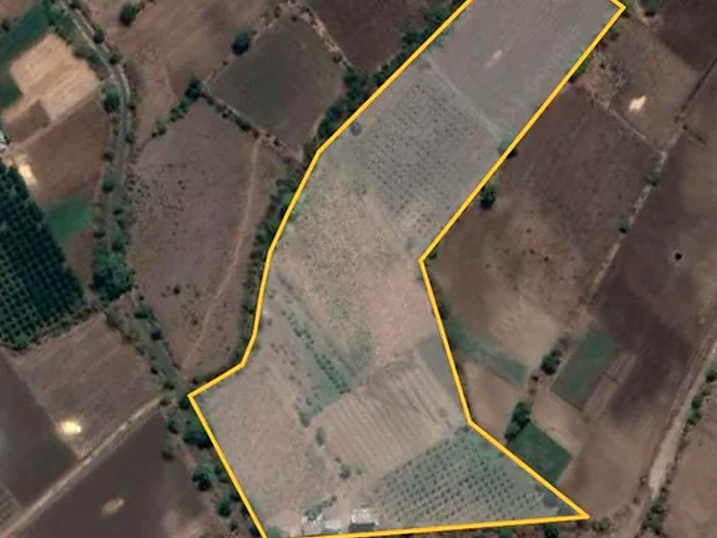
Our core competency lies in large-scale household surveys employing probability sampling methods and stratified survey designs. We routinely implement multi-stage cluster sampling, systematic random sampling, and proportional allocation strategies across rural and urban enumeration areas. Typical projects span 5,000 to 15,000 households across multiple districts, with sample frames constructed from Census data, program beneficiary lists, or village directories depending on study design.
Survey implementation covers education access and learning outcomes, maternal and child health indicators, livelihood and income generation activities, WASH infrastructure and behavior change, and governance service delivery across sectors. Each household survey includes documented sampling methodology, enumeration area maps, household replacement protocols, and non-response analysis—deliverables essential for methodological transparency in donor reporting and academic publication.
2. Baseline, Midline, and Endline Data Collection
We specialize in panel data collection tracking the same households or individuals across multiple rounds, implementing rigorous tracking protocols to minimize attrition and maintain sample integrity over multi-year evaluation periods. Baseline data collection establishes pre-intervention measurement across outcome and control groups, with extensive documentation of sample characteristics and balance checks between treatment arms. Midline fieldwork monitors program implementation fidelity and intermediate outcomes. Endline surveys measure final impact indicators using identical measurement instruments to ensure comparability.
We have executed sequential baseline-endline data collection for evaluations spanning 18 to 36 months, maintaining respondent tracking rates above 85 percent through systematic GPS verification, local field coordinator relationships, and mobile phone contact databases.
3. Qualitative Fieldwork: FGDs, IDIs, and Case Studies
Our qualitative research teams conduct focus group discussions with 8 to 12 participants organized by relevant characteristics (gender, age, beneficiary status), in-depth interviews with key informants including program staff, government officials, and community leaders, and case study documentation following program participants, implementing organizations, or intervention sites over time.
All FGDs and IDIs are audio-recorded with informed consent, transcribed verbatim in original languages, and translated to English with back-translation verification for quality assurance. Qualitative data undergoes thematic coding using NVivo or similar software, with codebooks and analytic memos provided as deliverables.
4. CAPI and PAPI Survey Implementation
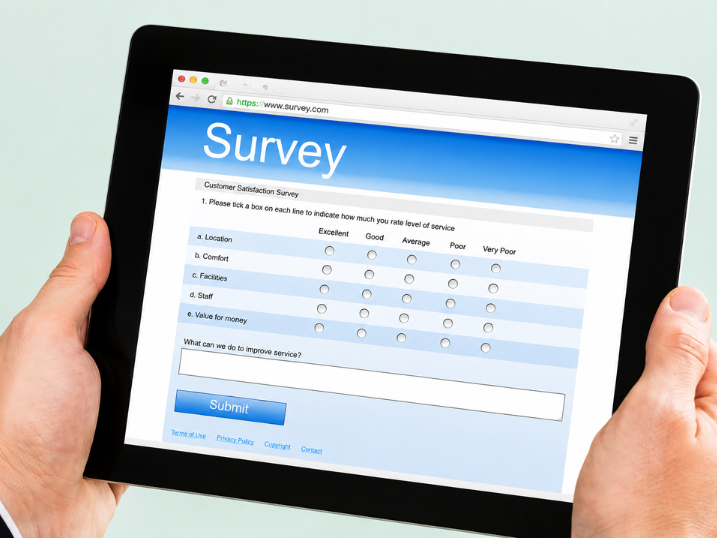
Our standard approach employs Computer-Assisted Personal Interviewing (CAPI) using SurveyCTO and Open Data Kit (ODK) platforms on Android tablets, with programmed skip logic, range checks, and real-time data encryption. Survey instruments incorporate multimedia capabilities—photographic documentation, GPS coordinates, and audio recording for quality audits.
For specific contexts—elderly respondents uncomfortable with tablet interfaces, extremely remote areas, or clients preferring paper documentation—we maintain Paper-and-Pencil Interviewing (PAPI) capacity with double data entry and validation protocols. Approximately 75 percent of our surveys now employ CAPI methods.
Field Operations Across Indian States
1. Multi-State Data Collection Infrastructure
Outline India maintains active field operations across more than 25 Indian states and union territories, spanning Jammu & Kashmir to Tamil Nadu and Gujarat to Assam. We routinely mobilize parallel survey operations in 5 to 8 states concurrently, with centralized technical oversight ensuring protocol consistency while respecting local implementation adaptation.
Projects have reached Tier 2 and Tier 3 urban areas, remote rural villages requiring multi-hour travel from district headquarters, Scheduled Area tribal populations with specific ethical protocols, and urban informal settlements where conventional sampling frames require ground enumeration.
2. Trained Enumerator Network and Field Coordination
We maintain a trained network exceeding 2,000 field researchers accumulated through repeated project engagement and systematic skill-building. New enumerators undergo minimum 40-hour training covering sampling procedures, informed consent protocols, questionnaire administration techniques, respondent privacy protection, and cultural sensitivity standards before field deployment.
Field supervision maintains ratios of approximately one supervisor per 8 to 10 enumerators, with supervisors conducting on-site observation of interviews, reviewing completed surveys daily, and implementing back-checks on 10 to 15 percent of completed households.
3. Language Capabilities and Remote Area Access
Our field teams operate in Hindi, Bengali, Tamil, Telugu, Marathi, Gujarati, Kannada, Malayalam, Odia, Punjabi, Assamese, and other regional languages, with surveys administered in respondent's preferred language without translation intermediaries that compromise data quality. Enumerators receive cultural competence training specific to regional contexts—appropriate dress codes, greeting protocols, gender norms affecting interview settings, and caste dynamics influencing community access.
We have implemented surveys in areas lacking road connectivity requiring foot travel, regions with active conflict or security concerns necessitating local coordination, tribal areas with restricted access requiring government permissions, and disaster-affected zones with displaced populations.
Quality Assurance and Data Integrity Protocols
1. Real-Time Data Monitoring and Back-Checks
CAPI surveys enable real-time data quality monitoring. Research managers monitor incoming data daily, reviewing survey duration patterns, GPS coordinates, item non-response rates, and response distributions for outliers or fabrication patterns.
Field supervisors conduct back-checks—abbreviated follow-up surveys with 10 to 15 percent of respondents—within 48 to 72 hours of original interviews, verifying key demographic data and selected substantive questions. Back-check concordance rates above 90 percent indicate acceptable enumerator performance; lower rates trigger retraining or enumerator replacement. Audio audits provide additional verification through random recording of survey sections with respondent consent.
2. Survey Pilot Testing and Ethical Standards
Before full fieldwork deployment, every survey instrument undergoes pilot testing with 30 to 50 respondents matching target population characteristics, including cognitive interviews that reveal interpretation problems not evident from response distributions alone.
All research protocols undergo ethical review aligned with international standards. We maintain an internal ethics review process and collaborate with institutional review boards at partner universities when required. Ethics protocols address informed consent procedures with illiterate populations, assent processes for minor participants, confidentiality protections for sensitive topics, and voluntary participation and right to withdraw. Data security protocols include encryption of digital data, password-protected access with role-based permissions, and secure servers meeting international data protection standards.
Partnership Model for Donors and Implementing Organizations
1. Collaborative Survey Design and Timeline Transparency
We engage clients in collaborative survey design rather than accepting predetermined instruments without technical input, beginning with scoping consultations clarifying research objectives, program theory of change, and evaluation questions. Joint instrument development includes reviewing validated measurement tools, adapting questions to local context and language, and balancing comprehensiveness with respondent burden.
We provide realistic timeline estimates spanning protocol development, enumerator training, pilot testing, full fieldwork implementation, data cleaning and validation, and final dataset delivery—typically 12 to 20 weeks for multi-district studies of 5,000 to 10,000 respondents. Budget development includes transparent per-interview costs, supervision and quality assurance expenses, travel and logistics for remote areas, technology platform fees, and data processing costs.
2. Data Deliverables
Standard data deliverables include cleaned datasets in Stata, SPSS, or CSV formats with labeled variables and value labels, comprehensive codebooks documenting all variables, response categories, and skip patterns, survey instruments in English and all field languages, sampling methodology documentation including sample frames and weights, and data quality reports covering response rates, back-check results, and enumerator performance.
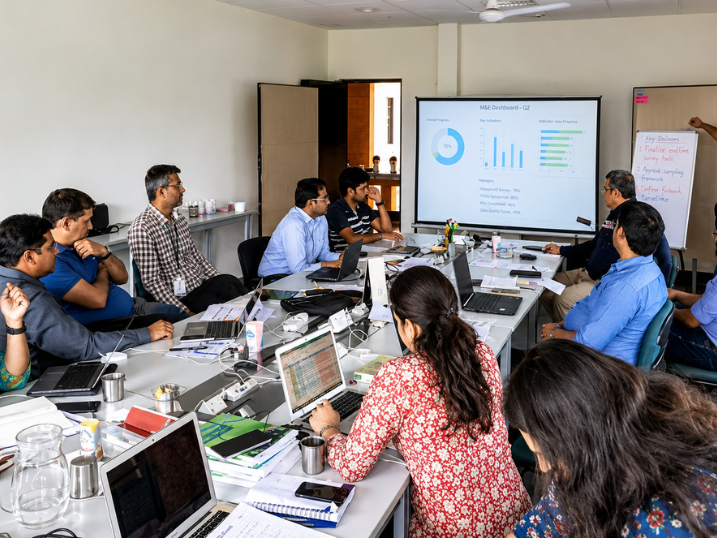
Our data collection integrates with client M&E frameworks by aligning survey timing with program reporting deadlines, incorporating standard indicators from log frames and results frameworks, and structuring datasets for aggregation to donor reporting templates.
Why Development Organizations Choose Outline India
1. Scale, Speed, and Methodological Rigor
We mobilize fieldwork rapidly when program timelines require quick turnaround, with survey deployment within 3 to 4 weeks of contract finalization for single-state projects. Simultaneously, we manage large-scale projects: surveys exceeding 15,000 respondents, fieldwork across 10 to 15 districts concurrently, and multi-state operations coordinating 100+ enumerators simultaneously. We have conducted over 800 surveys reaching more than 2 million cumulative respondents since organizational inception.
Our research team includes PhD-trained survey methodologists, economists, and social scientists who maintain academic research standards in development sector projects, ensuring appropriate sampling designs, validated measurement tools, and analytic approaches meeting academic peer review and donor evaluation standards.
2. Sector Expertise and Track Record
Years of concentration in development sector research builds substantive expertise beyond generic survey implementation. Our teams understand education measurement, health surveys (anthropometric measurement, illness recall modules), livelihoods research (income estimation, time use surveys), and WASH studies. This expertise prevents common errors like inappropriate income questions in informal economies or problematic self-reported health measures where observational data improves validity.
More than 70 percent of our projects serve foundation clients, bilateral and multilateral donors, government agencies, and international NGOs. Our work appears in public evaluation reports, academic publications citing primary data collection, and government program assessments—third-party validations demonstrating our contribution to evidence-based development practice.
---
Partner With Us for Your Data Collection Requirements
Development programs deserve primary data collection that meets the methodological standards your evaluation designs require and the operational reliability your program timelines demand. Whether you are designing a multi-state impact evaluation, implementing ongoing monitoring for adaptive management, or conducting formative research to inform program design, Outline India provides the field infrastructure, technical capacity, and development sector experience to deliver credible data on schedule.
We invite program officers, M&E managers, and research commissioners to discuss your data collection requirements through an initial scoping consultation.



David Angel Makel
IT ConsultantIt is a long established fact that a reader will be distracted by the readable content page looking at its layout point of using normal