
Development interventions require robust evidence systems to understand impact, inform adaptive management, and ensure accountability to beneficiaries and funders. As program officers and research commissioners navigate increasingly complex social challenges across India's diverse geographies, the demand for methodologically rigorous, independently conducted monitoring and evaluation has become central to effective program design and resource allocation.
Outline India provides evidence-based monitoring and evaluation services for development programs across all Indian states, combining academic rigor with operational scale. Our work serves foundations, multilateral agencies, bilateral donors, corporate social responsibility teams, and government departments requiring independent impact assessments, process evaluations, and real-time monitoring systems.
Our M&E practice is built on three pillars: methodological independence aligned with international MERL standards, mixed methods integration drawing from quantitative and qualitative traditions, and field operations capable of executing large-scale data collection with documented quality assurance protocols. Having completed monitoring and evaluation engagements across more than 25 Indian states, with cumulative sample sizes exceeding 500,000 respondents, we bring both technical expertise and operational capacity to complex evaluation questions in health, education, livelihoods, governance, and social inclusion.
Our M&E Approach and Methodological Framework
1. Theory-Based Evaluation and Results Frameworks
We anchor evaluation design in program theory articulation, typically through Theory of Change development or logframe refinement in collaboration with implementation teams. This process maps assumed causal pathways from inputs through activities, outputs, outcomes, and intended impacts, identifying key assumptions, external factors, and intermediate indicators requiring measurement.
Theory-based evaluation allows us to test not only whether a program achieved outcomes, but whether the theorized mechanisms operated as expected. For complex, multi-component interventions, we employ contribution analysis to assess the program's plausible contribution to observed changes within broader systems. Results frameworks guide indicator selection, ensuring measurement aligns with program objectives while remaining feasible within data collection constraints.
2. Mixed Methods: Quantitative and Qualitative Integration
Our evaluations routinely integrate quantitative and qualitative methods, using each tradition to address questions for which it is methodologically suited. Quantitative components typically employ structured surveys administered to treatment and comparison groups, generating data for statistical analysis of program effects. We deploy difference-in-differences designs, propensity score matching, and instrumental variable approaches when randomization is infeasible.
Where evaluation budgets and program design permit, we implement randomized controlled trials, working with implementation partners to introduce lottery-based assignment to treatment and control groups, enabling causal inference with minimal statistical assumptions.
Qualitative components employ in-depth interviews, focus group discussions, and ethnographic observation to understand implementation fidelity, mechanisms of effect, and contextual factors shaping program outcomes. We use thematic analysis and process tracing to identify patterns in qualitative data, linking findings to quantitative results through mixed methods integration at the analysis stage.
3. Sampling Strategies and Statistical Power Considerations
Sample design balances statistical requirements with operational feasibility and budget constraints. For quantitative surveys, we calculate required sample sizes based on minimum detectable effect sizes, baseline indicator prevalence, intra-cluster correlation where cluster randomization is employed, and expected attrition between survey rounds.
We employ multi-stage sampling strategies appropriate to program geography and population definitions, typically combining probability-proportional-to-size selection of geographic clusters with systematic or random selection of households within clusters. Qualitative sampling employs purposive selection strategies designed to capture variation in implementation contexts, beneficiary profiles, and program exposure.
M&E Services for Development Programs
1. Baseline, Midline, and Endline Evaluations
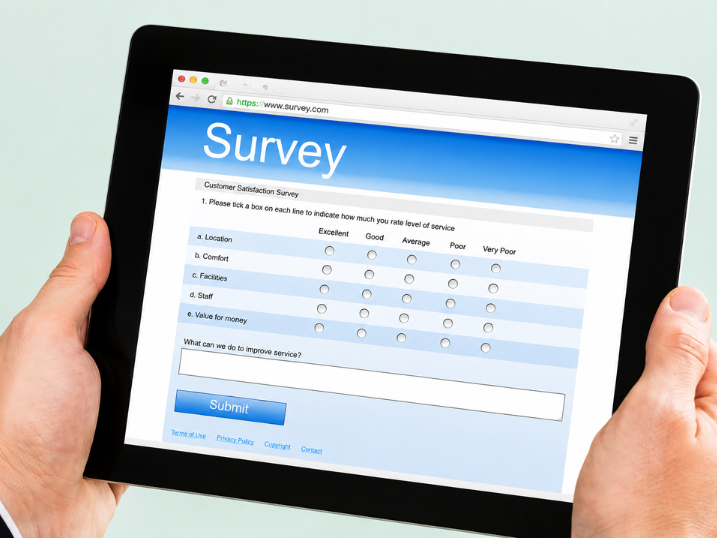
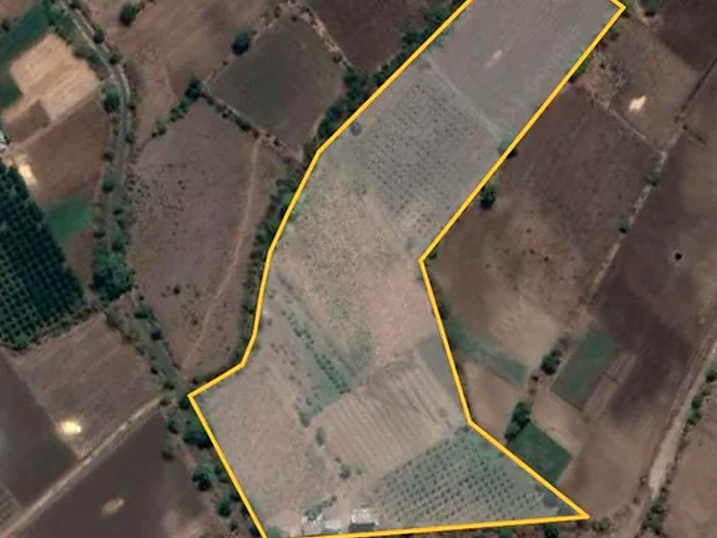
Baseline surveys establish pre-intervention measurements of key outcome indicators, beneficiary characteristics, and contextual factors, providing the reference point against which program effects are assessed. Typical baseline engagements span 2,000 to 15,000 respondents depending on program geography, population size, and required statistical precision, administered using computer-assisted personal interviewing (CAPI) on tablets, enabling real-time data quality checks, skip logic enforcement, and GPS verification of interview locations.
Midline evaluations conducted during program implementation serve both learning and accountability functions, providing early signals of program effects and identifying implementation challenges requiring course correction. Endline evaluations measure final outcomes, employing the same instruments as baseline surveys to enable direct comparison, with panel designs tracking the same respondents where attrition can be minimized.
2. Impact Assessments and Process Evaluations
Impact assessments estimate program effects on predefined outcome indicators, distinguishing changes attributable to the intervention from secular trends, seasonal variation, and external factors. We employ quasi-experimental designs—difference-in-differences, regression discontinuity, propensity score matching—matched to program assignment mechanisms and data availability, with transparency regarding methodological limitations and explicit statement of identifying assumptions.
Process evaluations investigate how programs are implemented, whether implementation adheres to program design (fidelity), and how contextual factors shape delivery. Our process evaluations combine quantitative measurement of implementation indicators with qualitative investigation of implementation challenges, frontline staff perspectives, and beneficiary experience.
3. Real-Time Monitoring and Adaptive Management Systems
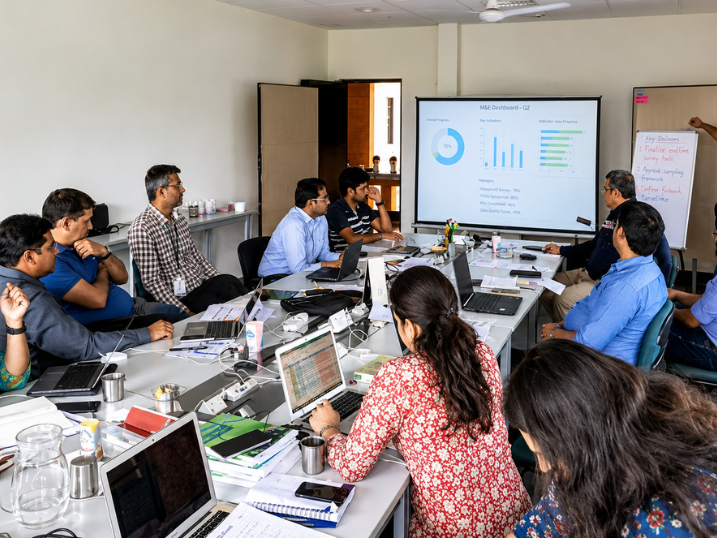
For programs requiring ongoing data flows to inform management decisions, we design and implement real-time monitoring systems combining routine administrative data with periodic primary data collection. These systems generate dashboards, automated reports, and alerts when indicators fall below thresholds, enabling rapid response. Real-time monitoring implementations employ mobile data collection tools integrated with cloud-based databases, allowing program managers to view updated indicators within 24-48 hours of data collection.
Field Infrastructure and Data Quality Assurance
1. Pan-India Field Network and Multilingual Enumerators
We maintain field teams across more than 25 Indian states, with enumerators recruited from local communities to ensure linguistic capability and cultural familiarity. Data collection is conducted in 15+ languages including Hindi, Bengali, Tamil, Telugu, Marathi, Gujarati, Kannada, Malayalam, Odia, Punjabi, Assamese, and tribal languages where program geographies require.
Our model combines permanent regional coordinators who manage field operations, recruit enumerators, and conduct quality oversight, with project-specific enumerators hired and trained for individual evaluations, providing continuity and local knowledge while enabling rapid scale-up for large, time-bound data collection efforts.
2. Digital Data Collection and Real-Time Quality Checks
All primary data collection employs CAPI systems using tablets with custom-programmed questionnaires, eliminating transcription errors, enforcing skip patterns, embedding validation rules preventing out-of-range responses, and enabling real-time data transmission for quality monitoring. Quality assurance protocols include GPS verification of interview locations, time stamps revealing interview duration, audio audits recording portions of interviews, and photographic documentation where appropriate.
We conduct back-checks on 10-15% of completed interviews, randomly selecting respondents for abbreviated re-interviews by independent enumerators to verify key responses. Inter-rater reliability metrics are calculated and reported, with enumerators demonstrating low agreement rates retrained or removed from fieldwork.
3. Ethics Protocols and Informed Consent
All evaluations follow ethics protocols based on institutional review board standards, including informed consent procedures, confidentiality protections, and data security measures. For studies involving vulnerable populations—minors, scheduled castes and tribes, persons with disabilities—we implement additional safeguards including parental consent and culturally appropriate engagement strategies. Personal identifiers are separated from survey responses, with linkage files encrypted and access restricted.
4. Sectoral M&E Expertise
Health and nutrition evaluations have assessed maternal and child health interventions, nutrition supplementation programs, health insurance schemes, telemedicine initiatives, and menstrual health programs, with measurement including anthropometric data collection following WHO protocols and anemia testing using portable hemoglobin meters.
Education evaluations encompass early childhood programs, school-based interventions, remedial education initiatives, teacher training programs, and vocational skilling projects, measuring learning outcomes using validated assessment tools, enrollment and attendance, and employment outcomes for skilling graduates.
Livelihoods evaluations assess programs promoting self-employment, wage employment, financial inclusion, and asset transfers for poverty reduction, measuring household income and expenditure, consumption-based poverty indicators, employment status and earnings, and asset ownership.
Cross-cutting themes of governance, gender, and social inclusion feature in evaluations across sectors, measuring women's empowerment using validated scales including decision-making autonomy, mobility, asset ownership, and exposure to violence, alongside citizen report cards, community score cards, and social audits.
5. Client Partnerships and Project Cycle
Projects begin with inception meetings clarifying evaluation questions, evidence requirements, methodological preferences, budget parameters, and timeline constraints. We develop evaluation design documents proposing methods, sampling approaches, indicators, analysis plans, and deliverable formats, incorporating client feedback through iterative review.
Fieldwork is managed by regional coordinators with daily communication to central project management teams, providing clients with fieldwork progress updates, preliminary data quality metrics, and flagging operational challenges requiring resolution. Analysis follows pre-specified plans documented in evaluation design documents, reducing risks of selective reporting or specification searching.
Deliverables are tailored to audience needs: technical reports document methodology and present detailed findings with supporting tables and figures, while policy briefs distill key findings into accessible formats for non-technical audiences. Dissemination activities include presentation workshops for program teams and stakeholders, support for academic publication, and media engagement for findings with public interest.
Why Organizations Choose Outline India for M&E
We have completed monitoring and evaluation projects for bilateral donors, multilateral agencies, international foundations, Indian CSR teams, and government departments. Our portfolio includes evaluations at district scale with 2,000-5,000 respondents, state-level assessments spanning 10-15 districts with 10,000-20,000 respondents, and multi-state programs requiring coordinated fieldwork across diverse geographies, with cumulative sample sizes exceeding 500,000 respondents.
Our evaluation team includes researchers with graduate training in economics, public health, sociology, and statistics from Indian and international universities. We adhere to MERL standards including evaluation design transparency, pre-registration of analysis plans for impact evaluations, and public disclosure of findings regardless of directionality, informed by guidelines from organizations including NITI Aayog, 3ie, J-PAL, and the World Bank.
Field infrastructure spanning 25+ states enables execution of geographically dispersed evaluations within compressed timelines. We routinely deploy 50-200 enumerators simultaneously for large-scale data collection, completing surveys of 10,000+ respondents within 6-8 week fieldwork windows, maintaining average delivery schedule adherence above 90%.
---
Development programs succeed when evidence systems generate credible, timely insights that inform adaptive management and accountability. Outline India brings field infrastructure, sectoral expertise, and methodological rigor to monitoring and evaluation engagements spanning health, education, livelihoods, governance, and cross-cutting themes. Our independence, commitment to MERL standards, and track record with foundations, donors, and government agencies position us as a credible partner for development evaluations requiring both technical quality and operational scale.
" We invite program officers and research commissioners to discuss evaluation needs with our team." Contact us to explore evaluation design options, receive methodology consultations, or request proposals for monitoring and evaluation services.



David Angel Makel
IT ConsultantIt is a long established fact that a reader will be distracted by the readable content page looking at its layout point of using normal