
When development programs scale across states or when funding institutions require independent verification of program impact, internal monitoring systems often fall short of delivering the objectivity and methodological rigor necessary for credible assessment. Outline India, founded in 2012, serves as an independent third-party evaluation agency, combining academic research standards with field operations capacity across 27 states and 4 union territories to provide unbiased, evidence-based program assessment for foundations, bilateral donors, corporate social responsibility teams, and government departments.
Our evaluation practice draws on a trained field research network capable of data collection in multiple Indian languages, enabling us to conduct assessments in both dense urban settlements and remote tribal areas with consistent methodological standards.
Our positioning as an independent evaluator rests on three pillars: technical expertise drawn from academic training and research traditions; operational capacity to execute large-scale, multi-state fieldwork with quality assurance protocols; and institutional independence that ensures findings are driven by evidence rather than client preferences.
Independent Third-Party Evaluation: Why External Assessment Matters
Objectivity and Credibility in Development Impact Measurement
Third-party evaluation refers to program assessment conducted by an external organization with no implementation responsibility or vested interest in demonstrating program success. Unlike internal monitoring and evaluation systems managed by program teams, third-party evaluations introduce institutional distance between data collection, analysis, and the entities accountable for program performance. This separation reduces bias in multiple forms: selection bias in choosing evaluation sites, social desirability bias in beneficiary responses when program staff conduct interviews, and confirmation bias in interpreting ambiguous findings.
The credibility premium associated with external evaluation becomes particularly valuable when results inform high-stakes decisions—whether to continue funding an intervention, replicate a model in new geographies, or modify core program design. Foundations conducting due diligence on grantee performance and corporate boards assessing CSR impact require evidence that can withstand scrutiny from skeptical stakeholders.
When Organizations Require Third-Party Evaluators
Development organizations typically engage third-party evaluators in several scenarios. Pilot programs testing new approaches benefit from independent assessment before scale-up decisions commit substantial resources. Multi-year, multi-site interventions require periodic external review to validate internal monitoring data and provide midcourse correction opportunities. Organizations also commission third-party evaluations when internal capacity constraints limit rigorous assessment, rather than building specialized M&E capacity in-house for periodic evaluation needs.
Regulatory and Donor Requirements for External Evaluation
Multiple regulatory frameworks now mandate or strongly encourage third-party evaluation for development programs in India. The Companies Act 2013 requires corporations spending beyond specified thresholds on CSR activities to conduct impact assessments through independent agencies. *(Refer to our CSR impact assessment pages for verified detail on these thresholds.)*
NITI Aayog's evaluation guidelines for centrally-sponsored schemes emphasize independent assessment as a core principle of credible impact measurement, specifying methodological standards, sampling requirements, and reporting formats that external evaluators are expected to meet. International donors similarly maintain evaluation policies requiring independent assessment at specified project stages, often specifying procurement processes that ensure evaluator independence.
Outline India's Third-Party Evaluation Methodology
Mixed-Methods Impact Evaluation Design
Outline India's evaluation approach integrates quantitative and qualitative methods to assess both whether programs achieve measurable impact and how implementation processes produce observed outcomes. Each evaluation begins with theory of change validation, examining whether the causal assumptions connecting program activities to intended outcomes reflect ground realities, testing these assumptions through early fieldwork and stakeholder consultation.
Where random assignment is feasible and ethical, we employ randomized controlled trial designs providing the strongest causal inference. Where randomization is not possible, we construct comparison groups through propensity score matching, difference-in-differences estimation, or regression discontinuity designs.
Quantitative Assessment: RCTs and Quasi-Experimental Designs
For programs with phased rollout or excess demand allowing random selection among eligible beneficiaries, we design and implement randomized controlled trials with appropriate power calculations ensuring sufficient sample size for detecting policy-relevant effect sizes. For long-term programs, we implement longitudinal studies tracking the same households or individuals across baseline, midline, and endline surveys.
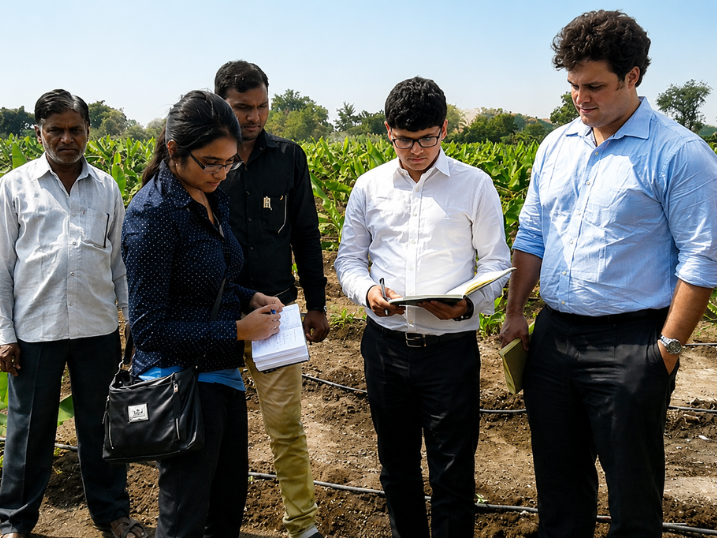
Our quantitative fieldwork employs tablet-based data collection using platforms including ODK and SurveyCTO, enabling real-time data transmission, logic checks preventing enumerator errors, and GPS geo-tagging verifying survey locations.
Qualitative Evaluation and Data Quality Assurance
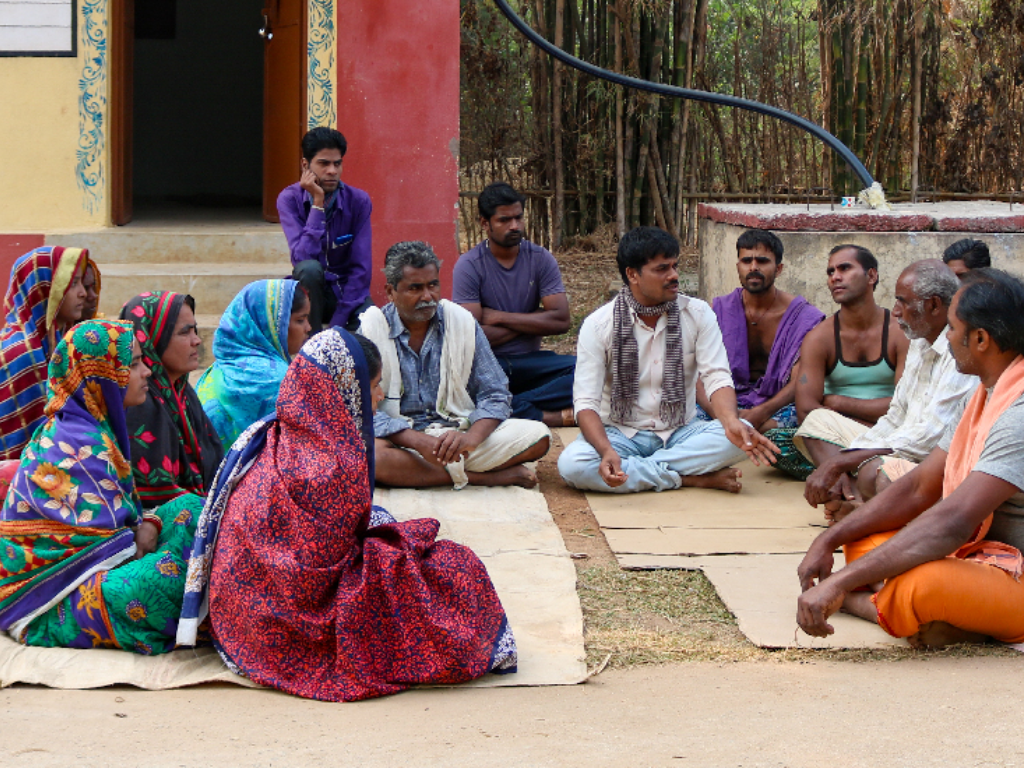
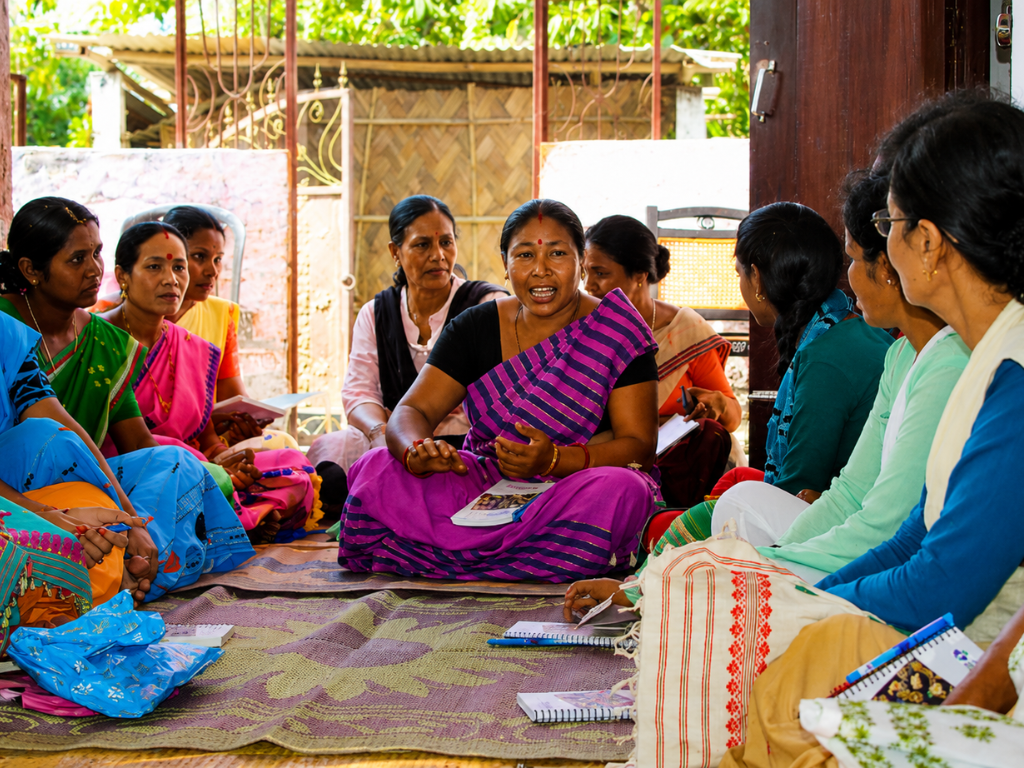
Our qualitative evaluation methods include in-depth interviews with program staff and beneficiaries, focus group discussions with community members, and direct observation of program delivery. These methods surface implementation fidelity issues, unintended consequences, and contextual factors moderating program effectiveness.
Field researchers undergo structured training covering survey instruments, informed consent procedures, sensitive topic handling, and device operation, followed by pilot testing and certification before deployment. During fieldwork, supervisors conduct in-person back-checks re-interviewing a portion of sampled respondents with abbreviated instruments.
Sectors and Themes Evaluated
Outline India has conducted third-party evaluations in " education and skill development ", assessing interventions from early childhood education through vocational training, using learning assessment tools including ASER and Pratham reading levels, and tracking certification completion, job placement rates, and wage effects.
We have completed third-party evaluations of " health and nutrition programs" addressing maternal and child health, communicable disease control, mental health services, and health system strengthening, incorporating biomarker collection where appropriate (anthropometric measurement, hemoglobin testing, water quality analysis).
Outline India has evaluated " livelihoods programs" including agricultural extension services, self-help group formation and strengthening, microfinance initiatives, and entrepreneurship training, measuring household income and expenditure, employment and time allocation, and financial inclusion metrics.
We evaluate "water, sanitation, and hygiene programs" as well as broader infrastructure and community development initiatives, combining objective facility observation with behavioral measurement of handwashing, open defecation, and water treatment practices. We also evaluate programs strengthening "governance institutions", promoting gender equity, and advancing social inclusion of marginalized groups, examining women's economic participation, decision-making authority, and program reach to scheduled castes, scheduled tribes, and persons with disabilities.
Scale and Geographic Reach
Outline India maintains operational capacity for fieldwork across Indian states and union territories. We have implemented evaluations across varied geographic terrain—from high-altitude regions to densely populated coastal areas, from arid regions to mountainous terrain, from urban settlements to remote tribal villages.
Our evaluation portfolio spans scales from focused assessments in single districts to larger studies covering multiple states, with sample sizes calibrated to the statistical precision required for district-level estimates or sub-group analysis at state level. We routinely reach hard-to-access populations including tribal communities in remote regions, conflict-affected populations, urban homeless populations, and migrant workers.
Client Portfolio and Evaluation Experience
Philanthropic organizations constitute a core client segment for our third-party evaluation services. Corporate clients engage us for third-party evaluation, including companies fulfilling CSR Act impact assessment requirements as well as corporations voluntarily seeking rigorous evidence on social programs. Government clients including state departments engage us for third-party evaluation of flagship schemes.
Evaluation Deliverables and Reporting
Our evaluation deliverables begin with inception reports detailing evaluation design, sampling strategy, instruments, and analytical frameworks, providing clients opportunity for input before fieldwork begins. Baseline assessment reports establish pre-program status on outcome indicators, midline evaluations provide formative evidence on early implementation, and endline reports present summative impact findings using appropriate causal inference methods, with technical reports and accessible executive summaries for different audiences.
Beyond static reports, we develop interactive data dashboards allowing clients to filter results by geography, demographic subgroups, or time periods. We conduct stakeholder dissemination workshops presenting findings to program implementers, government officials, and funders, and support clients in preparing policy briefs and media materials translating evaluation findings for public audiences.
What Sets Outline India Apart as a Third-Party Evaluator
Outline India's evaluation team comprises researchers with graduate training in economics, statistics, and social sciences. Our field operations strength rests on a trained enumerator network recruited through partnerships with local organizations and universities in program areas, enabling rapid mobilization for multi-state evaluations. We employ tablet-based data collection for quantitative surveys, with data dashboards providing clients real-time visibility into fieldwork progress and preliminary findings.
Ethical research practice is non-negotiable in our evaluation work. All studies undergo internal ethical review examining informed consent procedures, risks to participants, confidentiality protections, and benefit-risk balance, with external institutional review board (IRB) clearance obtained for research involving vulnerable populations or sensitive topics where required. We maintain awareness of and engagement with evaluation community standards, including guidance published by organizations such as the International Initiative for Impact Evaluation (3ie).
---
Partner with Outline India for Independent Program Evaluation
Development programs implemented at scale, across diverse contexts, with public or philanthropic resources warrant evaluation combining methodological rigor with operational excellence. Outline India provides third-party evaluation services meeting international standards for causal inference while navigating India's socio-geographic complexity.




David Angel Makel
IT ConsultantIt is a long established fact that a reader will be distracted by the readable content page looking at its layout point of using normal