
Evidence of impact requires rigorous primary data. For NGOs operating across India's diverse geographies—from urban slums in Delhi to remote tribal villages in Chhattisgarh—the quality of survey data collection directly determines the credibility of program evaluations, the renewal of donor grants, and the strategic direction of interventions.
Outline India, founded in 2012, delivers field-tested survey infrastructure tailored to the operational realities of the development sector: tight timelines aligned with grant cycles, budget constraints that demand transparent costing, and compliance requirements set by institutional donors and Institutional Review Boards (IRBs). With field presence across Indian states and demonstrated expertise in geographies underserved by general survey vendors—including tribal districts, conflict-affected zones, and disaster-response contexts—we provide NGOs with the methodological rigour and operational capacity required for credible impact measurement.
Our survey data collection services are built on three pillars: methodological precision in study design, ethical protocols that meet international standards, and field logistics that reach India's most challenging implementation environments.
Why NGOs Choose Outline India for Survey Data Collection
Experience Across Development Verticals
Outline India has completed a large volume of surveys for development sector clients since inception, spanning education, health, livelihoods, water and sanitation (WASH), women's empowerment, financial inclusion, and agriculture. In education, we have fielded learning outcomes assessments using ASER-aligned tools and teacher absenteeism studies. In health, our portfolio includes maternal and child health baselines, nutrition behavior-change surveys, and facility readiness assessments. For livelihoods programs, we have conducted household economic surveys and post-training employment tracking for vocational skilling initiatives.
This sectoral depth translates to enumerator teams that understand program logic models, recognise key performance indicators during fieldwork, and flag data anomalies in real time. When surveying self-help group members about savings behavior or adolescent girls about menstrual health practices, our field teams apply interview techniques calibrated to subject sensitivity and respondent literacy levels.
Multilingual Enumeration Teams
Language is not merely a translation challenge; it determines data validity. Outline India maintains enumeration networks across 27 states and 4 union territories, with enumerator fluency spanning widely spoken languages including Hindi, Bengali, Tamil, Telugu, and Marathi, as well as regional dialects. In tribal geographies, we prioritise enumerators from local communities who navigate cultural protocols and kinship networks that determine household access.
Each enumerator undergoes a standardised selection process: written assessment of language proficiency, mock interview evaluation, and reference verification. For NGO projects, we prioritise candidates with prior exposure to development programs, ensuring field teams can contextualise survey questions and probe responses without introducing interviewer bias.
Compliance with Donor and IRB Standards
NGO program evaluations frequently serve multiple audiences: boards of trustees, government partners, CSR funders, and international donors with stringent compliance requirements. Our IRB compliance framework includes ethics review for all study designs involving human subjects, informed consent processes documented in writing (or witnessed oral consent for non-literate respondents), and data protection protocols aligned with Indian IT Act provisions. Consent forms are translated into local languages and cognitively tested during piloting to ensure comprehension. For vulnerable populations, we implement additional safeguards including mandatory enumerator training on trauma-informed interviewing and referral pathways to support services.
Data privacy is operationalised through encrypted mobile data collection platforms, role-based server access controls, and de-identification procedures that separate personally identifiable information (PII) from analytical datasets. For donors requiring third-party verification, we support independent back-checks by external auditors on a subset of completed surveys.
Survey Methodologies for NGO Impact Assessment
Baseline and Endline Surveys
Baseline and endline surveys form the evidentiary backbone of program monitoring and evaluation. A well-executed baseline establishes the pre-intervention status of target populations across key indicators, enabling NGOs to demonstrate attribution of change at endline. Our sampling methodologies are tailored to program design: for geographically clustered interventions, we employ multi-stage cluster sampling with probability-proportional-to-size (PPS) selection; for targeted beneficiary programs, we construct sampling frames from program rosters and apply stratified random sampling.
Sample size determination is governed by statistical power calculations that balance precision requirements with budget constraints, presenting tiered sampling scenarios with associated cost implications so M&E teams can make informed trade-offs. Endline surveys replicate baseline instruments with modifications to capture program exposure and outcome evolution, maintaining detailed documentation of baseline sampling protocols to enable panel tracking where attrition allows.
Randomised Control Trials (RCTs) and Quasi-Experimental Designs
For NGOs and funders seeking causal inference, Outline India provides data collection services for randomised control trials and quasi-experimental evaluations across education, health, and livelihoods interventions. RCT data collection requires operational precision: treatment and control group surveys must be fielded simultaneously to avoid temporal confounds, enumerators must remain blind to treatment assignment where possible, and data quality protocols must detect differential attrition that threatens internal validity.
For organisations lacking the budget or timeline for full randomisation, we design quasi-experimental approaches that leverage natural variation in program rollout—difference-in-differences designs, propensity score matching, and regression discontinuity methods—each requiring tailored data collection strategies.
Community-Based Participatory Research
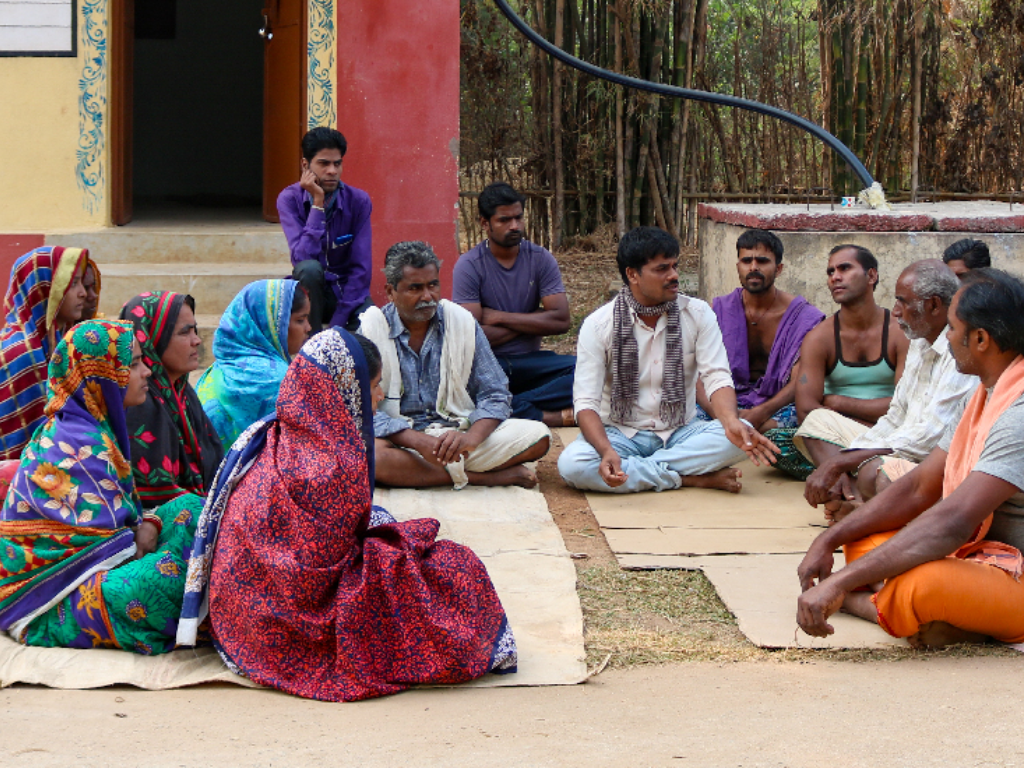
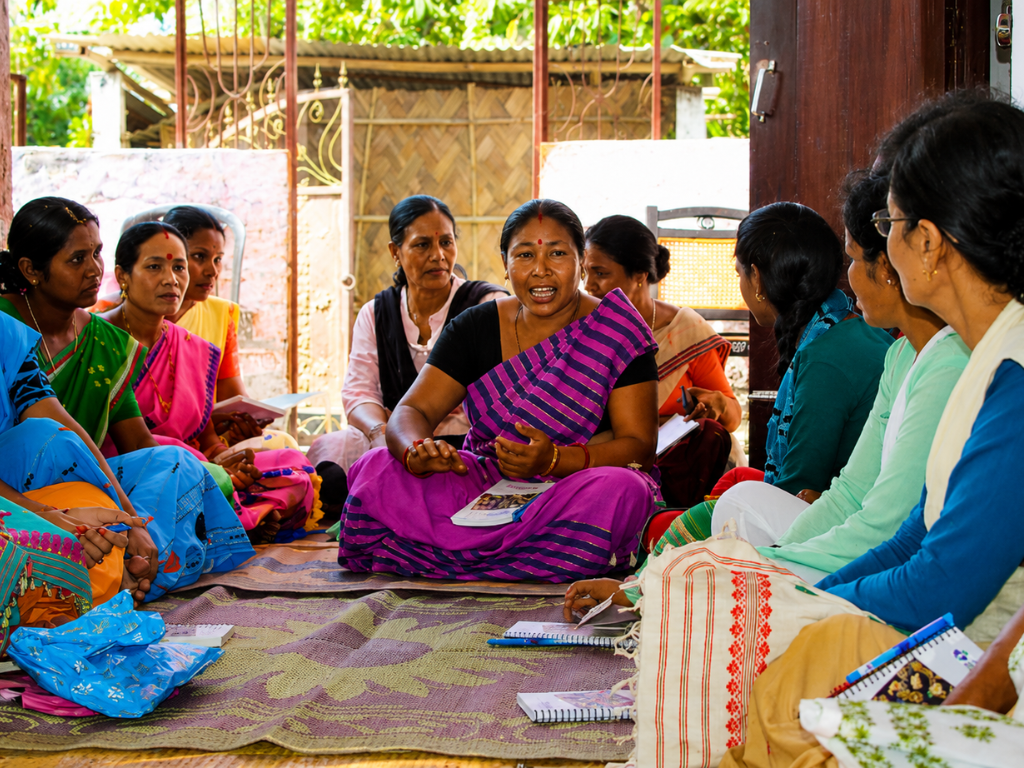
Not all development data is captured through structured surveys. Community-based participatory research (CBPR) methods—focus group discussions, participatory rural appraisals, and community mapping—generate qualitative insights that contextualise quantitative findings. Our facilitators are trained in participatory techniques such as wealth ranking exercises and seasonal calendars that enable community members with limited literacy to co-produce analytical outputs. This mixed-methods approach is particularly valued by NGOs preparing narrative impact reports for trustees and donor site visits.
Mobile Data Collection (CAPI/CATI)
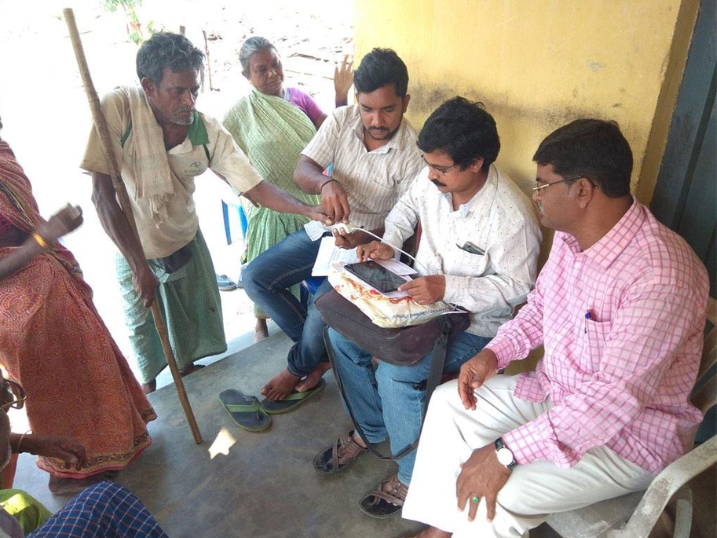
Computer-Assisted Personal Interviewing (CAPI) and Computer-Assisted Telephone Interviewing (CATI) have become the standard for development sector surveys in India, replacing paper-based methods due to speed, accuracy, and real-time quality assurance capabilities. Our field teams are equipped with Android tablets running SurveyCTO and ODK, enabling complex survey logic, reduced transcription errors, and embedded validation checks. GPS coordinates and photograph documentation are auto-captured, providing verifiable audit trails.
CATI is deployed for surveys where telephone access is high and travel costs prohibitive, or where repeated panel tracking is required, from centralised call facilities. Recorded calls enable quality audits, and automatic call-back scheduling optimises respondent contact rates. The choice between CAPI and CATI depends on respondent connectivity, survey length, and question complexity; we guide NGO partners through this decision during scoping.
End-to-End Survey Implementation for Development Programs
Instrument Design and Piloting
Questionnaire quality determines data validity. Our instrument design process begins with program logic model review, identifying outcome indicators and contextual covariates necessary for impact attribution. We source standardised modules from validated survey instruments—DHS for health, ASER for education, PPI for poverty measurement—and develop custom modules for program-specific outcomes in consultation with NGO program teams.
Translation extends beyond word-for-word conversion. Our protocols include forward translation by native speakers, back-translation verification, and cognitive testing during piloting to identify comprehension failures. Piloting occurs in non-sample villages demographically similar to target populations, testing questionnaire length, skip logic functionality, and enumerator comprehension.
Enumerator Training and Field Supervision
Enumerator training is conducted over 4-7 days depending on survey complexity, covering research ethics, interview techniques, CAPI platform navigation, and question-by-question instrument review, including mock interviews and field practice in non-sample areas. Field supervision ratios are maintained at roughly one supervisor per six enumerators for multi-district surveys, with supervisors conducting spot-checks, observing interviews, and reviewing daily data uploads.
For geographically dispersed surveys, we deploy regional coordinators who provide ground logistics and escalation support for security or access issues.
Data Quality Assurance and Back-Checks
Data quality assurance is embedded throughout fieldwork, not relegated to post-collection cleaning. Real-time protocols include high-frequency checks, GPS coordinate verification against sampled household lists, and photograph audits to confirm respondent identity. Back-checks—re-interviews of a portion of surveyed households on a subset of questions—provide independent verification of enumerator accuracy, comparing responses on time-invariant factual questions and flagging enumerators whose concordance rates fall below expected thresholds for retraining or exclusion.
Ethical and Quality Standards
Informed Consent and Data Privacy Protocols
Every Outline India survey begins with informed consent: voluntary participation, study purpose explanation, confidentiality assurances, and right to withdraw. Consent forms are translated into local languages, read aloud to respondents, and documented through written signature or thumbprint (for non-literate respondents) witnessed by an independent party.
For vulnerable populations—minors, survivors of violence, displaced communities—we implement enhanced consent procedures, including parental consent plus child assent for surveys involving minors, and privacy protocols for sensitive topics including private interview spaces and referral information for support services.
Data privacy is operationalised through encryption, access controls, and de-identification. Servers are access-controlled with role-based permissions, and datasets shared with NGO clients and donors exclude direct identifiers.
Bias Mitigation and Culturally Sensitive Interviewing
Survey data validity depends on minimising interviewer bias, social desirability bias, and cultural insensitivity that distorts responses. Our enumerator training modules address cognitive biases and cultural dynamics that shape interview interactions. Gender-matching of enumerators to respondents is standard for surveys addressing women's empowerment or reproductive health, and for caste-sensitive contexts, we recruit enumerators across caste backgrounds and assign teams thoughtfully to avoid power differentials that inhibit candid responses.
Training includes role-plays on non-judgmental probing, maintaining neutral body language, and recognising respondent fatigue. Supervision spot-checks assess interview conduct, and audio audits review tone, pacing, and adherence to scripted question wording.
Third-Party Data Audits
For evaluations requiring independent verification, Outline India facilitates third-party data audits conducted by external research organisations or donor evaluation units. Our data documentation—sampling frames, GPS logs, audio recordings, back-check concordance tables—provides audit trails that enable independent assessors to verify data collection quality.
Engagement Models for NGO Budgets
NGO budgets demand cost predictability. Outline India provides itemised cost estimates structured by component: instrument development, enumerator compensation, supervision and quality assurance, data processing, and analysis. We provide cost scenarios for sampling variations, enabling NGO M&E teams to optimise study design within budget constraints, and offer flexible engagement models including rapid mobilisation for time-sensitive baselines, phased fieldwork staggered across program cohorts, and rolling analysis with preliminary findings shared mid-fieldwork.
For multi-year M&E partnerships, we maintain enumeration rosters and field infrastructure between survey rounds, enabling cost-efficient endline deployment with the same enumerators who conducted baseline work. Many NGOs require integrated monitoring and evaluation services combining survey data collection with qualitative research and participatory evaluation methods, which we offer as bundled M&E packages spanning baseline through endline.
---
Partner with a research firm that understands NGO constraints and donor expectations.
Outline India combines methodological rigour with operational pragmatism: IRB-compliant protocols that meet institutional standards, field logistics that reach India's most challenging geographies, and pricing transparency that respects development sector budgets.




David Angel Makel
IT ConsultantIt is a long established fact that a reader will be distracted by the readable content page looking at its layout point of using normal