
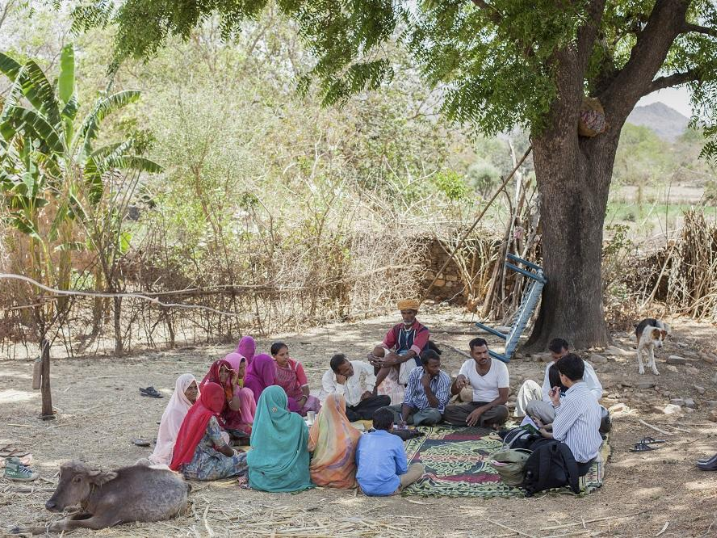
Evidence of impact requires rigorous primary data. For NGOs operating across India's diverse geographies—from urban slums in Delhi to remote tribal villages in Chhattisgarh—the quality of survey data collection directly determines the credibility of program evaluations, the renewal of donor grants, and the strategic direction of interventions.
Outline India delivers field-tested survey infrastructure tailored to the operational realities of the development sector:
Tight timelines aligned with grant cycles, budget constraints that demand transparent costing, and compliance requirements set by institutional donors and Institutional Review Boards (IRBs). With documented field presence across all Indian states and demonstrated expertise in geographies underserved by general survey vendors—including tribal districts, conflict-affected zones, and disaster-response contexts—we provide NGOs with the methodological rigour and operational capacity required for credible impact measurement.
Our survey data collection services are built on three pillars: methodological precision in study design, ethical protocols that meet international standards, and field logistics that reach India's most challenging implementation environments. Whether your organisation requires a baseline survey for a three-year education program, an endline evaluation for a WASH intervention, or a randomised control trial for a livelihoods initiative, our approach integrates donor-grade data quality with the flexibility NGO budgets demand.
Why NGOs Choose Outline India for Survey Data Collection
1. Experience Across Development Verticals
Outline India has completed over 850 surveys for development sector clients since inception, spanning education, health, livelihoods, water and sanitation (WASH), women's empowerment, financial inclusion, and agriculture. This breadth of sectoral experience enables our teams to design instruments that capture both standardised development indicators and context-specific program outcomes.
In education, we have fielded Learning Outcomes Assessments using ASER-aligned tools, teacher absenteeism studies with unannounced school visits, and community perception surveys on mid-day meal quality. In health, our portfolio includes maternal and child health baselines, nutrition behavior-change surveys, and facility readiness assessments across primary health centres and Anganwadi networks. For livelihoods programs, we have conducted household economic surveys, value chain assessments with farmer producer organisations, and post-training employment tracking for vocational skilling initiatives.
This sectoral depth translates to enumerator teams that understand program logic models, recognise key performance indicators during fieldwork, and flag data anomalies in real time. When surveying self-help group members about savings behavior or adolescent girls about menstrual health practices, our field teams apply interview techniques calibrated to subject sensitivity and respondent literacy levels—competencies developed through repeated exposure to development program evaluations.
2. Multilingual Enumeration Teams in All States
Language is not merely a translation challenge; it determines data validity. Outline India maintains enumeration networks across all 28 Indian states and 8 Union Territories, with demonstrated capacity to deploy multilingual teams within 72 hours of engagement confirmation. Our enumerator database includes fluency in 28+ languages and dialects, from widely spoken Hindi, Bengali, Tamil, Telugu, and Marathi to minority languages such as Gondi, Santali, Kurukh, and Mizo.
In tribal geographies—where we have conducted surveys across 112 tribal districts—we prioritise enumerators from local communities who navigate cultural protocols and kinship networks that determine household access. For a child nutrition survey in Jharkhand's Khunti district, our Kurukh-speaking enumerators secured a 94% response rate in villages where previous external survey attempts had failed due to language barriers and community suspicion of outsiders.
Each enumerator undergoes a standardised selection process: written assessment of language proficiency, mock interview evaluation, and reference verification. For NGO projects, we prioritise candidates with prior exposure to development programs, ensuring field teams can contextualise survey questions and probe responses without introducing interviewer bias. This recruitment rigour has yielded enumerator retention rates exceeding 70% across multi-phase projects, ensuring consistency in data collection quality from baseline to endline.
3. Compliance with Donor and IRB Standards
NGO program evaluations frequently serve multiple audiences: boards of trustees, government partners, CSR funders, and international donors with stringent compliance requirements. Outline India's survey protocols are designed to meet the evidentiary standards of institutional funders including bilateral donors, multilateral agencies, and private foundations that commission independent evaluations.
Our IRB compliance framework includes ethics review for all study designs involving human subjects, informed consent processes documented in writing (or witnessed oral consent for non-literate respondents), and data protection protocols aligned with both Indian IT Act provisions and international standards such as GDPR where applicable. Consent forms are translated into local languages and cognitively tested during piloting to ensure comprehension. For vulnerable populations—children, survivors of gender-based violence, or marginalised caste groups—we implement additional safeguards including mandatory enumerator training on trauma-informed interviewing and referral pathways to support services.
Data privacy is operationalised through encrypted mobile data collection platforms, role-based server access controls, and de-identification procedures that separate personally identifiable information (PII) from analytical datasets. For donors requiring third-party verification, 18% of our completed surveys undergo independent back-checks by external auditors, with our datasets achieving a 96% concordance rate on factual variables—a benchmark that meets the quality thresholds of organisations such as J-PAL and IPA.
Survey Methodologies for NGO Impact Assessment
1. Baseline and Endline Surveys
Baseline and endline surveys form the evidentiary backbone of program monitoring and evaluation. A well-executed baseline establishes the pre-intervention status of target populations across key indicators, enabling NGOs to demonstrate attribution of change at endline. Outline India's baseline survey services integrate sampling design, instrument development, and data collection within timelines that align with program launch schedules—often 8-12 weeks from instrument finalisation to data delivery.
Our sampling methodologies are tailored to program design. For geographically clustered interventions (e.g., a school-based program across 100 villages), we employ multi-stage cluster sampling with probability-proportional-to-size (PPS) selection at the village level. For targeted beneficiary programs (e.g., adolescent girls enrolled in a life skills initiative), we construct sampling frames from program rosters and apply stratified random sampling to ensure representativeness across age, caste, and socioeconomic strata.
Sample size determination is governed by statistical power calculations that balance precision requirements with budget constraints. For a typical NGO impact evaluation seeking to detect a 10-percentage-point change in a binary outcome (e.g., school enrollment) with 80% power and 5% significance, we calculate minimum detectable effects during the design phase and present tiered sampling scenarios with associated cost implications. This transparency enables M&E teams to make informed trade-offs between statistical robustness and per-household data collection costs.
Endline surveys replicate baseline instruments with modifications to capture program exposure and outcome evolution. We maintain detailed documentation of baseline sampling protocols—including GPS coordinates of sampled households—to enable panel tracking where attrition allows. In contexts with high seasonal migration (e.g., rural Odisha, where circular migration peaks post-monsoon), we schedule endline fieldwork to maximise respondent availability and implement callback protocols that achieve tracking rates exceeding 85% for panel designs.
2. Randomised Control Trials (RCTs) and Quasi-Experimental Designs
For NGOs and funders seeking causal inference, Outline India provides data collection services for randomised control trials and quasi-experimental evaluations. Our RCT implementation experience spans education interventions (e.g., remedial tutoring programs), health campaigns (e.g., immunisation behavior-change messaging), and livelihoods initiatives (e.g., entrepreneurship training for women's collectives).
RCT data collection requires operational precision: treatment and control group surveys must be fielded simultaneously to avoid temporal confounds, enumerators must remain blind to treatment assignment to prevent interviewer bias, and data quality protocols must detect any differential attrition that threatens internal validity. We operationalise these requirements through randomised enumerator assignment across treatment arms, GPS-stamped timestamps that verify simultaneous data collection, and real-time dashboards that flag differential response rates requiring field intervention.
For organisations lacking the budget or timeline for full randomisation, we design quasi-experimental approaches that leverage natural variation in program rollout. Difference-in-differences designs, propensity score matching, and regression discontinuity methods all require tailored data collection strategies—oversampling near program eligibility thresholds, collecting retrospective baseline data, or surveying matched comparison communities. Our methodological team collaborates with NGO M&E officers and external evaluators to align sampling, instrument design, and fieldwork sequencing with the identification strategy underpinning causal claims.
3. Community-Based Participatory Research
Not all development data is captured through structured surveys. Community-based participatory research (CBPR) methods—focus group discussions, participatory rural appraisals, stakeholder consultations, and community mapping—generate qualitative insights that contextualise quantitative findings and surface unintended program effects.
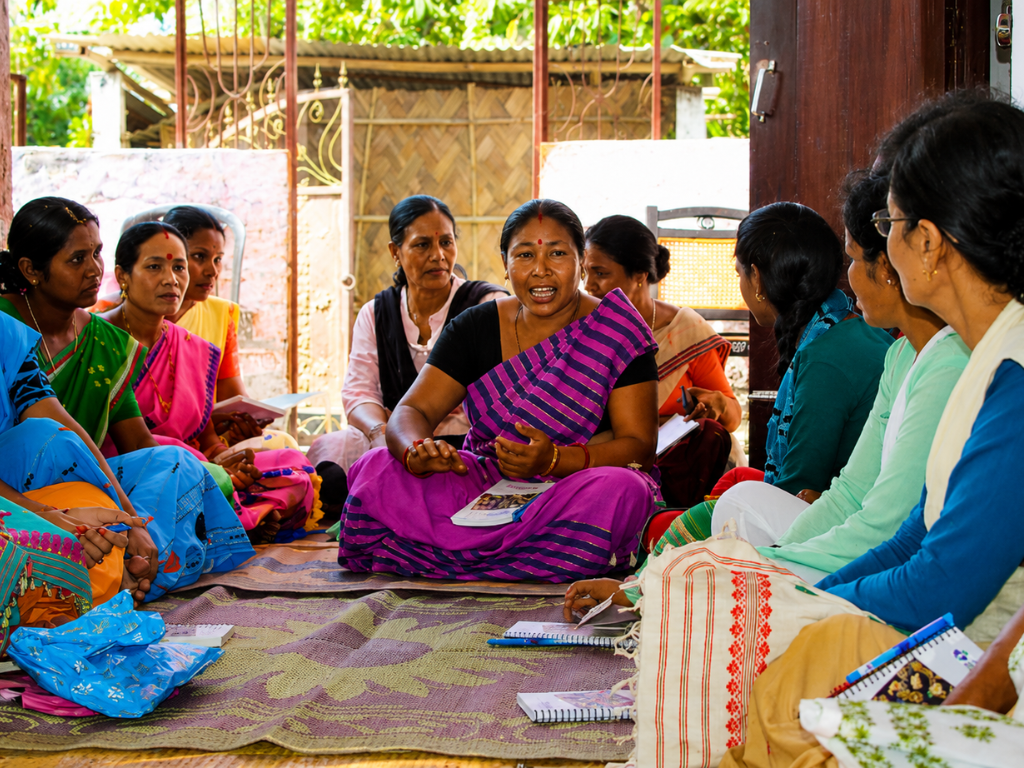
Outline India's CBPR services complement survey data collection by documenting beneficiary perspectives, power dynamics, and implementation challenges that household questionnaires cannot capture. For a women's empowerment program evaluation in Madhya Pradesh, we conducted 48 focus groups with self-help group members across treatment and control villages, using vignette-based discussions to elicit perceptions of decision-making agency that validated (and nuanced) survey-measured empowerment indices.
Our facilitators are trained in participatory techniques—wealth ranking exercises, seasonal calendars, Venn diagrams of institutional influence—that enable community members with limited literacy to co-produce analytical outputs. Session documentation follows standardised templates (audio recordings, facilitator notes, photograph inventories), and transcription/translation services produce coded qualitative datasets that integrate with survey analysis. This mixed-methods approach is particularly valued by NGOs preparing narrative impact reports for trustees and donor site visits, where beneficiary voices complement regression tables.
4. Mobile Data Collection (CAPI/CATI)
Computer-Assisted Personal Interviewing (CAPI) and Computer-Assisted Telephone Interviewing (CATI) have become the standard for development sector surveys in India, replacing paper-based methods due to speed, accuracy, and real-time quality assurance capabilities. Outline India has deployed CAPI surveys across 650+ districts since 2012, with field teams equipped with Android tablets running SurveyCTO, ODK, and proprietary data collection platforms.
CAPI enables complex survey logic (skip patterns, randomised question ordering, piped text), reduces transcription errors, and embeds validation checks that prevent invalid entries at the point of interview. GPS coordinates and photograph documentation are auto-captured, providing verifiable audit trails. Daily server synchronisation allows supervisors and principal investigators to monitor fieldwork progress through dashboards displaying completion rates by enumerator, response distributions, and flagged inconsistencies requiring follow-up.
CATI is deployed for surveys where telephone access is high and travel costs prohibitive, or where repeated panel tracking is required. From centralised call centres in Delhi and Bangalore, our CATI teams have completed health follow-up surveys, beneficiary satisfaction studies, and program uptake tracking across multi-state programs. Recorded calls enable quality audits, and automatic call-back scheduling optimises respondent contact rates. For a pan-India CSR evaluation covering 12,000 beneficiaries of a vocational training program, CATI reduced data collection costs by 40% relative to in-person enumeration while achieving a 78% contact rate across mobile numbers collected during training enrollment.
The choice between CAPI and CATI depends on respondent connectivity, survey length, and question complexity. We guide NGO partners through this decision during scoping, presenting cost-benefit analyses that account for mobile penetration rates in target geographies, questionnaire sensitivity (topics like domestic violence require in-person rapport), and donor requirements for in-person verification.
End-to-End Survey Implementation for Development Programs
1. Instrument Design and Piloting
Questionnaire quality determines data validity. Outline India's instrument design process begins with program logic model review, identifying outcome indicators, intermediate outputs, and contextual covariates necessary for impact attribution. We source standardised modules from validated survey instruments—DHS for health, ASER for education, PPI for poverty measurement—and develop custom modules for program-specific outcomes in consultation with NGO program teams.
Translation extends beyond word-for-word conversion. Our protocols include forward translation by native speakers, back-translation verification, and cognitive testing during piloting to identify comprehension failures. For a financial inclusion survey in rural Karnataka, cognitive testing revealed that the term "interest rate" had no direct Kannada equivalent understood by low-literacy women; we revised to use local idioms referencing crop loan terms.
Piloting occurs in non-sample villages demographically similar to target populations, testing questionnaire length (target: 45-60 minutes for household surveys), skip logic functionality, and enumerator comprehension. Pilot debriefs generate instrument revisions and enumerator training content addressing common interview challenges. This iterative refinement ensures field-ready tools before full deployment.
2. Enumerator Training and Field Supervision
Enumerator training is conducted over 4-7 days depending on survey complexity, covering research ethics, interview techniques, CAPI platform navigation, and question-by-question instrument review. Training includes mock interviews, field practice in non-sample areas, and written assessments. Only candidates achieving 80%+ accuracy on mock data quality checks proceed to deployment.
Field supervision ratios are maintained at 1:6 (one supervisor per six enumerators) for multi-district surveys, with supervisors conducting spot-checks, observing interviews, and reviewing daily data uploads. Supervisors hold evening debriefs to address fieldwork challenges—refusal patterns, unclear questions, logistical obstacles—ensuring protocol adherence and morale maintenance during multi-week field stints.
For geographically dispersed surveys, we deploy regional coordinators who provide ground logistics (vehicle hiring, accommodation, local permissions) and escalation support for security or access issues. This tiered supervision model has enabled us to field 50+ concurrent enumeration teams across 15 states while maintaining centralised quality oversight.
3. Data Quality Assurance and Back-Checks
Data quality assurance is embedded throughout fieldwork, not relegated to post-collection cleaning. Real-time protocols include high-frequency checks (questions with response variance below expected thresholds, indicating interviewer satisficing), GPS coordinate verification against sampled household lists, and photograph audits to confirm respondent identity.
Back-checks—re-interviews of 10-15% of surveyed households on a subset of questions—provide independent verification of enumerator accuracy and fraud detection. Our back-check protocols compare responses on time-invariant factual questions (household composition, asset ownership, program participation) and flag enumerators whose concordance rates fall below 90%. In a 12,000-household endline survey across Uttar Pradesh, back-checks identified one enumerator fabricating interviews; those records were excluded and villages re-surveyed within the project timeline.
Audio audits—where enumerators record interviews (with respondent consent)—enable post-fieldwork review of interview conduct. We sample 5% of recordings for quality checks on informed consent delivery, question reading verbatim, and non-leading probing. This layered quality infrastructure ensures datasets meet the evidentiary standards required for peer-reviewed publication and donor reporting.
4. Analysis and Reporting for Donor Audiences
Survey deliverables are formatted for institutional audiences: cleaned datasets in Stata, SPSS, and Excel; codebooks documenting variable construction; and technical annexes detailing sampling, weights, and attrition. For NGOs without in-house analytical capacity, we provide descriptive analysis (frequencies, cross-tabulations by program exposure, demographic subgroup comparisons) and inferential statistics (regression analysis, propensity score matching, difference-in-differences estimation) aligned with evaluation questions.
Data visualisations—maps of geographic coverage, bar charts of outcome distributions, scatter plots of dose-response relationships—are produced for donor presentations and board reports. We recognise that foundation program officers and CSR heads require both statistical precision and accessible narrative synthesis; our reports integrate regression tables with beneficiary case vignettes and contextual analysis of implementation fidelity.
Turnaround from data collection closure to draft report delivery averages 4-6 weeks for descriptive reports, 8-10 weeks for impact evaluations requiring complex econometric modeling. This timeline accommodates NGO grant reporting deadlines while ensuring analytical rigour.
Field Reach Across India
1. Urban Slum and Rural Village Coverage
Outline India's field infrastructure spans urban and rural contexts, from metropolitan slums in Mumbai and Kolkata to remote villages in Arunachal Pradesh and the Andaman Islands. We have conducted surveys in 650+ districts, including Tier 2 and Tier 3 cities where development programs increasingly concentrate.
Urban slum enumeration presents distinct challenges: household density, migration churn, and respondent availability (interviews often occur in evening hours post-work). Our urban teams use saturation sampling in demarcated slum clusters, maintain flexible field hours, and coordinate with community leaders and anganwadi workers to secure household access. For a sanitation behavior survey across Delhi's JJ clusters, local enumerators achieved a 91% response rate through evening and weekend scheduling.
Rural fieldwork requires logistical planning for vehicle access, seasonal road conditions, and accommodations in district towns. We maintain relationships with local NGO partners and panchayat officials who facilitate village entry and provide context on community sensitivities. This social infrastructure enabled us to complete a 15,000-household agricultural survey across 300 villages in Bihar during monsoon season, when road connectivity was compromised but farmer availability was high.
2. Tribal and Remote Geographies
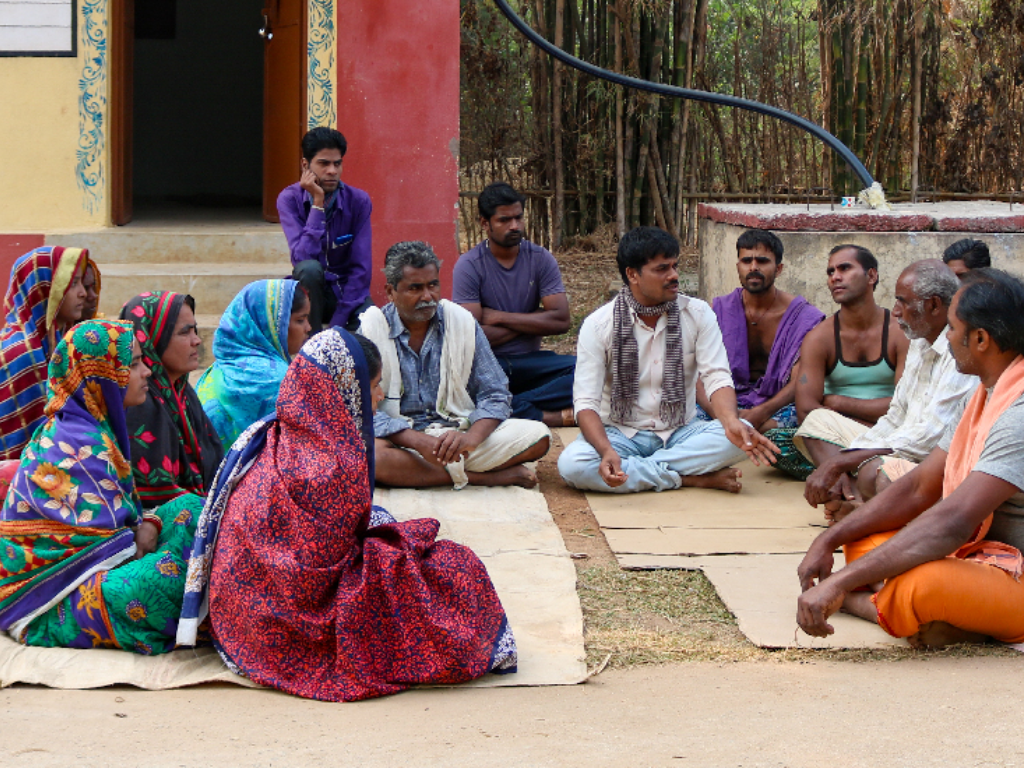
Outline India has documented fieldwork experience in 112 tribal districts, including Scheduled Areas under the Fifth and Sixth Schedules of the Constitution. Tribal geographies demand culturally informed protocols: securing permissions from Gram Sabhas, engaging local interlocutors respected by communities, and adapting survey timing to agricultural cycles and festival calendars.
In Chhattisgarh's Bastar division, where we conducted a forest livelihoods assessment among Gond and Halba communities, our teams included tribal enumerators who navigated protocols around outsider entry, conducted surveys in haats (weekly markets) where villagers congregate, and adapted interview durations to respect respondent time constraints during paddy harvest. The 4,200-household survey achieved enumeration across villages where government census teams had historically faced access challenges.
Remote geography operations require contingency planning. For an education baseline in Manipur's hill districts accessible only by foot during monsoon, we deployed enumerators resident in target villages, conducted training via video call, and used offline CAPI with weekly manual data uploads. Such adaptations reflect our operational philosophy: methodological rigour within the constraints of real-world implementation environments.
3. Conflict-Affected and Disaster-Response Contexts
Development programs increasingly operate in fragile contexts: Left-Wing Extremism (LWE)-affected districts, communal tension zones, and post-disaster settings. Outline India has fielded surveys in 45+ LWE-affected districts across Chhattisgarh, Jharkhand, Odisha, and Maharashtra, implementing security protocols developed in consultation with local administration and development partners.
In conflict-affected areas, we conduct security risk assessments prior to mobilisation, hire enumerators from within target blocks (minimising external travel), and coordinate field schedules with district police to avoid sensitive periods. For a health facility survey in Jharkhand's West Singhbhum district, we adjusted field timings to daylight hours and employed local ASHAs (Accredited Social Health Activists) as enumerators, leveraging their existing community access.
Post-disaster surveys—conducted after floods in Assam, cyclones in Odisha, and earthquakes in Nepal border districts—require rapid mobilisation and trauma-informed interviewing. Following the 2018 Kerala floods, we deployed a 3,500-household damage assessment survey within 12 days of engagement, using district-resident enumerators and expedited training protocols. Enumerators received briefing on psychological first aid and referral information for government relief services, recognising that surveys in crisis contexts carry ethical obligations beyond data extraction.
Case Studies: NGO Survey Data Collection
1. Education Program Evaluation in Uttar Pradesh
An education-focused NGO implementing a remedial tutoring intervention required independent evaluation to demonstrate impact to a bilateral donor. Outline India designed a quasi-experimental evaluation using propensity score matching to select comparison schools demographically similar to treatment schools but outside the program catchment.
Baseline and endline surveys assessed student learning levels using ASER tools (reading fluency, arithmetic proficiency) and administered household surveys capturing parental education, socioeconomic status, and school participation. Enumerators conducted one-on-one assessments with children in quiet school corners to minimise distraction, with quality protocols requiring photographic documentation of completed assessment sheets.
Fieldwork challenges included seasonal migration (reducing student availability during harvest) and school closures for local elections. We mitigated attrition through weekend make-up sessions and coordination with headmasters to schedule surveys during assembly periods. The endline achieved 89% panel tracking, enabling difference-in-differences analysis that isolated program effects from secular trends in learning outcomes. Data delivery included Stata datasets, regression results, and a technical annex documenting attrition analysis—formatted for the donor's external review panel.
2. Health Baseline Survey Across Six States
A health NGO launching a three-year nutrition program required a baseline survey measuring anthropometric indicators (stunting, wasting, underweight prevalence), infant and young child feeding practices, and healthcare utilisation. The geographic scope—spanning six states with linguistic diversity from Hindi to Odia—demanded coordinated multi-state mobilisation.
We recruited 96 enumerators across state offices, conducted simultaneous 6-day trainings led by certified trainers using standardised curricula, and deployed digital weighing scales and stadiometers with daily calibration protocols. Anthropometric measurement quality was ensured through duplicate measurements (height/weight recorded twice per child, averaged if within tolerance, re-measured if discrepant) and photographic documentation of equipment readings.
CAPI programming embedded WHO growth reference calculations, flagging biologically implausible values (e.g., height-for-age z-scores beyond ±6 SD) for immediate re-measurement. GPS coordinates verified household locations within sampled village boundaries. Back-checks re-measured 10% of children within 48 hours, achieving 94% concordance on anthropometric indicators.
The dataset enabled the NGO to establish state-specific baseline prevalence rates, identify geographic hotspots for program intensification, and calibrate intervention targets. Deliverables included disaggregated tables by state and wealth quintile, maps of district-level stunting prevalence, and documentation of sampling weights for multi-state pooled analysis.
3. Livelihoods Impact Assessment in Rural Rajasthan
A microfinance NGO required rapid impact assessment of a two-year livelihoods intervention providing financial literacy training and seed capital to women's SHGs. With no baseline data available, we designed an endline-only evaluation using a comparison group of non-participant women matched on retrospective economic indicators.
The questionnaire integrated standardised modules on household income and expenditure, women's economic decision-making (using validated empowerment indices), and SHG participation history. Female enumerators—mandatory for culturally sensitive questions on intra-household decision-making—were recruited from Udaipur district and trained on wealth-ranking exercises that enabled asset-based poverty classification.
Fieldwork occurred during summer months when agricultural activity was low and women's availability high. Focus group discussions with 20 SHGs complemented surveys, surfacing qualitative narratives of empowerment that quantitative indices alone could not capture. Audio recordings were transcribed in Hindi and translated to English, with thematic coding identifying perceived pathways of change (confidence to negotiate with traders, household recognition of economic contributions, mobility to travel for business).
Propensity score matching on pre-program asset ownership, caste, and household size enabled quasi-experimental impact estimation despite the absence of baseline data. The 250-page evaluation report integrated regression results, beneficiary testimonials, and implementation fidelity analysis based on NGO monitoring data—a mixed-methods synthesis that satisfied the CSR funder's requirements for both quantitative rigor and narrative evidence.
4. Ethical and Quality Standards
1. Informed Consent and Data Privacy Protocols
Every Outline India survey begins with informed consent: voluntary participation, study purpose explanation, confidentiality assurances, and right to withdraw. Consent forms are translated into local languages, read aloud to respondents, and documented through written signature or thumbprint (for non-literate respondents) witnessed by an independent party.
For vulnerable populations—minors, survivors of violence, displaced communities—we implement enhanced consent procedures. Child surveys require parental consent plus child assent, with assent scripts age-appropriate in language. Surveys on sensitive topics (domestic violence, sexual health) include privacy protocols: interviews conducted in private spaces, enumerator training on trauma-informed questioning, and referral information for support services provided post-interview.
Data privacy is operationalised through encryption, access controls, and de-identification. Servers are password-protected with role-based access (field teams upload only, analysts access de-identified datasets, PII restricted to project leads). Datasets shared with NGO clients and donors exclude direct identifiers (names, phone numbers, precise GPS coordinates), with indirect identifiers (village names, birthdates) disclosed only where evaluation design requires and data-sharing agreements specify protection protocols.
For projects requiring IRB approval, we submit ethics applications to registered review boards and implement amendments as directed. Our ethics documentation templates—consent forms, study information sheets, data protection plans—are adapted from international standards and available in English and Hindi baselines for rapid customisation.
2. Bias Mitigation and Culturally Sensitive Interviewing
Survey data validity depends on minimising interviewer bias, social desirability bias, and cultural insensitivity that distorts responses. Outline India's enumerator training modules address cognitive biases (leading questions, confirmatory probing) and cultural dynamics (caste hierarchies, gender norms) that shape interview interactions.
Gender-matching of enumerators to respondents is standard for surveys addressing women's empowerment, reproductive health, or domestic responsibilities. For caste-sensitive contexts, we recruit enumerators across caste backgrounds and assign teams to villages in ways that avoid upper-caste enumerators interviewing Scheduled Caste households where power differentials inhibit candid responses.
Training includes role-plays on non-judgmental probing (e.g., asking about open defecation without conveying disapproval), maintaining neutral body language, and recognising respondent fatigue (shortening interviews if respondents exhibit distraction). Supervision spot-checks assess interview conduct, and audio audits review tone, pacing, and adherence to scripted question wording.
For surveys measuring socially desirable outcomes (e.g., program participation, child immunisation), we employ validation techniques: asking respondents to produce documentation (immunisation cards, program enrollment slips), using list experiments for sensitive behaviors, and triangulating self-reports with administrative data where available.
3. Third-Party Data Audits
For evaluations requiring independent verification, Outline India facilitates third-party data audits conducted by external research organisations or donor evaluation units. Our data documentation—sampling frames, GPS logs, audio recordings, back-check concordance tables—provides audit trails that enable independent assessors to verify data collection quality.
Eighteen percent of our completed NGO surveys have undergone third-party back-checks or audits, with factual variable concordance rates averaging 96%—meeting thresholds set by organisations such as the Abdul Latif Jameel Poverty Action Lab (J-PAL) and Innovations for Poverty Action (IPA). Audit findings have consistently validated our quality assurance protocols, with discrepancies typically limited to subjective perception questions where response variability is expected.
For NGOs facing donor requirements for independent verification, we build audit costs into project budgets and coordinate audit timing to avoid field disruption. This transparency reflects our institutional philosophy: rigorous data withstands external scrutiny, and methodological integrity serves client interests better than post-hoc data manipulation.
5. Pricing and Engagement Models for NGO Budgets
1. Transparent Per-Survey Costing
NGO budgets demand cost predictability. Outline India provides itemised cost estimates structured by component: instrument development (questionnaire design, translation, piloting), enumerator compensation (per-interview rates, travel allowances), supervision and quality assurance (back-checks, audio audits), data processing (cleaning, weight construction, documentation), and analysis (descriptive tables, regression models, report drafting).
Per-interview costs vary by geography (urban vs. rural), accessibility (road-connected vs. remote), questionnaire length, and respondent type (household vs. institutional surveys of schools or health facilities). For a typical 60-minute household survey in rural North India, per-interview costs range from ₹400–600 including enumerator fees, supervision, and quality protocols. Remote tribal geographies or hard-to-reach populations (e.g., seasonal migrants) command premium rates reflecting higher mobilisation costs.
We provide cost scenarios for sampling variations: increasing sample size from 1,200 to 2,400 households may reduce per-interview costs through economies of scale in training and supervision, while geographic dispersion (surveying 50 households across 40 villages vs. 2,000 households in 40 villages) increases per-unit costs due to travel time. This costing transparency enables NGO M&E teams to optimise study design within budget constraints.
2. Flexible Timelines for Grant Cycles
NGO grant cycles rarely align with ideal survey timelines. Donor approvals may arrive mid-fiscal-year, program launches may delay, or reporting deadlines may accelerate. Outline India accommodates these realities through flexible engagement models: rapid mobilisation (field teams deployed within 2 weeks of contract signature for time-sensitive baselines), phased fieldwork (data collection staggered across program cohorts or geographies as budgets disburse), and rolling analysis (preliminary findings shared mid-fieldwork to inform program course corrections).
For multi-year M&E partnerships, we maintain enumeration rosters and field infrastructure between survey rounds, enabling cost-efficient endline deployment with the same enumerators who conducted baseline work (improving panel tracking) and institutional memory of program context. Our project management systems track grant timelines, flag upcoming deliverable deadlines, and coordinate fieldwork around NGO program calendars (avoiding surveys during program delivery periods when staff bandwidth is constrained).
3. Bundled M&E Packages
Many NGOs require integrated monitoring and evaluation services: routine program monitoring (quarterly beneficiary tracking, output verification), periodic process evaluations (mid-term assessments of implementation fidelity), and summative impact evaluations (endline surveys with comparison groups). Outline India offers bundled M&E packages that combine survey data collection with qualitative research, administrative data analysis, and participatory evaluation methods.
A three-year bundled engagement might include: baseline survey (Year 1), quarterly monitoring dashboards derived from program management data (Years 1-3), annual participatory review workshops with beneficiaries (Years 2-3), midline process evaluation with key informant interviews (Year 2), and endline impact survey (Year 3). Bundling reduces per-activity costs through shared project management, amortised enumerator training, and integrated analysis that traces program evolution from baseline to impact.
Retainer models provide ongoing M&E support: a dedicated research associate embedded with the NGO's program team, monthly data review meetings, and on-call survey capacity for rapid needs assessments or course-correction studies. This partnership approach aligns with how mature NGOs conceptualise M&E—not as episodic compliance exercises, but as continuous learning infrastructure that shapes program strategy.
---
"Partner with a research firm that understands NGO constraints and donor expectations." Outline India combines methodological rigour with operational pragmatism: IRB-compliant protocols that meet institutional standards, field logistics that reach India's most challenging geographies, and pricing transparency that respects development sector budgets.
Whether you require a baseline survey for a pilot intervention, an endline evaluation for a scaled program, or a multi-state impact assessment for CSR reporting, our team brings documented expertise across development verticals, multilingual enumeration networks in all Indian states, and quality assurance systems validated through third-party audits.
"Contact Outline India to scope your next survey." Share your program geography, evaluation questions, and timeline—we will provide a customised proposal detailing methodology, sampling strategy, deliverables, and costs. Evidence-led program decisions begin with credible data. Let us help you generate it.




David Angel Makel
IT ConsultantIt is a long established fact that a reader will be distracted by the readable content page looking at its layout point of using normal