
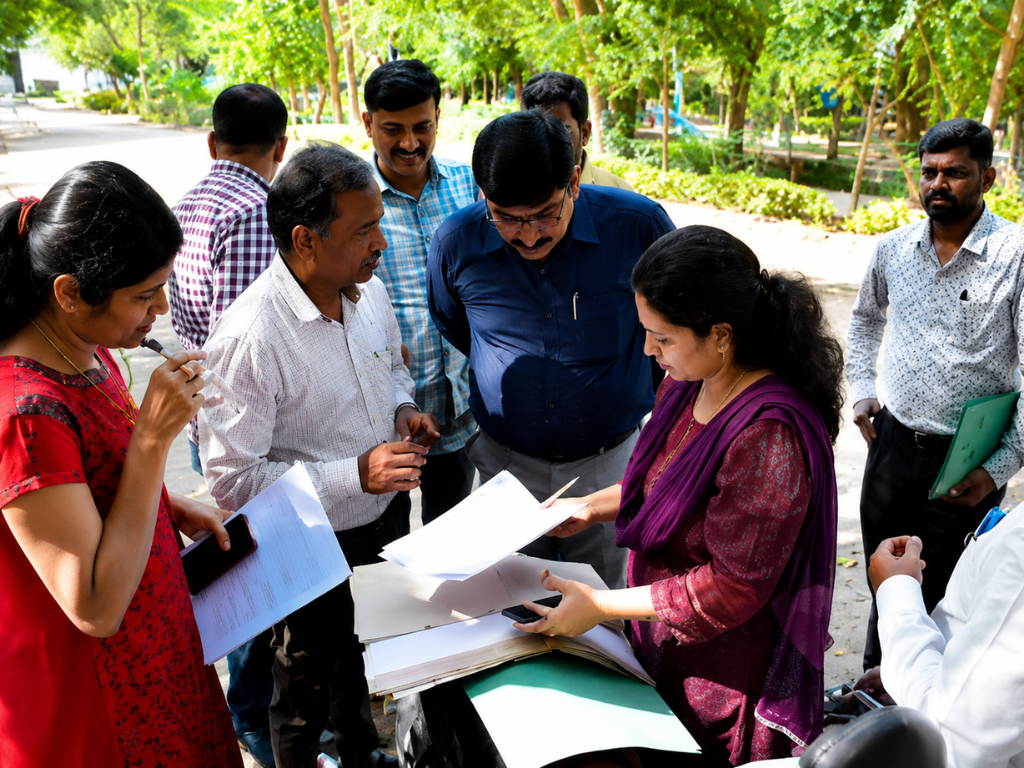
India's development sector allocates substantial resources toward social programs each year—from government schemes reaching millions of beneficiaries to foundation-led interventions and corporate CSR initiatives. Yet the gap between program design and demonstrated impact remains significant. Program officers, research commissioners, and institutional decision-makers increasingly recognize that rigorous evaluation is not merely a compliance requirement but a strategic imperative for learning, adaptation, and accountability.
Outline India, founded in 2012, is a program evaluation firm that brings methodological rigor and operational scale to development evaluation across India, spanning education, health, livelihoods, financial inclusion, WASH, and governance sectors. Our work serves bilateral donors, multilateral agencies, foundations, government departments, and CSR teams who require independent, evidence-based assessments of program performance and impact.
Our evaluation practice is distinguished by three characteristics: methodological credibility grounded in academic standards and evaluation frameworks such as OECD-DAC criteria; operational capacity to execute complex, multi-state primary data collection; and sectoral expertise built through sustained engagement with India's development landscape. Each engagement begins with a theory of change, contextual understanding of implementation realities, and evaluation questions that matter to decision-makers.
Independent Program Evaluation Services
Impact Evaluation and Causal Inference
Impact evaluation seeks to answer a specific question: What change can be attributed to the program? Establishing causality requires counterfactual reasoning—understanding what would have happened in the program's absence. Our impact evaluation practice employs experimental and quasi-experimental designs appropriate to the evaluation context, implementation timeline, and data availability.
We have designed and implemented randomized controlled trials (RCTs) for education interventions, livelihoods programs, and behavior change initiatives, working with implementing partners to randomize treatment assignment at the individual, household, or cluster level. Where randomization is infeasible due to programmatic or ethical constraints, we employ quasi-experimental designs including difference-in-differences, propensity score matching, regression discontinuity, and synthetic control methods. Each design choice is documented with explicit identification assumptions and robustness checks.
Our research team includes economists, statisticians, and public policy specialists with training in causal inference methods. Impact evaluations routinely involve primary data collection across multiple program and comparison sites. Our pan-India field network, covering 27 states and 4 union territories, enables us to execute complex sampling strategies, track cohorts over time, and maintain data quality protocols including back-checks and audio audits.
Process and Implementation Evaluation
Not all evaluation questions require causal identification. Program officers and implementing teams often need to understand how a program operates in practice: whether activities are implemented as designed, what barriers staff and beneficiaries encounter, and how contextual factors shape delivery and uptake.
Our process evaluations combine quantitative monitoring data with qualitative field research—stakeholder interviews, focus group discussions, program observation, and document review. We assess fidelity to program design, resource allocation and utilization, participant satisfaction, and unintended consequences. Implementation evaluation is particularly valuable for programs in pilot or early rollout phases, when course corrections can meaningfully improve effectiveness.
Baseline, Midline, and Endline Assessments
Multi-year programs require evaluation data at multiple time points: baseline assessments establish pre-program conditions, midline evaluations enable adaptive management, and endline assessments measure final outcomes. Outline India designs and executes baseline, midline, and endline surveys that balance comprehensiveness with feasibility, working with clients to define key performance indicators (KPIs) and construct instruments that capture demographic characteristics, outcome measures, and contextual factors.
Midline evaluations typically occur during program implementation, providing early signals on program uptake and implementation challenges, offering program managers an opportunity for course correction. Endline evaluations measure program outcomes and impact against the baseline benchmark, comparing treatment and comparison groups and examining heterogeneity across beneficiary characteristics.
Across baseline, midline, and endline studies, we maintain structured data quality protocols, with field teams receiving standardized training and quality assurance including back-checks on a portion of completed surveys.
Sectoral Evaluation Expertise
Education and Skilling Program Evaluation
We have evaluated education schemes, foundation-led learning interventions, EdTech pilots, teacher training programs, and vocational skilling initiatives, measuring learning outcomes using standardized assessments, tracking enrollment and attendance, and assessing pedagogy and classroom practices. For skilling programs, evaluation frameworks include employment outcomes, wage effects, and skill acquisition, tracking trainees over time to measure job placement and career progression. Education evaluations often involve nested data structures—students within classrooms, classrooms within schools—requiring multilevel analysis.
Health and Nutrition M&E
Health and nutrition programs present unique evaluation challenges: outcome measurement often requires clinical data or anthropometric assessments, and beneficiaries may include vulnerable populations. We have conducted impact assessments of maternal and child health interventions, nutrition supplementation programs, and community health worker initiatives, with outcome measures including anthropometry, anemia testing, immunization status, and healthcare utilization. Field teams include enumerators trained in anthropometric measurement, supervised by public health professionals, and health evaluations frequently employ mixed methods combining household surveys with facility assessments.
Livelihoods and Financial Inclusion Assessment
Livelihoods and financial inclusion programs aim to increase incomes, build assets, and enhance economic resilience among poor and marginalized households. Outline India has evaluated self-help group (SHG) programs, microfinance interventions, entrepreneurship training, and digital financial inclusion initiatives, collecting detailed household economic data including income, consumption expenditure, savings and debt, and asset ownership. These evaluations often require longitudinal data collection to observe income and asset trajectories, employing household fixed effects and difference-in-differences estimators.
WASH and Infrastructure Evaluation
Water, sanitation, and hygiene (WASH) and infrastructure programs involve physical assets and associated behavior change objectives. Evaluation requires both verification of infrastructure delivery and assessment of usage, maintenance, and outcomes such as health improvements. Evaluation designs include verification surveys to confirm infrastructure presence and functionality, household surveys to assess usage and satisfaction, and outcome measurement such as water quality testing and time spent collecting water. For WASH behavior change programs, we measure knowledge, attitudes, and practices, employing observational measures to complement self-reported data and reduce social desirability bias.
Methodological Approach and Data Quality
Our evaluations integrate quantitative and qualitative data through mixed-methods designs. We analyze qualitative data using thematic coding frameworks aligned with evaluation questions and theory of change, triangulating qualitative findings with quantitative data for a richer understanding of program effects and implementation realities.
Data quality assurance begins with survey programming: logic checks, range validation, and consistency checks are embedded in CAPI instruments to prevent data entry errors. During fieldwork, supervisors conduct spot-checks, and real-time monitoring dashboards track survey completion rates and response patterns, with outliers triggering flags for review. We conduct back-checks on a portion of completed surveys, contacting respondents to verify key responses, complemented by audio audits reviewed by quality assurance teams. Data is cleaned and validated through multiple rounds of logical consistency checks and comparison with external benchmarks such as census data and the National Family Health Survey (NFHS).
Why Organizations Choose Outline India for Program Evaluation
Pan-India Data Collection Capacity
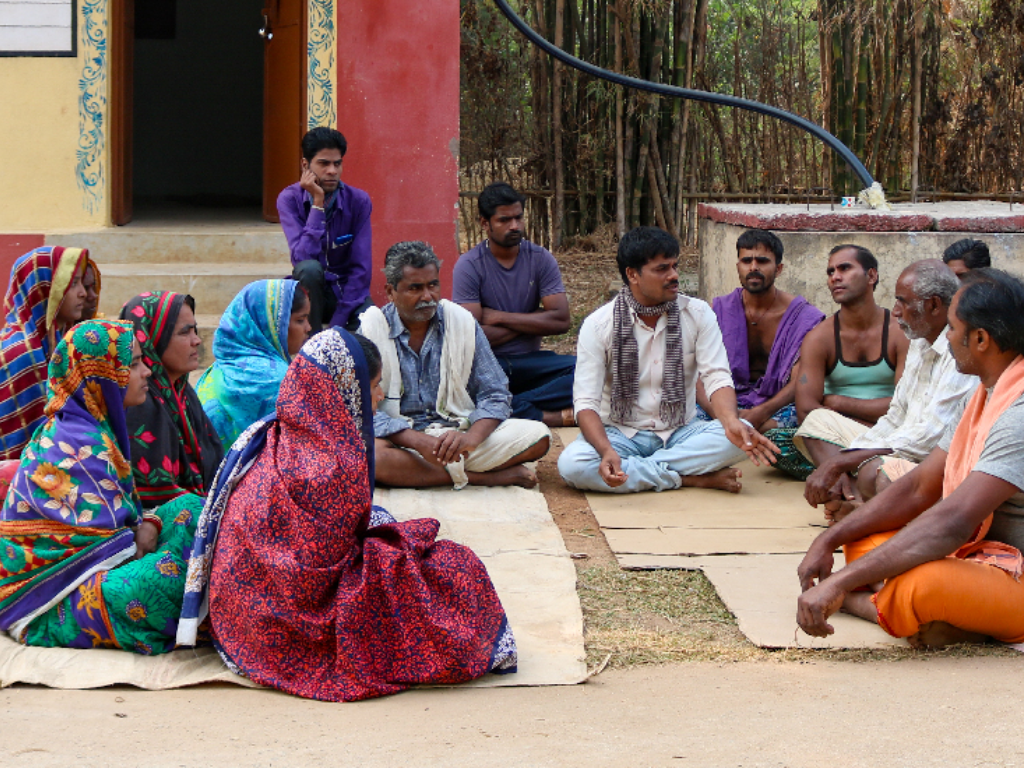
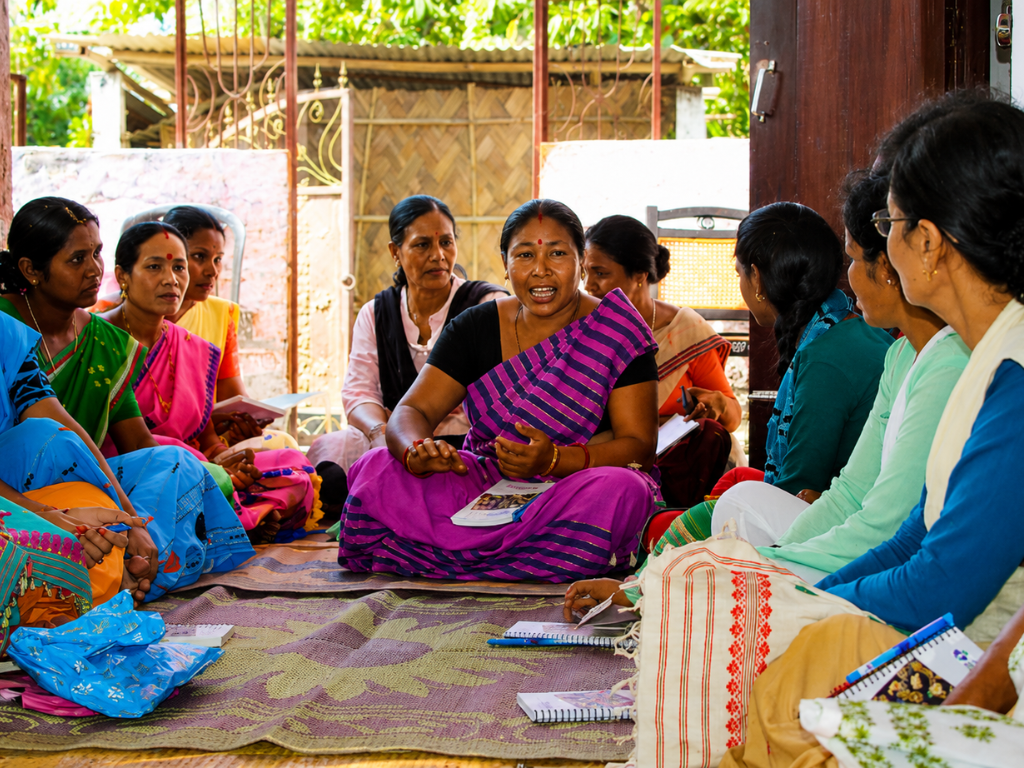
India's scale and diversity demand evaluation partners with demonstrated operational reach. Outline India's pan-India field network, covering 27 states and 4 union territories, enables us to execute multi-state evaluations with consistency and quality. We have conducted evaluations in remote tribal districts, urban slums, and other varied geographies, with research associates who understand local norms and can build rapport with marginalized communities.
For large-scale evaluations, we mobilize trained enumerator teams coordinated through a hub-and-spoke model with state supervisors and centralized project management, ensuring quality control and adherence to ethical protocols across geographically dispersed field sites.
Academic-Grade Methodological Rigor
Evaluation findings inform decisions about program scale, funding allocation, and policy. Outline India's research team includes economists, statisticians, and public policy specialists experienced in causal inference, survey methodology, and program evaluation frameworks. We design evaluations informed by internationally recognized standards, including OECD-DAC evaluation criteria and guidance from organizations such as NITI Aayog, 3ie, and J-PAL.
Sectoral and Contextual Expertise
Effective evaluation requires more than technical proficiency; it requires understanding of sector-specific challenges, program implementation realities, and the policy and institutional contexts in which programs operate. We understand the measurement challenges specific to each sector—learning assessments in education, anthropometric and clinical measures in health, income and asset tracking in livelihoods—and are familiar with government schemes and regulatory environments that inform sampling strategies and interpretation of findings.
Outline India also adheres to rigorous ethical standards in all evaluation work. We follow IRB protocols where required, employ informed consent procedures adapted to literacy and language, and protect respondent confidentiality through data anonymization and secure storage.
---
Request an Evaluation Proposal
Rigorous program evaluation provides the evidence foundation for learning, accountability, and strategic decision-making in India's development sector. Whether you are commissioning an impact assessment of a new initiative, conducting midline monitoring of a multi-year program, or seeking independent evaluation of a government scheme or CSR intervention, Outline India brings the methodological expertise, operational capacity, and sectoral knowledge required to deliver credible evidence at scale.




David Angel Makel
IT ConsultantIt is a long established fact that a reader will be distracted by the readable content page looking at its layout point of using normal