
In India's rapidly evolving development landscape, program officers, M&E leads, and research commissioners face increasing pressure to demonstrate impact, adapt interventions based on evidence, and meet stringent donor accountability standards. Whether designing a multi-state livelihoods intervention, scaling a health systems strengthening program, or assessing the outcomes of education technology pilots, the demand for methodologically rigorous monitoring, evaluation, and learning (MEL) services has never been greater.
Outline India, founded in 2012, has established itself as a MEL partner for foundations, bilateral donors, and government ministries across India's development sectors, spanning health, education, livelihoods, governance, and social protection across 27 states and 4 union territories. We employ randomized controlled trials, quasi-experimental designs, and mixed-methods approaches that meet international standards for evaluation rigor while remaining deeply contextualized to India's subnational realities.
Our MEL services are designed for organizations that require more than compliance reporting—those seeking strategic insights to refine theories of change, strengthen implementation pathways, and generate credible evidence for scaling or course correction.
Our MEL Approach: Evidence-Led, Context-Aware, Actionable
Our MEL approach is grounded in three pillars: theory-based evaluation that articulates causal pathways, mixed-methods architecture that captures both attribution and contribution, and real-time data systems that enable adaptive program management.
Theory of Change and Results Framework Design
Before any data collection begins, we work with program teams to articulate and test the underlying theory of change—mapping causal pathways from inputs through activities and outputs to outcomes and impact, identifying critical assumptions, and specifying indicators that capture both intended and unintended effects. Our results frameworks specify SMART indicators across process, outcome, and impact domains, aligned with OECD-DAC evaluation criteria of relevance, effectiveness, efficiency, impact, and sustainability.
Mixed-Methods Evaluation Architecture
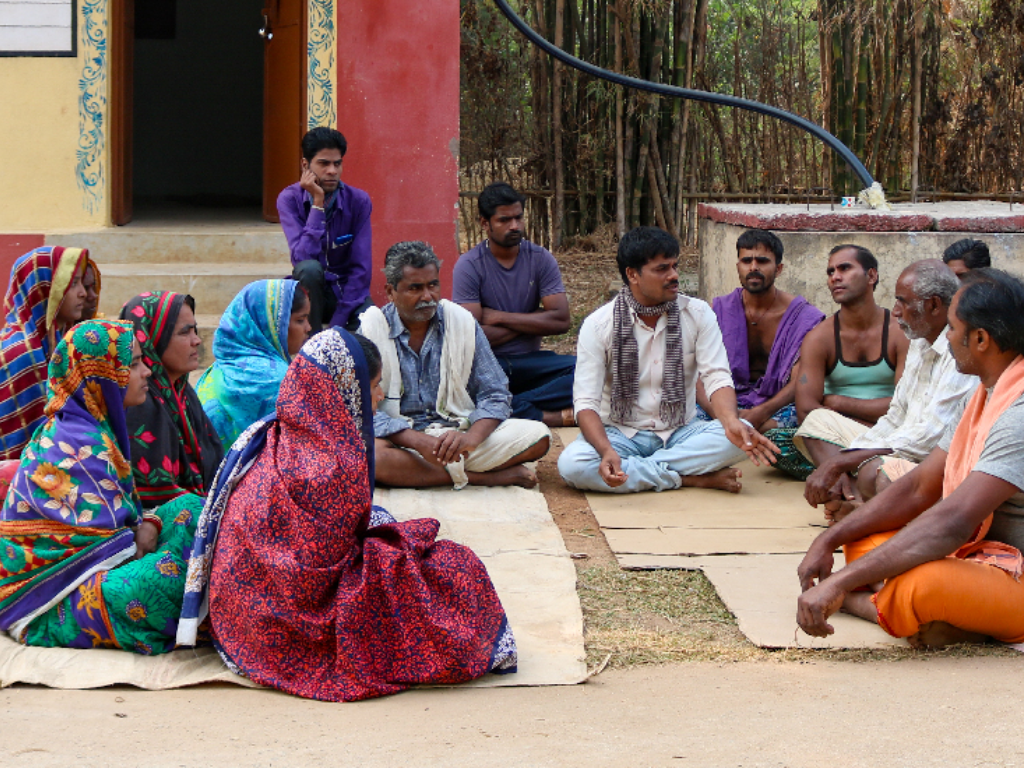
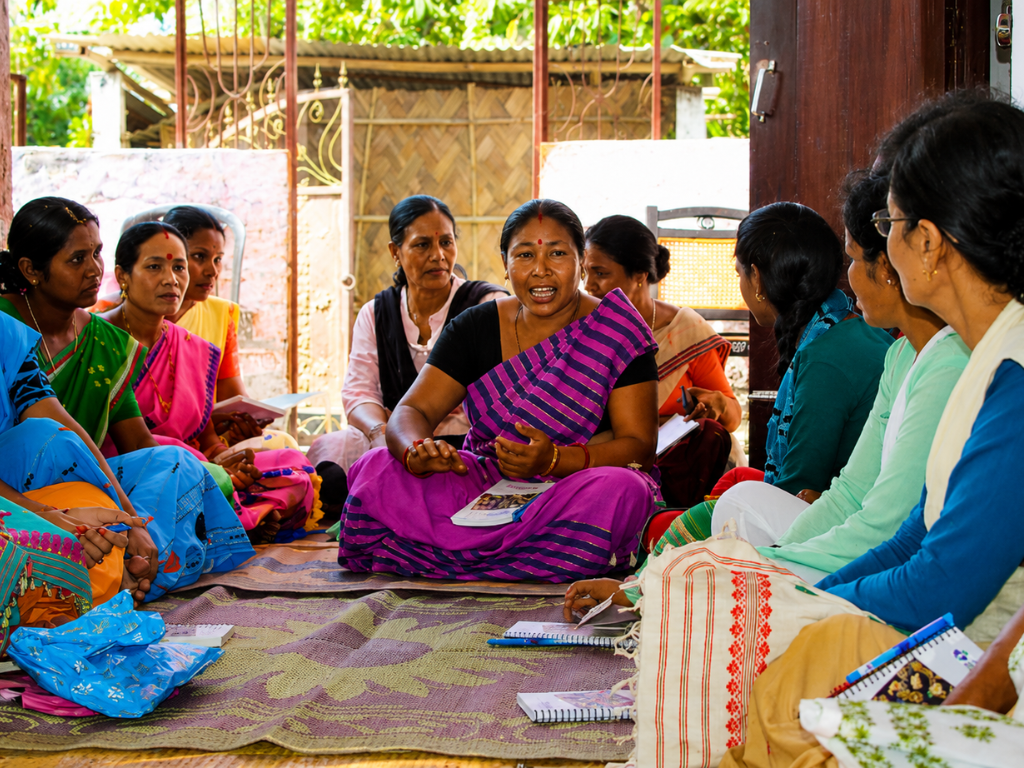
For impact assessments requiring causal inference, we employ randomized controlled trials (RCTs), difference-in-differences designs, regression discontinuity designs, and propensity score matching, selecting the approach best suited to program assignment mechanisms and evaluation timelines. Our sampling strategies enable disaggregated analysis by gender, caste, geography, and other equity dimensions. Complementing survey work, our qualitative research employs in-depth interviews, focus group discussions, participatory rural appraisal, and ethnographic observation to understand implementation processes and mechanisms of change. Our mixed-methods integration goes beyond parallel analysis to genuine triangulation, using qualitative findings to interpret quantitative results and administrative data to validate self-reported outcomes.
Real-Time Data Systems and Adaptive Learning
We design and implement digital data collection systems using platforms such as SurveyCTO and ODK that enable program managers to track implementation progress and make mid-course corrections. Beyond monitoring, we support learning agendas that structure iterative cycles of inquiry, reflection, and adaptation, establishing hypotheses about program mechanisms and designing rapid learning studies to test them.
Sectoral Expertise in India's Development Landscape
Our "health and nutrition" MEL portfolio spans maternal and child health interventions, nutrition-sensitive agriculture programs, and health systems strengthening, with baseline, midline, and endline evaluations measuring anthropometric outcomes and household dietary diversity, integrating biomarkers with survey data and facility assessments where appropriate.
In "education", our MEL work encompasses early childhood education, foundational literacy and numeracy interventions, education technology pilots, and vocational skilling, employing standardized learning assessments (ASER-style tools, curriculum-based tests) alongside classroom observation and teacher interviews. Vocational skilling evaluations address long follow-up periods and attribution complications through phone-based tracer studies and matched comparison groups.
Our "livelihoods and rural development" MEL practice encompasses agricultural extension programs, self-help group strengthening, and microfinance impact assessments, tracking household income and women's agency outcomes, employing agronomic measurement protocols alongside household economic surveys.
For "governance, gender, and social protection", we have conducted process evaluations of local governance strengthening programs and evaluated women's collective action programs using measurement approaches sensitive to social desirability bias, including list experiments and female enumerators for gender-based violence modules. Social protection evaluations require integration of administrative MIS data with independent verification surveys to assess targeting accuracy and leakage.
MEL Services We Provide
Baseline, Midline, and Endline Evaluations
Baseline evaluations establish the pre-program status of outcome indicators, verify targeting accuracy, and validate assumptions underlying the theory of change. Midline evaluations, conducted during implementation, assess early outcomes and enable course correction through quantitative panel surveys combined with qualitative research. Endline evaluations measure program impacts on primary and secondary outcomes, calculating intent-to-treat and treatment-on-treated effects and conducting heterogeneity analysis to identify for whom the program worked best.
Impact Assessments and Randomized Evaluations
We design randomized controlled trials and, where randomization is infeasible, quasi-experimental designs—difference-in-differences, regression discontinuity, and synthetic control methods. Our impact assessments are powered to detect policy-relevant effect sizes, pre-register analysis plans to prevent specification searching, and examine impact heterogeneity by gender, caste, and baseline wealth.
Process Evaluations and Implementation Research
Our process evaluations employ qualitative and quantitative methods to assess implementation fidelity, identify mechanisms of change, and surface contextual factors that enabled or hindered program success, specifying key implementation dimensions—reach and recruitment, dosage and adherence, quality of delivery. Implementation research goes beyond documenting what happened to understand why, employing mediation analysis and realist evaluation approaches.
Learning Agendas and Data Quality Assessments
Learning agendas structure systematic, iterative inquiry aligned with programmatic decision points, identifying priority learning questions and designing rapid learning cycles. We also conduct data quality assessments and MIS audits that compare administrative records against independent verification data, assessing accuracy, completeness, consistency, timeliness, and validity of program monitoring systems.
Methodological Rigor and Quality Assurance
Sampling and Field Protocols
Our sampling strategies balance statistical precision, operational feasibility, and budget constraints, typically employing multi-stage sampling for village-level interventions and stratified random sampling for beneficiary-level programs. Our field teams undergo structured training covering survey content, informed consent procedures, and tablet-based data collection, drawing on a trained enumerator network operating across 27 states and 4 union territories and multiple Indian languages.
Data Quality Checks and Ethical Standards
Quality assurance extends throughout fieldwork through multi-layered data validation, including back-checks—resurveys of a sample of respondents by independent enumerators—and audio audits reviewing enumerator adherence to protocols. Our MEL studies undergo ethical review through internal ethics committees, with informed consent processes adapted to participant literacy levels and cultural contexts, and data protection protocols addressing both digital and physical security in compliance with India's data localization requirements.
Track Record: Scale, Complexity, and Stakeholder Diversity
Outline India's MEL practice has served diverse commissioners—from foundations piloting innovative interventions to government ministries evaluating programs at scale.
"Foundations and philanthropies" engagements typically emphasize learning alongside accountability. "Bilateral and multilateral donors" commissioning evaluations require adherence to OECD-DAC evaluation criteria. "Government ministries and state departments" engagements involve evaluation of national programs and pilot interventions being considered for scaling, often supporting establishment of state evaluation cells. " Corporate CSR and social enterprises" engagements typically operate under tighter timelines, requiring pragmatic evaluation designs that balance rigor with operational feasibility.
Why Organizations Choose Outline India for MEL
Program officers and M&E leads choose Outline India based on three differentiators: our in-house research infrastructure enabling operational control and quality assurance, our contextual understanding of India's subnational variation and sectoral ecosystems, and our commitment to actionable insights that inform programmatic decisions rather than merely documenting outcomes.
In-House Research and Field Infrastructure
Unlike evaluation firms that outsource data collection to third-party field agencies, Outline India maintains permanent field teams and research infrastructure across India, with in-house field capacity providing direct quality oversight, institutional learning from repeated deployments, and flexibility to surge capacity for large or time-sensitive evaluations.
Contextualized Analysis and Localized Insights
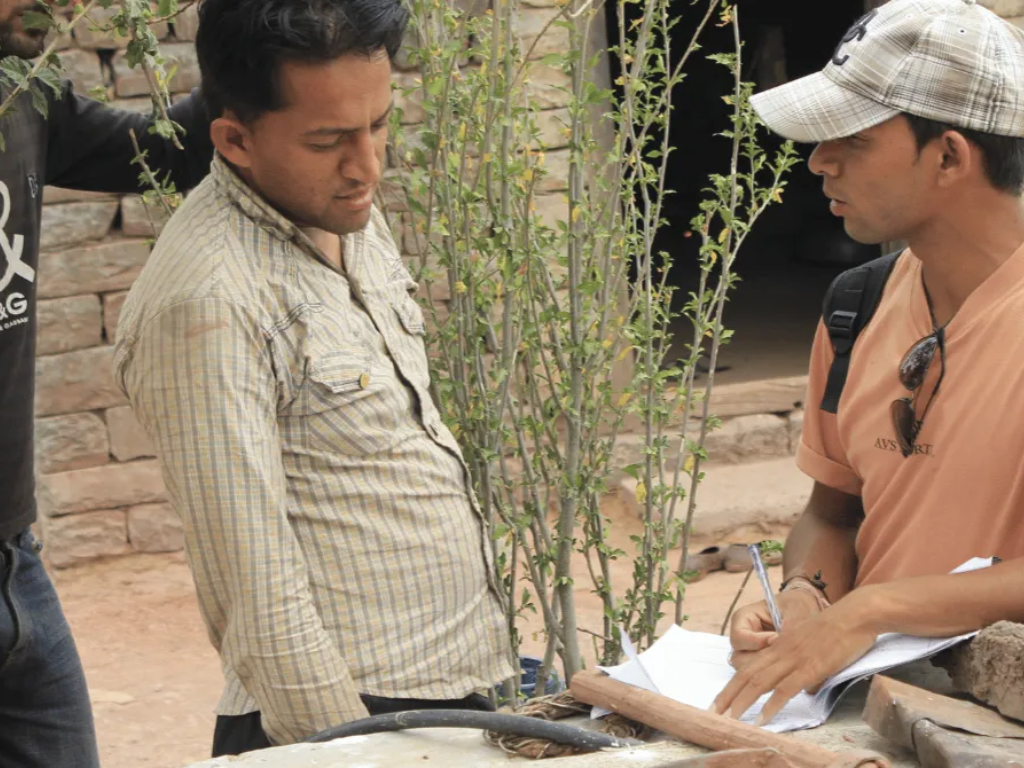
We emphasize localization throughout the research process—conducting surveys in respondents' preferred languages and recruiting enumerators from program geographies who understand local dialects and cultural norms. Analysis goes beyond documenting average effects to examining heterogeneity across India's diverse contexts, identifying where programs worked and for whom.
Actionable Recommendations and Dissemination Support
We emphasize actionable recommendations grounded in evaluation evidence—specific, feasible program refinements and design alternatives for testing in subsequent program phases. Our evaluation reports are structured for accessibility, supplemented by stakeholder workshops and, for broader dissemination, policy briefs and presentations tailored to different audiences.
---
Partner with Outline India for Evidence That Matters
Rigorous monitoring, evaluation, and learning is foundational to effective development programming—providing accountability to beneficiaries and funders, generating insights that inform program refinement, and contributing to cumulative evidence on intervention effectiveness. Whether you are designing a new program and need baseline establishment, seeking to assess the impact of ongoing interventions, or building learning systems that enable adaptive management, Outline India brings the methodological expertise, field infrastructure, and contextual knowledge to deliver credible evaluation evidence.




David Angel Makel
IT ConsultantIt is a long established fact that a reader will be distracted by the readable content page looking at its layout point of using normal