
When development programs require verifiable evidence of impact, methodologically sound field research becomes the foundation of credible evaluation. Outline India operates as a specialized field research agency serving foundations, multilateral donors, government agencies, and implementing organizations across India's diverse geographic and demographic landscape. With over 100,000 surveys conducted across more than 20 states, our primary data collection infrastructure supports baseline surveys, endline evaluations, real-time monitoring systems, and impact assessments that inform program design and policy decisions.
Organizations engaging Outline India for field research access an established infrastructure of trained enumerators, field coordinators with domain expertise across health, education, livelihoods, and governance programs, and data management systems designed for the transparency requirements of institutional donors.
Field Research Capabilities and Methodology
1. Primary Data Collection Methods: CAPI, CATI, PAPI
Outline India deploys Computer-Assisted Personal Interviewing (CAPI), Computer-Assisted Telephone Interviewing (CATI), and Paper-and-Pencil Interviewing (PAPI) methodologies selected according to project requirements, respondent characteristics, and field conditions. Our CAPI infrastructure utilizes Android-based mobile data collection on platforms including SurveyCTO and CommCare, enabling real-time data transmission, automated skip logic, and geographic validation through GPS coordinates captured at the point of interview.
CAPI surveys constitute approximately 75% of our field research engagements, selected for their capacity to reduce transcription errors, enable complex survey routing, and incorporate multimedia consent protocols in low-literacy contexts. CATI methodologies serve projects where telephone coverage aligns with target populations, including urban beneficiary verification and high-frequency monitoring panels. PAPI remains deployed in contexts where digital literacy concerns, network connectivity limitations, or community preferences favor traditional enumeration methods.
2. Survey Design and Sampling Frameworks
Our sampling approaches include stratified random sampling—where populations are divided into strata by relevant characteristics before random selection—and two-stage cluster sampling common in household surveys, where primary sampling units are randomly selected, followed by systematic household selection within chosen clusters. For large-scale surveys exceeding 5,000 respondents, probability-proportional-to-size sampling ensures that selection probabilities reflect population distributions across administrative units.
Survey instrument design incorporates cognitive testing with representative respondents, refining question wording, response categories, and interview flow before field deployment. Questionnaires undergo review for alignment with validated measurement tools in health (anthropometric protocols following WHO guidelines), education (assessment instruments like ASER), and economic wellbeing (consumption modules adapted from National Sample Survey methodologies).
3. Quality Assurance Protocols and Back-Checks
Data quality assurance at Outline India operates through multi-layered verification processes beginning with enumerator training and extending through back-checks conducted on 10-15% of completed interviews. Daily data review protocols flag surveys with suspicious patterns—unusually short interview durations, identical response sets, GPS coordinates indicating interviews conducted outside assigned clusters—triggering immediate field coordinator investigation.
Back-checks involve independent re-interviews of randomly selected respondents, verifying key survey responses and confirming that interviews occurred as reported. Discrepancy rates above 5% on factual questions prompt enumerator retraining or replacement. For CAPI surveys, audio audits record interview segments (with respondent consent), enabling quality reviewers to assess question reading accuracy and informed consent protocol adherence.
4. Multi-Lingual Enumeration Capacity
India's linguistic diversity presents fundamental field research challenges: conducting surveys across states may require questionnaire translation into a dozen languages, identifying enumerators fluent in regional dialects, and ensuring semantic equivalence of complex concepts across linguistic contexts. Outline India maintains enumeration capacity across 15+ Indian languages including Hindi, Bengali, Tamil, Telugu, Marathi, Gujarati, Kannada, Malayalam, Odia, Punjabi, and Assamese, with additional dialect-specific expertise for tribal languages in central and northeastern states.
Translation protocols involve forward translation by native speakers with subject matter expertise, back-translation to source language for equivalence verification, and harmonization workshops resolving discrepancies. Enumerators are recruited from communities where surveys are conducted, providing linguistic fluency and cultural familiarity that facilitate trust-building with respondents.
Geographic Coverage and Field Infrastructure
1. Pan-India Reach: States and Districts Covered
Outline India's field research infrastructure spans over 20 Indian states with demonstrated project delivery across more than 200 districts. Our operational presence includes major program states—Uttar Pradesh, Bihar, Madhya Pradesh, Rajasthan, Maharashtra, West Bengal, and Karnataka—where development programming concentrates, alongside northeastern states, union territories, and smaller states where specialized field research capacity remains limited.
2. Urban, Rural, and Hard-to-Reach Populations
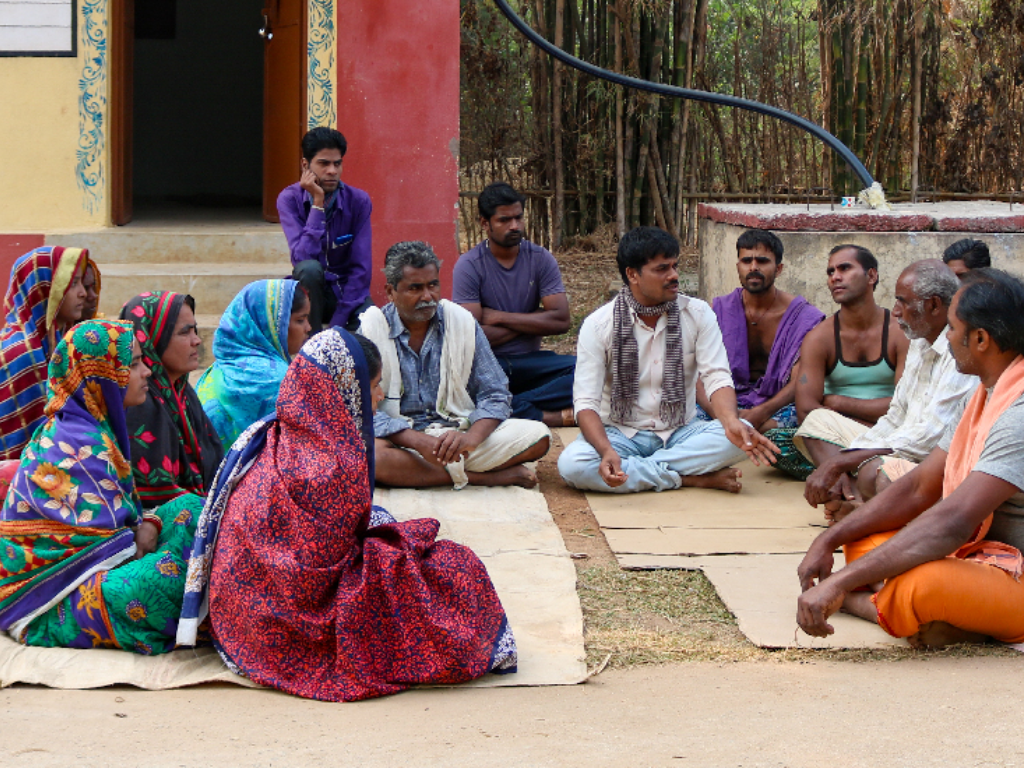
Rural fieldwork constitutes approximately 60% of our survey portfolio, reflecting development program concentration in rural districts. Our rural enumeration protocols account for seasonal migration patterns affecting respondent availability, agricultural calendars determining appropriate survey timing, and community entry procedures involving gram panchayat engagement and local leader sensitization before household-level data collection begins.
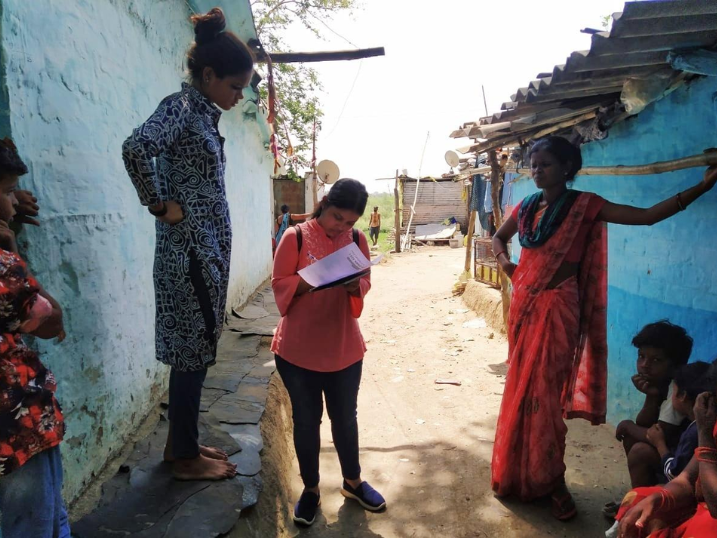
Specialized field research capacity emerges most clearly in projects targeting hard-to-reach populations: tribal communities in Scheduled Areas, pastoralist groups, urban homeless populations, and residents of conflict-affected regions. Outline India has conducted surveys in Naxalite-affected districts of Chhattisgarh and Jharkhand, requiring security protocols and community liaison arrangements distinct from standard rural fieldwork. These projects demonstrate field research infrastructure extending beyond standard household survey capacity—organizational capability to navigate regulatory approvals for research in protected areas, cultural competency to engage marginalized communities respectfully, and operational flexibility to adapt timelines and methods when field realities diverge from initial project plans.
Field Research for Development Programs
1. Baseline and Endline Surveys
Baseline surveys establish pre-intervention measurements against which program impacts are assessed, requiring sampling frames that identify treatment and comparison populations, instrument design capturing outcomes the intervention aims to influence, and documentation enabling endline teams to trace respondents months or years later. Our endline projects have achieved follow-up rates exceeding 85% in multi-year evaluations, supported by systematic tracking protocols: updating respondent phone numbers through community contacts, locating households that have migrated using village informants, and conducting multiple visit attempts before coding respondents as lost to follow-up.
2. Household Surveys, Beneficiary Verification, and Real-Time Monitoring
Household surveys constitute the primary data collection method for development program evaluations, capturing individual and household-level outcomes including health status, educational attainment, employment patterns, consumption expenditure, and program awareness, with sample sizes ranging from 2,000 households for district-level assessments to 15,000+ households for state-representative evaluations.
Development programs increasingly require verification that intended beneficiaries actually receive services, subsidies, or transfers—detection of inclusion errors, exclusion errors, and implementation leakages. Verification surveys often employ rapid assessment methodologies with shorter instruments, larger sample sizes, and accelerated timelines compared to comprehensive impact evaluations. A recent verification exercise covering 8,000 households across 12 districts was completed within six weeks, providing program managers with evidence of targeting accuracy while implementation could still be adjusted.
Real-time monitoring systems represent field research infrastructure operating continuously rather than in discrete baseline-endline waves, tracking program implementation through high-frequency data collection—monthly or quarterly surveys with beneficiary panels, facility checklists completed by field observers, and grievance documentation from community feedback mechanisms.
3. Sector Experience and Domain Expertise
Health sector field research at Outline India has encompassed maternal and child health surveys measuring antenatal care coverage, institutional delivery rates, and immunization completion; nutrition program evaluations assessing anthropometric outcomes; and health systems assessments documenting facility readiness. Our enumerators receive specialized training in anthropometric measurement following WHO standardized protocols.
Education sector field research includes learning assessments directly testing children's foundational literacy and numeracy, school facility surveys, and household surveys measuring enrollment and attendance—using tools adapted from ASER methodology. Livelihoods program evaluations track employment status, income sources, skills training participation, and entrepreneurship indicators.
WASH field research involves household surveys measuring water source usage, sanitation facility access, and hygiene behaviors, alongside observational protocols verifying reported facilities and infrastructure functionality, including large-scale assessments of Swachh Bharat Mission implementation. Financial inclusion research tracks account ownership, credit access, and digital payment adoption, while agriculture sector field research covers crop production patterns, input usage, and market access—including crop-cutting experiments for yield verification.
Data Quality and Ethical Standards
1. Enumerator Training and Certification
Every Outline India field research project begins with enumerator training typically spanning 5-7 days, covering survey content, interview techniques, mobile data collection platform operation, and field protocols specific to project requirements. Standardization exercises during training establish measurement consistency: enumerators independently code identical scenario responses, with discrepancies discussed until teams demonstrate reliable interpretation of survey questions and response categories.
Our training curriculum incorporates modules on research ethics, informed consent procedures, respondent confidentiality, and appropriate responses to sensitive disclosures, teaching enumerators to recognize when interviews should be terminated due to respondent distress and how to maintain professional boundaries while building rapport.
2. Informed Consent, Data Protection, and IRB Approval
Informed consent protocols at Outline India align with international research ethics standards, ensuring respondents understand survey purposes, how data will be used, who will access it, and their right to refuse participation without consequence. Consent scripts are translated into local languages and tested for comprehension with respondents of varying literacy levels.
Personally identifiable information is separated from survey responses during data processing, with encrypted linkage files stored separately from de-identified analytical datasets. Our servers are India-based, ensuring data localization compliance with regulatory requirements for sensitive population information.
Research projects funded by international donors or academic institutions typically require ethics approval from Institutional Review Boards (IRBs) before field implementation. Outline India supports IRB submission processes, providing study protocols, consent scripts, questionnaires, and data management plans for ethics review, and conducts internal ethical review for projects not subject to external IRB oversight.
3. Technology and Data Management
Outline India's CAPI infrastructure operates primarily on SurveyCTO and CommCare platforms, selected for their offline functionality enabling data collection without continuous network connectivity, GPS integration validating survey locations, and multimedia capacity supporting photo documentation and audio consent recording. Survey programming incorporates validation rules preventing impossible entries, skip logic ensuring respondents answer only relevant questions, and randomization features supporting experimental evaluations.
Data collected through mobile platforms transmits to secure servers as devices connect to internet, enabling near real-time analysis of field progress and data quality indicators through project-specific dashboards visualizing daily survey completion by enumerator, geographic coverage maps, and data quality metrics flagging surveys requiring review. All data is stored on India-based servers employing encryption for data in transit and at rest, role-based access controls, and regular security audits.
Why Organizations Choose Outline India for Field Research
1. Demonstrated Scale and Speed
Outline India's field research infrastructure has delivered over 100,000 surveys annually at peak capacity, demonstrating operational capability to mobilize large enumerator teams, coordinate complex multi-state logistics, and maintain quality standards at scale. Average project turnaround from fieldwork completion to cleaned data delivery is three weeks for surveys under 5,000 respondents, four to five weeks for larger evaluations requiring extensive data validation.
Repeat engagement rates provide market validation of quality: approximately 65% of Outline India's field research clients have commissioned multiple projects, and several institutional donors have maintained research partnerships spanning five or more years.
2. Methodological Transparency
Development sector research demands transparency into methodologies determining data reliability. Outline India provides clients with comprehensive documentation including sampling frame descriptions, randomization protocols for experimental evaluations, survey instruments in all languages deployed, enumerator training materials, field protocols, quality assurance procedures, and data processing logs. This transparency enables evaluation partners to assess methodology appropriateness for research questions, identify potential bias sources, and interpret findings with full understanding of data limitations.
3. Development Sector Specialization
Unlike commercial market research firms, Outline India specializes exclusively in development sector research serving social programs, government schemes, and international development initiatives. This specialization translates into enumerator training curriculum covering sensitive topics common in development surveys—nutrition security, open defecation, menstrual hygiene, caste-based discrimination—with protocols for respectful questioning on subjects where respondents may feel stigma or judgment. Our field teams understand community engagement practices appropriate when research involves vulnerable populations, government program beneficiaries, or communities with previous negative research experiences.
---
Partner With Outline India for Your Field Research Requirements
Organizations commissioning field research in India require partners combining methodological rigor, operational scale, and development sector expertise—capabilities ensuring that primary data collection produces credible evidence suitable for impact evaluation, program learning, and policy influence.
We invite program officers, monitoring and evaluation leads, and research commissioners to discuss upcoming field research needs with our team. Initial consultations explore research questions, target populations, geographic scope, and methodology considerations, resulting in detailed proposals outlining sampling approaches, questionnaire design, quality assurance protocols, timelines, and budget estimates.
"[Discuss your field research requirements with our team]"
(through our project brief intake process).




David Angel Makel
IT ConsultantIt is a long established fact that a reader will be distracted by the readable content page looking at its layout point of using normal