
When development programs demand rigorous evidence at scale, the quality of primary data collection determines the credibility of evaluation findings. Computer-Assisted Personal Interviewing (CAPI) has become the methodological standard for large-scale household surveys, monitoring and evaluation exercises, and impact assessments across the development sector. Outline India, founded in 2012, operates CAPI survey infrastructure across 27 states and 4 union territories, deploying trained field researchers to collect data from vulnerable and hard-to-reach populations with protocols that meet international standards for data quality, ethical safeguarding, and methodological rigor.
Our CAPI survey services support program officers, M&E specialists, and research commissioners at multilateral donors, foundations, and government agencies who require analysis-ready data from complex field environments.
What is CAPI and Why It Matters for Development Research
Computer-Assisted Personal Interviewing Explained
Computer-Assisted Personal Interviewing is a data collection methodology in which trained enumerators administer structured questionnaires using digital devices—typically tablets or smartphones—rather than paper forms. During face-to-face interviews, enumerators record responses directly into survey software that incorporates programmed skip logic, validation rules, and multi-media capabilities, transforming data collection from a two-stage process (field enumeration followed by data entry) into a single, integrated operation.
The CAPI approach fundamentally differs from paper-and-pencil interviewing (PAPI) in its capacity for automated quality control. Validation rules can prevent impossible values, flag inconsistencies immediately, and ensure appropriate question routing based on earlier responses. GPS coordinates, timestamps, and audio recordings can be captured automatically, creating an audit trail that supports data verification.
Advantages Over Paper-Based Data Collection
Survey methodology research generally documents error reduction when transitioning from paper to CAPI methodologies—fewer data entry errors, near elimination of skip logic failures, and decreases in item non-response when appropriate validation prompts are implemented. CAPI also enables methodological features difficult to implement with paper instruments: randomization of question order can be programmed at the respondent level, and multi-media elements expand the range of constructs that can be measured reliably.
Real-time data transmission allows research teams to monitor fieldwork progress and implement corrections while teams remain in the field. Digital data storage reduces the logistical burden of archiving paper questionnaires, while encryption capabilities address data security requirements that paper records cannot meet.
When CAPI is Appropriate for Your Research Design
CAPI methodology suits structured surveys with predetermined questionnaires administered to samples large enough that manual data entry would be resource-intensive—impact assessments, baseline and endline surveys, household consumption surveys, and facility assessments. Very small sample sizes may not justify CAPI programming costs, and highly exploratory qualitative research remains better suited to other documentation methods. Our research design consultation process examines these trade-offs against your evaluation's specific requirements, sample size, timeline, and budget.
Outline India's CAPI Survey Capabilities
Field Infrastructure Across India
Outline India maintains a network of trained field researchers capable of deploying across India's diverse linguistic and geographic contexts, with enumerator pools in urban, rural, and remote settings. Our field researchers administer surveys in 12+ languages, including Hindi, English, Tamil, Telugu, Kannada, Bengali, Marathi, Gujarati, Odia, and tribal languages, with questionnaire translation protocols that include back-translation verification and cognitive interviewing in target languages.
The geographic scope of our field infrastructure supports research designs requiring representation across diverse contexts—from urban slums in metropolitan areas to tribal villages in remote forest regions—enabled by established relationships with local authorities and community organizations.
Technology Stack and Survey Platforms
Our CAPI implementation employs industry-standard survey platforms including SurveyCTO, ODK (Open Data Kit), and CommCare, selected based on each project's specific technical requirements and offline functionality needs. All survey programming incorporates validation rules, skip logic, and data quality checks specified during questionnaire design.
Data transmission protocols employ encryption for data storage, access, and retention. For fieldwork in low-connectivity environments, survey platforms function offline with data synchronization when internet access becomes available. Real-time data dashboards provide research managers with monitoring capabilities, displaying sample progress and data quality indicators.
Quality Assurance Protocols
Data quality assurance begins before fieldwork commences and continues through data delivery. Our protocols draw on standards established by survey programs such as the Demographic and Health Surveys (DHS) and are adapted to development research contexts. During active fieldwork, multi-layered supervision protocols verify data quality: field supervisors conduct direct observation of interviews, review completed questionnaires daily, and implement back-checks with a random sample of respondents (typically 5-10% of completed interviews).
High-frequency checks—automated scripts that run against incoming data—flag outliers and logical inconsistencies for supervisor review while field teams remain deployed, enabling real-time correction of enumeration errors and replacement of underperforming enumerators before sample completion.
CAPI for Vulnerable and Hard-to-Reach Populations
Ethical Data Collection Protocols
Research with vulnerable populations demands ethical protocols that protect participants from harm while respecting autonomy and dignity. Our informed consent process employs modules programmed into CAPI instruments that ensure standardized delivery of consent information while accommodating varied literacy levels. Consent documentation captures electronic signatures or witnessed verbal consent, with refusal rights clearly communicated. For research involving minors, parental consent and age-appropriate assent protocols follow ethical requirements.
Data protection protocols extend beyond encryption to encompass access controls, retention policies, and anonymization procedures. Personally identifiable information is separated from survey responses, with access restricted to authorized personnel.
Fieldwork in Challenging Geographies
India's geographic and infrastructural diversity presents operational challenges for household surveys. Rural areas with limited road access, urban slums with informal settlement patterns, and tribal regions requiring special entry permissions all demand adapted fieldwork protocols. Our enumerator networks include individuals with established presence in challenging geographies, whose community relationships facilitate access.
In low-connectivity areas, CAPI platforms function offline with periodic synchronization when internet access becomes available. Power management protocols, including solar charging systems, sustain device operation during multi-day field deployments.
CAPI Survey Applications in Development Programs
Baseline and Endline Surveys for RCTs
Randomized controlled trials require baseline data collection before intervention implementation and endline surveys following program completion. CAPI methodology supports several features critical to experimental evaluations: unique respondent identifiers enable precise matching between survey rounds, supporting difference-in-differences estimation and panel analysis, while GPS verification confirms that sampled households align with randomization assignments, preventing spillover contamination across treatment arms.
Real-time enumeration monitoring allows research teams to track sample balance across treatment and control groups during baseline data collection. Endline surveys benefit from digital baseline records that inform tracking protocols for mobile populations, reducing attrition that threatens experimental validity.
Monitoring & Evaluation Data Collection
Ongoing program monitoring requires data collection systems that provide timely information to program managers while maintaining quality standards for evaluation. CAPI infrastructure enables more frequent data collection cycles than paper-based alternatives, with real-time dashboards displaying key indicators supporting adaptive management. For government schemes and service delivery programs, monitoring surveys verify beneficiary targeting and document implementation fidelity across geographic areas.
Impact Assessment and Longitudinal Studies
Impact assessments requiring attribution of outcomes to program interventions benefit from CAPI capabilities for longitudinal data collection. Panel surveys that interview the same respondents across multiple rounds demand tracking systems that locate mobile populations and maintain questionnaire consistency to enable valid temporal comparisons. Data delivery includes panel datasets with appropriate structure for longitudinal analysis, along with attrition analysis and re-weighting recommendations when sample retention falls below design specifications.
From Survey Design to Analysis-Ready Data
Questionnaire Programming and Pretesting
Survey instrument development proceeds through iterative stages. Following initial questionnaire drafting, our survey design team reviews proposed questions for clarity and logical flow. Cognitive interviewing with small samples from target populations tests question comprehension and assesses interview duration, generating questionnaire refinements before pilot deployment.
Pilot surveys in field conditions—typically 50-100 interviews with trained enumerators—surface implementation issues absent in cognitive testing. Analysis of pilot data examines response distributions and validation rule performance, informing final questionnaire revisions before full-scale fieldwork.
Enumerator Training and Certification
Standardized enumerator training ensures consistent survey administration across field teams and geographies, combining classroom instruction, mock interviews, and supervised field practice. Certification requirements verify enumerator competence before field deployment through practice interviews evaluated against standardized rubrics.
Data Cleaning and Validation Pipelines
Analysis-ready data requires systematic cleaning beyond real-time field checks. Our data validation pipelines implement statistical procedures that detect outliers, verify logical consistency, and flag irregularities requiring investigation. Enumerator-level quality analysis identifies systematic problems with individual interviewers, examining interview duration distributions and item non-response rates.
Data delivery includes clean datasets in specified formats (Stata, SPSS, CSV), comprehensive codebooks documenting variable construction, and documentation of cleaning procedures and decisions.
Why Development Agencies Choose Outline India for CAPI Surveys
Leading development organizations require field research partners who combine technical capability with institutional credibility. Our contribution to evaluations that inform policy decisions demonstrates capacity for research meeting academic standards, not merely operational data collection.
The scale of our survey infrastructure enables research designs requiring large samples across diverse geographies, with quality assurance systems designed to maintain data quality across simultaneous enumerators through supervision ratios and automated quality checks.
Our research team includes social scientists who engage with evaluation design questions and can advise on measurement strategies and sampling approaches that strengthen inference—meaning you work with research partners who understand your evidence needs, not merely field logistics contractors executing specifications.
---
Discuss CAPI Survey Requirements for Your Evaluation
Rigorous impact assessment and monitoring depends on primary data that meets your evidentiary standards. Our research team consults with program officers, M&E specialists, and research commissioners to design CAPI surveys aligned with evaluation requirements, field realities, and budget parameters.
Why Field Data Collection Matters
Primary data collection forms the backbone of development research. Unlike secondary data, primary data is gathered directly from individuals, households, institutions, or communities through structured research methods.
Reliable field data helps organizations:
What Does a Field Data Collection Company Do?
A field data collection company manages the complete research process—from planning surveys to delivering analysis-ready datasets.
This includes:
The goal is simple: collect accurate, unbiased, and actionable data that organizations can trust.
Modern Technology is Transforming Field Research
Today's field research is no longer limited to paper questionnaires.
Leading research organizations now use digital technologies such as:
Computer-Assisted Personal Interviewing (CAPI)
Enumerators use tablets or smartphones to record responses directly during face-to-face interviews.
Computer-Assisted Telephone Interviewing (CATI)
Telephone surveys allow researchers to reach respondents remotely while maintaining quality standards.
GPS Verification
Location tracking confirms interviews were conducted at the correct survey locations.
Real-Time Dashboards
Project managers can monitor survey progress, interviewer performance, and data quality as fieldwork happens.
These digital tools improve efficiency, reduce human errors, and significantly shorten project timelines.
Conducting Research Across India's Diverse Communities
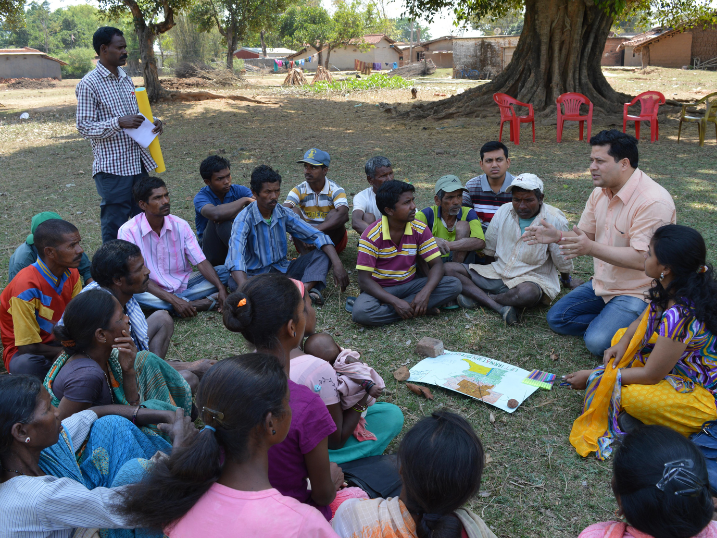
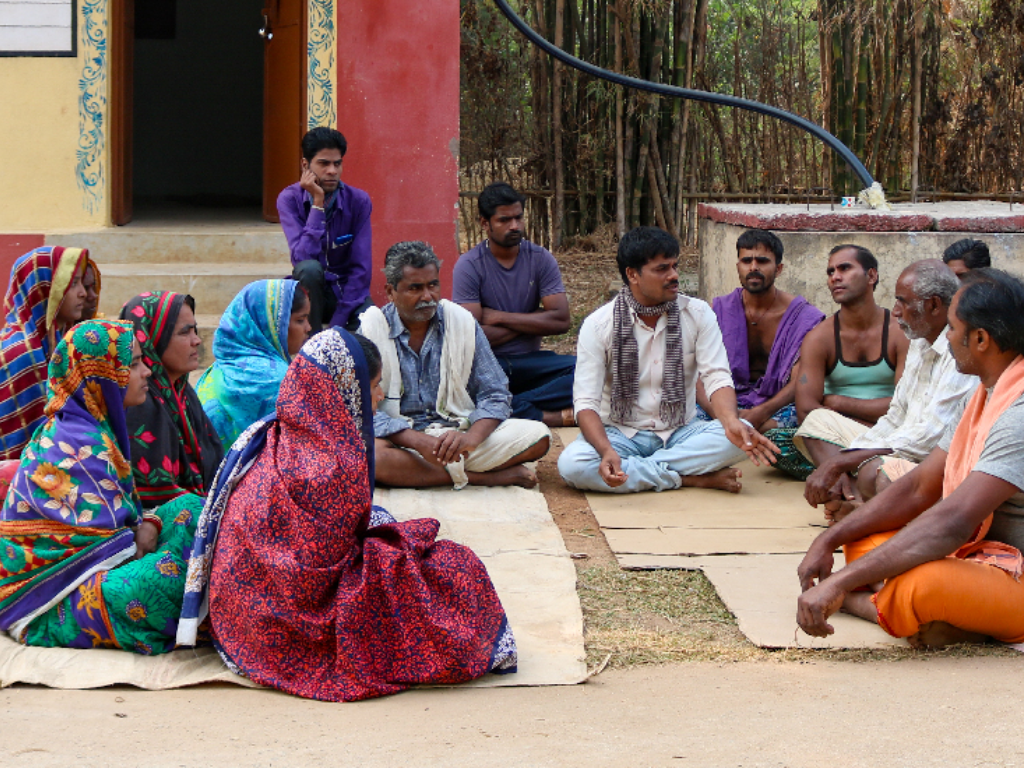
India's social and geographic diversity presents unique challenges for field research.
Researchers often work in:
Successful fieldwork requires more than technology. It demands local language expertise, cultural sensitivity, and strong community engagement.
Experienced field teams understand regional customs, build trust with respondents, and ensure ethical data collection practices throughout the research process.
Quality Assurance: The Foundation of Reliable Research
Collecting data is only one part of the process. Ensuring its accuracy is equally important.
Professional field research organizations implement multiple quality assurance measures, including:
These systems help detect inconsistencies early and ensure that datasets are ready for meaningful analysis.
Ethical Research Comes First
Research involving communities requires respect, transparency, and responsibility.
Every field study should prioritize:
Where Field Data Collection Makes an Impact
Field data collection supports a wide range of development sectors, including:
Public Health
Monitoring maternal and child health, nutrition programs, disease surveillance, and healthcare access.
Education
Learning assessments, school infrastructure studies, teacher evaluations, and digital education research.
Agriculture
Farmer surveys, crop assessments, livelihood studies, and rural development programs.
Livelihoods
Employment studies, financial inclusion, skill development, and entrepreneurship research.
Government Programs
Baseline surveys, beneficiary verification, monitoring, and large-scale impact evaluations.
Why Organizations Choose Professional Field Research Partners
Development agencies, NGOs, government departments, CSR teams, and international donors need research partners that combine scale with scientific rigor.
An experienced field data collection partner offers:
These capabilities enable organizations to generate evidence that supports better policies, stronger programs, and sustainable development outcomes.
The Future of Field Data Collection
The future of development research lies in combining human expertise with digital innovation.
As technologies like mobile data collection, geospatial mapping, AI-assisted quality checks, and real-time analytics continue to evolve, field research is becoming faster, smarter, and more reliable than ever before.
Organizations that invest in high-quality primary data are better positioned to understand communities, improve interventions, and create measurable social impact.
Final Thoughts
Reliable evidence begins in the field.
Behind every successful development project is a team of trained researchers, enumerators, supervisors, and analysts working together to collect accurate, ethical, and actionable data.
As India's development landscape continues to evolve, professional field data collection remains one of the most valuable investments organizations can make to ensure informed decision-making and lasting social change.





David Angel Makel
IT ConsultantIt is a long established fact that a reader will be distracted by the readable content page looking at its layout point of using normal