
Rigorous development research depends on methodologically sound primary data collection—yet delivering field surveys at scale across India's diverse geographies, languages, and implementation contexts remains a persistent challenge for program teams. Outline India, founded in 2012, has built field infrastructure and quality assurance protocols specifically designed to meet the evidence requirements of bilateral donors, foundations, government agencies, and international NGOs implementing development programs across India.
We conduct primary data collection across 27 states and 4 union territories, deploying computer-assisted personal interviewing (CAPI), computer-assisted telephone interviewing (CATI), and qualitative methods for baseline surveys, endline surveys, and impact assessments spanning health, education, livelihoods, WASH, and climate adaptation sectors. Our field capabilities are structured to deliver both the statistical rigor demanded by academic standards and the operational speed required by program cycles, with data quality assurance protocols that meet donor due diligence requirements.
Primary Data Collection Methods and Scale
Computer-Assisted Personal Interviewing (CAPI)
Our quantitative fieldwork is anchored in CAPI methodology using Survey Solutions, SurveyCTO, and ODK platforms, with custom questionnaire programming that embeds skip logic, validation rules, and real-time error flagging. Enumerators work on Android tablets equipped with offline survey functionality, enabling data collection in low-connectivity geographies while capturing GPS coordinates, time stamps, and audio recordings for quality assurance.
Device management protocols include centralized app deployment, daily data synchronization to secure cloud servers, and remote lock/wipe capabilities to protect respondent confidentiality. Field supervisors monitor daily upload rates and survey duration metadata through real-time dashboards, flagging outlier patterns for immediate review. Our survey instruments span multi-module questionnaires administered in 15+ regional languages.
Computer-Assisted Telephone Interviewing (CATI)
For geographically dispersed samples or time-sensitive data collection, our CATI facility operates with call recording, automated dialing, and supervisor monitoring dashboards. Telephone surveys are particularly effective for follow-up waves in panel designs, rapid needs assessments during emergencies, and reaching mobile populations where in-person enumeration is cost-prohibitive.
CATI protocols include stratified callback scheduling, respondent verification scripts, and call outcome tracking (completed, refusal, non-contact) to calculate response rates. Audio recordings are systematically reviewed for quality control, and encrypted voice files are archived per data protection requirements specified by institutional review boards and donor policies.
Qualitative Data Collection: KIIs, FGDs, and Case Studies
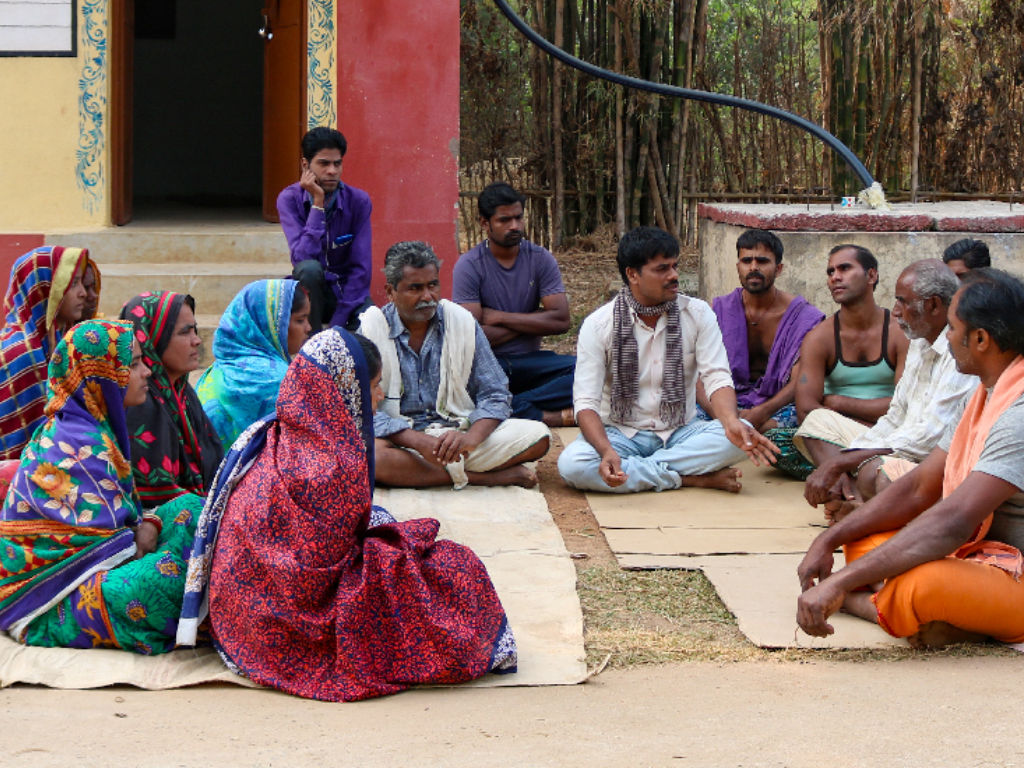
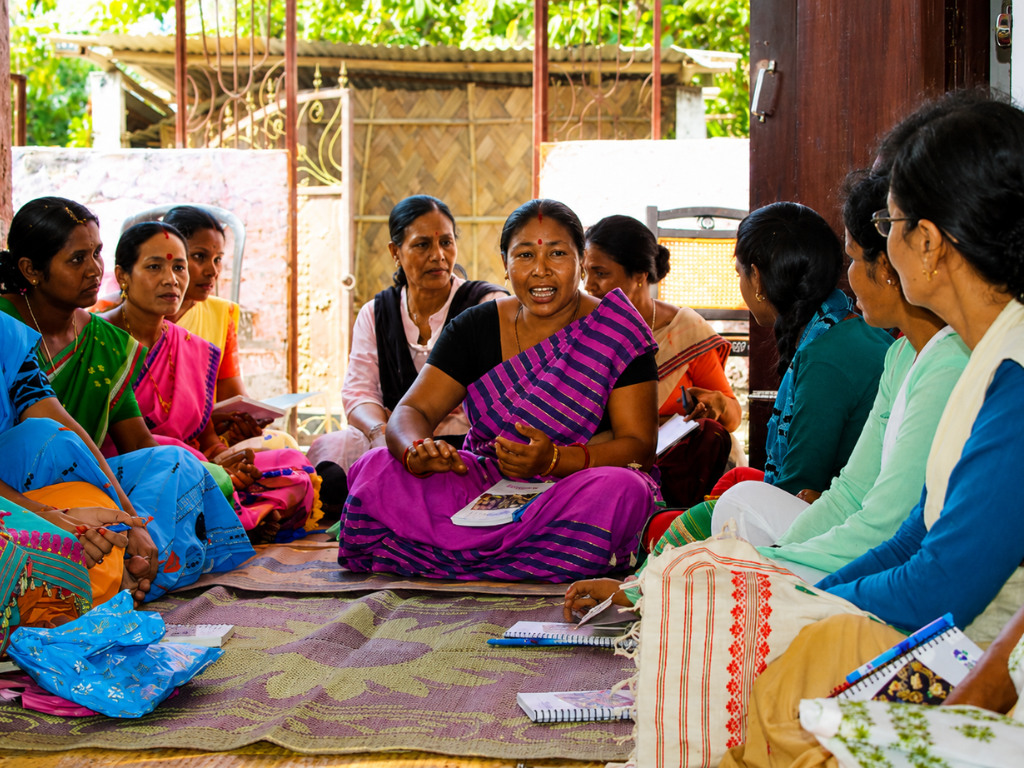
Qualitative data collection complements survey findings with contextual depth, capturing implementation barriers, beneficiary narratives, and system-level dynamics. Our qualitative methods include key informant interviews (KIIs) with program implementers and community leaders; focus group discussions (FGDs) designed to explore social norms and collective experiences; and case studies documenting household trajectories over program duration.
Qualitative teams undergo specialized training in informed consent procedures, probing techniques, and ethical protocols for sensitive topics. FGD moderators are recruited to match participant demographics where culturally appropriate, and discussions are conducted in local languages with professional transcription and translation workflows.
Mixed-Methods Field Design
Development evaluations increasingly require integrated data collection strategies where qualitative inquiry informs quantitative instrument design, or survey findings guide purposive sampling for case studies. We structure mixed-methods fieldwork with sequenced data collection phases, joint analysis workshops, and synthesis protocols that triangulate findings across methods.
Geographic Coverage and Field Infrastructure
Pan-India Field Network
Outline India maintains field partnerships and enumerator networks across India's major states, including Uttar Pradesh, Bihar, Madhya Pradesh, Maharashtra, Rajasthan, West Bengal, Odisha, Jharkhand, Chhattisgarh, Tamil Nadu, Karnataka, Andhra Pradesh, Telangana, Gujarat, and Kerala, as well as northeastern states and union territories. Regional coordinators based in state capitals manage enumerator recruitment, training logistics, and field supervision within their zones.
Hard-to-Reach and Aspirational Districts
Development programs frequently target populations in hard-to-reach geographies: districts affected by Left Wing Extremism, border regions with restricted access, tribal blocks with seasonal connectivity challenges, and aspirational districts identified under government transformation frameworks. Field planning for such geographies includes reconnaissance visits, coordination with district administration, and enumerator teams fluent in indigenous languages, recruited locally where feasible.
Urban, Peri-Urban, and Rural Sampling Frames
Survey designs require sampling frames appropriate to settlement patterns—whether urban wards, peri-urban slum clusters, or rural villages. For rural surveys, we work with Census village codes, gram panchayat lists, and beneficiary rosters to construct sampling frames with probability-proportional-to-size selection. Urban surveys draw on ward maps, electoral rolls, and household listing exercises in randomly selected enumeration blocks. In peri-urban and slum geographies, we deploy household mapping exercises using GPS-enabled mobile applications to create digitized sampling frames.
Quality Assurance and Data Integrity Protocols
Multi-Tiered Field Supervision
Field supervision follows a hierarchical structure with defined span-of-control ratios—enumerator teams supervised by field supervisors who accompany surveys, review submitted data daily, and conduct spot-checks. Field coordinators oversee multiple supervisors within a district or region, aggregating quality metrics and escalating issues to the central research team. Daily debriefs address questionnaire ambiguities and reinforce informed consent protocols.
Back-Checks and Audio Audits
Independent verification protocols include back-checks on a portion of completed surveys, where a separate enumerator re-interviews the same respondent on key survey items to detect fabrication or interviewer bias. Audio audits complement back-checks by reviewing CAPI recordings (where consented) to assess interview quality, particularly valuable for sensitive modules where social desirability bias is likely.
Real-Time Data Quality Monitoring
Survey data flows to cloud servers regularly, triggering quality dashboards that display completion rates, skip pattern violations, and outlier responses. High-frequency checks compare incoming data against expected distributions and cross-check responses for internal consistency, with surveys failing multiple checks returned to the field for re-interview before the enumeration team leaves the village.
Data Security and Confidentiality Standards
Data protection protocols align with institutional review board (IRB) requirements and donor data security policies. Personally identifiable information (PII) is encrypted during transmission, stored on access-controlled servers, and separated from survey responses. For projects involving vulnerable populations or sensitive topics, we implement additional safeguards including device-level encryption and restricted access to raw data files.
Sector Experience in Primary Data Collection
"Health and nutrition surveys" require specialized data collection: anthropometric measurements, biomarkers, vaccination record verification, and knowledge assessments on maternal and child health practices, collecting anthropometric data per WHO protocols. Enumerators trained in anthropometry follow standardized measurement techniques with duplicate measurements and inter-rater reliability checks, and female enumerators are deployed for questions on reproductive health and menstrual hygiene management.
"Education and skilling assessments" integrate household surveys with direct learning assessments—oral reading fluency tests, mathematics problem sets, and socio-emotional skill batteries—using tablet-based testing platforms. Skilling program evaluations collect detailed employment histories and employer verification, requiring multi-visit protocols where initial household surveys identify trainees and follow-up visits confirm employment outcomes.
"Livelihoods, agriculture, and financial inclusion" surveys capture income sources, consumption expenditure, and asset ownership, with enumerators trained in household economics and income estimation techniques. Agricultural surveys document crop choices, input use, and livestock holdings. Financial inclusion studies collect transactional data with respondent permission protocols and secure handling of financial information.
" WASH, energy, and climate adaptation" surveys involve direct observation protocols verifying latrine functionality and water quality, supplementing respondent self-reports with objective measurement. Climate adaptation surveys increasingly link household vulnerability data with geospatial datasets on flood risk and drought exposure.
Client Profile: Donors, Foundations, and Government
Outline India's client base reflects India's development ecosystem: bilateral and multilateral agencies funding large-scale programs, corporate foundations executing CSR mandates, government departments commissioning evaluations, and international NGOs implementing field interventions.
We have supported primary data collection for programs funded by bilateral and multilateral institutions requiring compliance with evaluation standards such as OECD-DAC criteria and standard donor evaluation policies. Such engagements involve detailed technical proposals specifying sampling methodology and analysis plans, followed by data collection aligned with agreed protocols, with donor-funded evaluations emphasizing transparency: documented sampling frames, pre-registration of analysis plans, and adherence to reporting standards.
Corporate foundations executing CSR programs require impact data to satisfy board reporting and regulatory compliance under Companies Act disclosure requirements, typically on tighter timelines than donor-funded studies. Government evaluation tenders require compliance with public procurement processes and capacity to operate across administrative geographies. International NGOs implementing programs across multiple Indian states require field data collection partners who understand operational realities and can balance methodological rigor with program constraints.
Why Organizations Choose Outline India for Primary Data
Methodological Rigor and Academic Standards
Our data collection protocols reflect academic standards: probability sampling designs with documented selection procedures, survey instruments pilot-tested and cognitively validated, informed consent processes reviewed by ethics committees, and analysis plans that specify hypotheses and estimation strategies prior to data access. Our research staff includes survey methodologists and sector specialists who design data collection strategies aligned with evaluation questions, whether difference-in-differences estimation, randomized controlled trials, or qualitative comparative analysis.
Proven Scale and Speed
Development programs operate on timelines compressed by funding cycles and seasonal calendars—evaluation data is often needed urgently. Our field infrastructure—pre-trained enumerator pools, regional coordinators, survey programming templates, and quality assurance dashboards deployed at project start—enables rapid mobilization without compromising quality.
Transparent Reporting and Documentation
Methodological transparency enables replication, facilitates peer review, and builds client confidence in data quality. Our project deliverables include detailed field reports documenting sampling procedures, response rates, and quality control outcomes; codebooks with variable definitions and measurement notes; and metadata files specifying survey versions and data collection dates. For evaluations supporting academic publication, we provide sampling weight calculations and non-response bias analysis.
---




David Angel Makel
IT ConsultantIt is a long established fact that a reader will be distracted by the readable content page looking at its layout point of using normal