
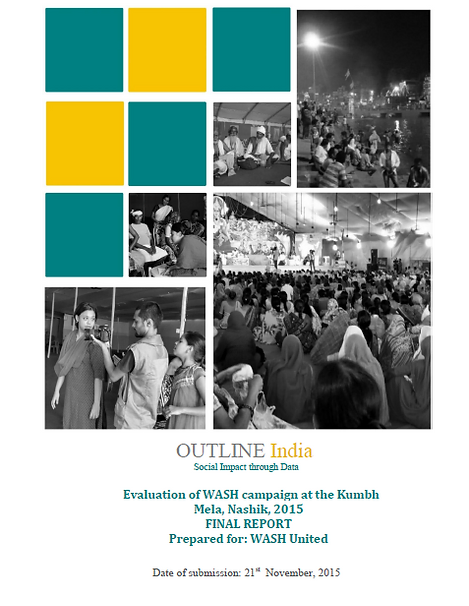
Outline India tested a series of innovative interventions with the objective of learning what public awareness strategies work to engage people on the issue of improved sanitation practices around mass gatherings.
Outline India collaborated with WASH United to evaluate the effectiveness of different interventions at the Kumbh Mela - Myth Buster Videos on Sanitation, Swachh Days, Games and Activities and Photo Booth. Outline India conducted In-depth interviews and Focus Group Discussions (FGDs) with the pilgrims to gauge the impact of these interventions in generating awareness on safe sanitation practices. Based on the evaluation, Outline India made pointed recommendations to improve the reach and depth of these communication strategies.
To access the full report write to us on contact@outlineindia.com
The Meghalaya Comprehensive School Transformation Programme (M-CSTP), launched in 2023 by the Government of Meghalaya in partnership with the Reach to Teach Foundation, is a large-scale effort to strengthen the state’s education system. Covering over 7,700 government schools, the programme focuses on academic improvement, teacher capacity building, and institutional strengthening.
Through initiatives like the Meghalaya Class Readiness Programme (MCRP), learning outcome-aligned syllabi, and teacher handbooks, M-CSTP is helping educators plan lessons more effectively and focus on measurable learning goals. Over 500 teachers have been trained, and digital tools such as M-LENS assessments and the State Level Achievement Survey (SLAS) are generating real-time data to guide classroom practices and policy decisions.
With strong government ownership and localized implementation, M-CSTP is fostering a culture of collaboration and accountability. The programme is transforming Meghalaya’s schools into more inclusive, data-driven, and child-centred spaces for learning and growth.

This report highlights findings from a quantitative pre and post assessment study to understand the impact of child-focused and family-based social programmes focused in India and Nepal that directly or indirectly address children’s needs and rights through a combination of economic support and complementary interventions.
To access the full report write to us on contact@outlineindia.com
This report presents findings from a baseline study that aimed to address the critical needs of children of temporary migrant families between the age of 3-8 years. The report includes an assessment of the current levels of learning and development among these children, engagement patterns of parents/caregivers with their children, as well as their attitudes and perceptions towards responsive parenting.
To access the full report write to us on contact@outlineindia.com
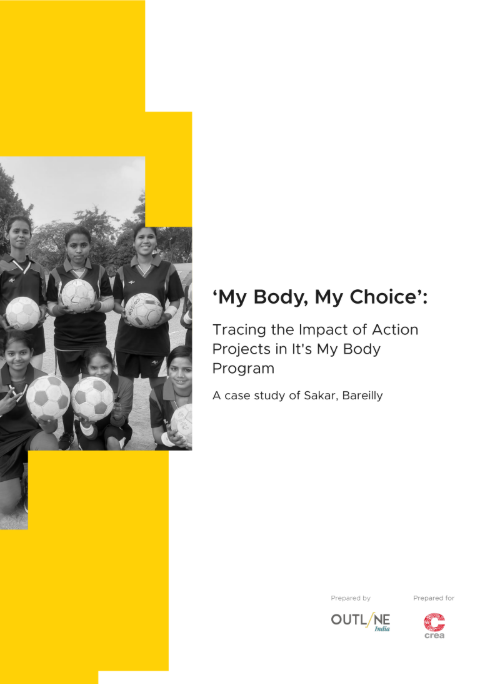
The report ‘My Body, My Choice: Tracing the Impact of Action Projects in It’s My Body Program – A Case Study of Sakar, Bareilly’, prepared by Outline India for CREA, explores the transformative impact of the It’s My Body (IMB) program in Uttar Pradesh. The study captures how adolescent girls and young women from marginalized communities in Bareilly, trained under the IMB program, mobilized collective action against gender-based violence, alcoholism, and restrictive gender norms. Through action projects, they advocated for women’s safety, bodily autonomy, and access to sexual and reproductive health rights.
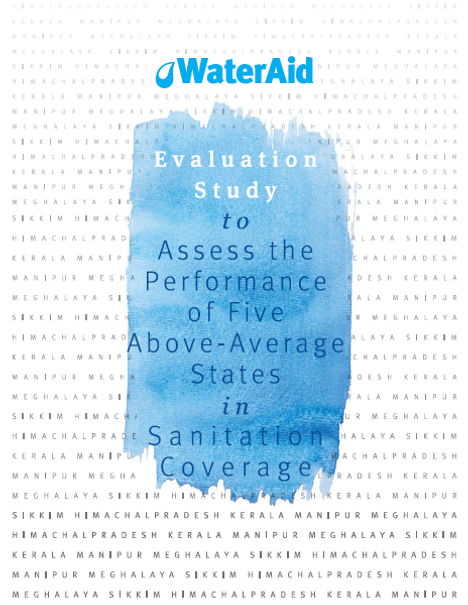
Outline India collaborated with Water Aid to conduct assessment of five states - Himachal Pradesh, Kerala, Meghalaya, Sikkim, Manipur which performed above average in water and sanitation domain.
Outline India undertook an assessment of the five states in India which performed above average in the water and sanitation domain, to explore the motivating factors that were instrumental in the success of the sanitation policies across these states.The study vitally supported the client’s advocacy on the national, as well as at the state level, accelerating the implementation of Swachh Bharat Mission interventions.
To access the full report write to us on contact@outlineindia.com
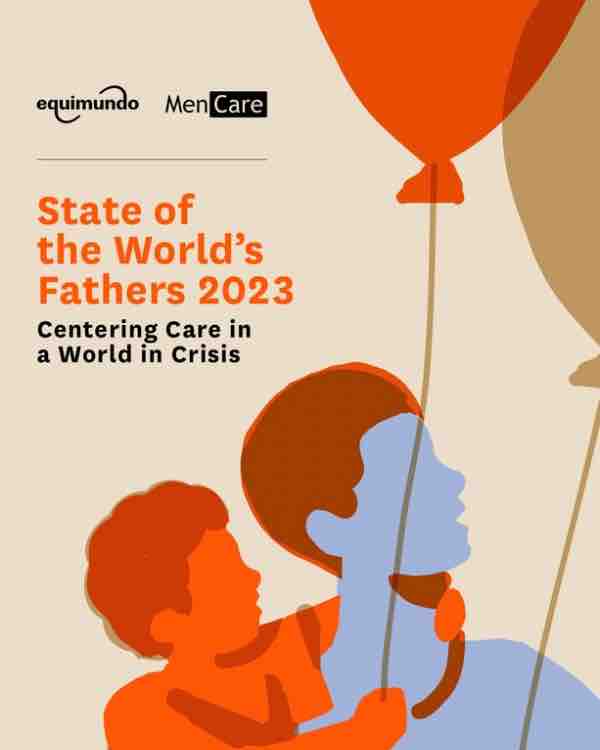
State of the World’s Fathers 2023 is a global report by Equimundo under the MenCare campaign, calling for recognition and equal sharing of unpaid care work by involving men and boys. Based on responses from nearly 12,000 people across 17 countries, it highlights the impact of caregiving on well-being and gender equality.
Outline India led the India data collection through phone-based surveys, ensuring culturally appropriate tools and contributing valuable insights to the global findings.
For full report email us at lead@outlineindia.com
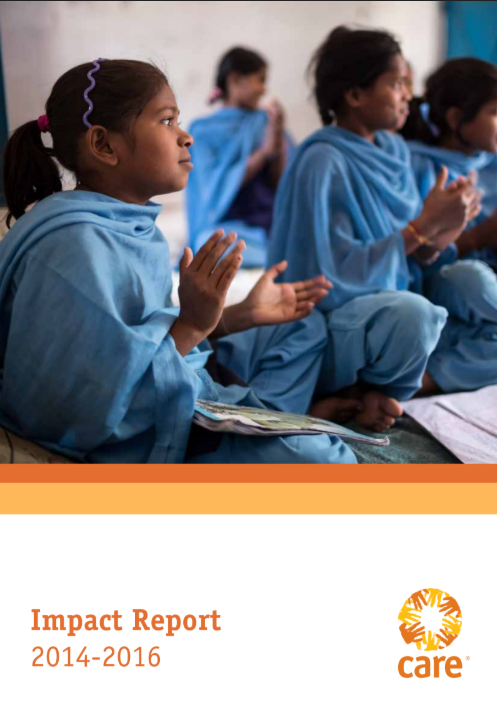
Outline India conducted a systematic review of project related data and reports to identify, analyse and synthesize impact and outcome of the organization. By consolidating information and analysis of 50 project interventions undertaken by the organization from 2013-14 to 2015-16, this report documents its overall achievements in India and long term impacts of interventions in the period of 2014-16. By collating the successes and failures, replicability and sustainability, the report provides a strong evidence base for the organization’s future programs, partnerships and advocacy, and also serves as an internal learning document.