Blogs

DIFFERENT STEPS OF DATA COLLECTION

When pioneers research, they know their tools and sample well.


Introduction


Data collection would begin after a researcher has clearly defined and articulated his/her research problems. Data can be collected in two ways: by using primary sources and by using secondary sources. The primary data is collected after visiting the field. Thus, it acts as a first-hand information to address a specific research problem. The secondary data has been collected by someone else and it has been through a rigorous statistical process. For collecting data, the researcher must decide which kind of data he/she would be using for the study. The methods of collecting primary and secondary data differ as primary data is collected originally while in case of secondary data, the data collection work is merely about compiling the given data. 


Steps for Data Collection


  1. Identify issues and opportunities for collecting data: Every tool for collecting data has its own pros and cons. Thus, for deciding the best method, it is important to identify issues and opportunities for collecting data according to the method. It might be helpful to engage in a pilot study to review our tools and sample size. 
  2. Setting goals and objectives:  The researcher uses data to address his/her research questions and must design his/her methodology accordingly. Thus, every tool used by the researcher must have certain objectives which could be used for addressing these questions after analysis.
  3. Planning approach and methods: Researcher would make decisions pertaining to who will be surveyed, how data will be collected, sources and tools for data collection, and duration of the project.
  4. Collect data:  While planning the data collection, it is important to understand logistical challenges and prepare accordingly. 


Various Methods of Data Collection


There are various methods of collecting data. A researcher must know the pros and cons of each method so as to choose the best method for addressing research problems and suggesting recommendations on the basis of proper data analysis. 


Collecting the Primary Data


Collection of Primary Data in Social Sciences is in the form of performance surveys like the census and sample surveys then we can collect primary data through observation or by conversing/interviewing respondents. There are various methods for collecting primary data including, observation method, Interview, through questionnaires, through schedules, content analysis, etc. 


A. Observation Method


This method is commonly used in Behavioural Sciences. It can only serve as a scientific tool if the researcher has planned it well and recorded all the incidents in a systematic manner. In this method, the researcher has to observe the situation and how respondents behave in a specific setting. While using this method, the researcher must focus on the process of carrying out a structured observation to address questions like, what should be observed? How observations will be recorded? How the accuracy of observation can be ensured? There are two ways to carry out observation: participant observation and non-participant observation. In participant observation, the researcher becomes the member of the group so as to experience how the other group members feel but if the researcher detaches from the group then he/she is being a non-participant observer. 


B. Interview Method


Interview method involves interaction between the researcher and the respondents upon a particular issue or for capturing the impact of the issue of his/her interest. Interviews can be conducted through personal interviews or via using techno-aids like Skype, Google Hangout, email, telephone, etc. 


C.  Collecting data through questionnaires


While collecting data for a large sample size, questionnaires could be designed in a simplistic way to generate quantitative inputs for verifiability of a certain hypothesis considered by the researcher. In this method, the researcher prepares a questionnaire and asks the respondents to fill in the questionnaire and then asks the respondents to return the filled questionnaires. For each question, the researcher selects a measurement scale and analyses the data accordingly. 


Collection of Secondary Data

Secondary data is the data which has been collected and analysed by someone else. Secondary data  is available in various research journals; publications of international organisations, governmental organisations; books, magazines, newspapers, public records and statistics, etc.


Data collection is contextual and it should be only used for research/academic purposes. Therefore, research ethics need to be followed during the collection of data. The researcher must ensure that the data should be reliable, suitable, adequate, and accurate. 


Selection of Appropriate Method for Data Collection


  1. Nature, scope and object of enquiry: This is the basis of choosing the method for data collection. It must suit the type of enquiry which the researcher wants to conduct. This would also help the researcher to understand if he /she wants to collect data from primary or secondary sources. 
  2. Availability of funds: Funding is an essential component of research and it would help the researcher to choose a method which is effective, efficient and could help him/her to collect data with available funds.
  3. Time: A good researcher not just focuses on his/her research design but emphasizes on the allotment of time so as to proceed through each step of research. Therefore, time is an important factor as some methods consume a lot of time and some methods consume less time.
  4. Precision: A good research, impact assessment or evaluation study is precise and the level of precision required for writing them would also require a proper assessment of methods for data collection. 


Thus, the most desirable approach for collecting data depends on the nature of problem, on the time and resources available and the level of precision required for addressing the research problems. But, selection of method also depends on the experience and ability of the researcher. Thus, Dr. Bowley said, while collecting data, ‘common sense is the chief requisite and experience is the chief teacher.’ 


References:


Kothari, C.R. (2013). Research Methodology: Methods and Technology. New Age     International Publishers: Mumbai.


Ontario Human Rights Commission (2019). What is involved in collecting data:Six steps to success. Accessed on June 18, 2019. From HTTP://WWW.OHRC.ON.CA/EN/COUNT-ME-COLLECTING-HUMAN-RIGHTS-BASED-DATA/6-WHAT-INVOLVED-COLLECTING-DATA-%E2%80%93-SIX-STEPS-SUCCESS

 

Read More

THINGS TO REMEMBER WHILE DESIGNING THE SURVEY TOOL

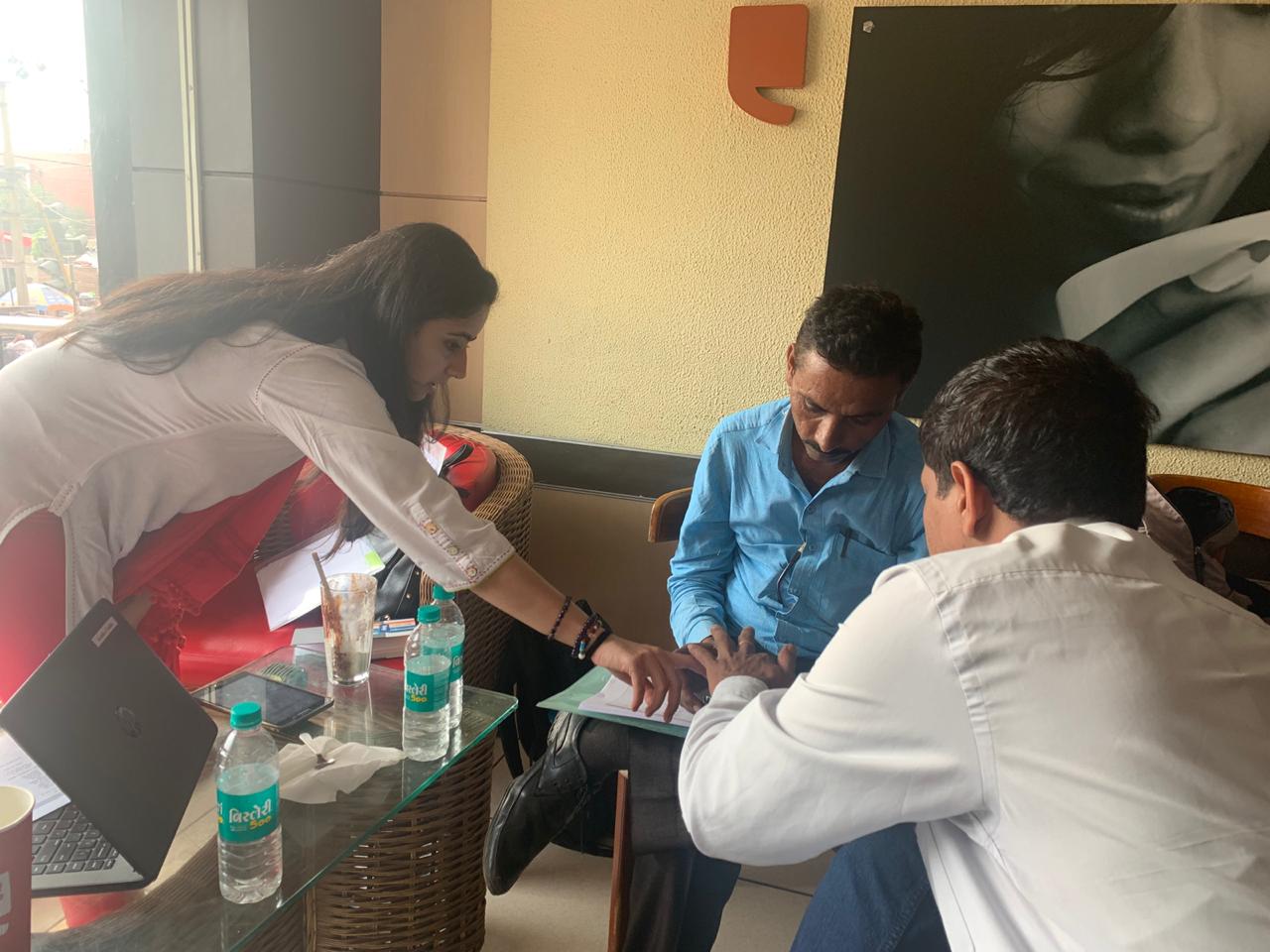
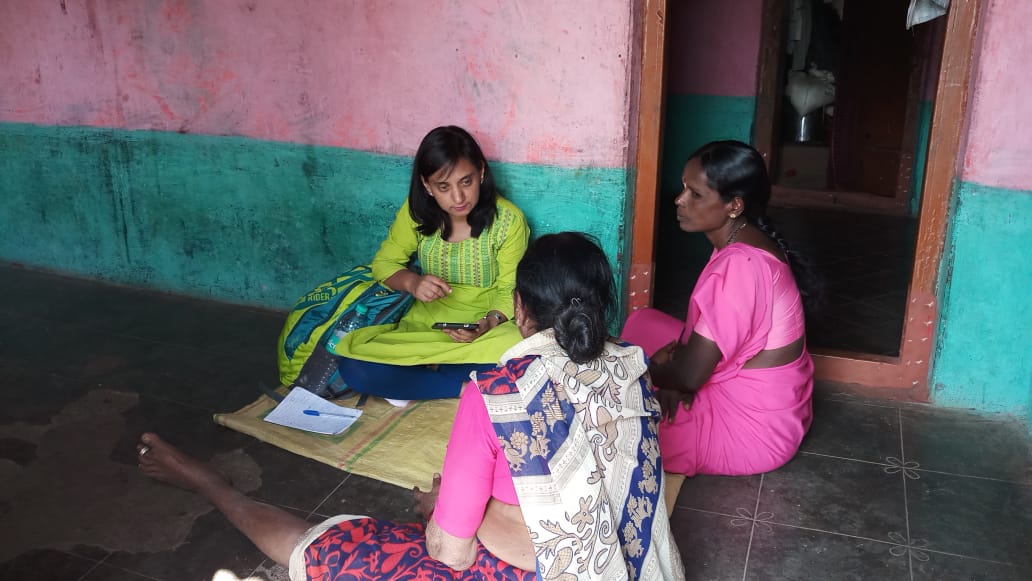
Effective data collection necessitates extensive field training, which in turn is a process rife with utter detail. The following objects are communicated to the enumerators as a part of their field training:

CHECKLIST BEFORE INTERVIEWS

Keep the following documents handy:

       Organisation ID

       Permission letters

       Personal ID cards

      The list with respondent names


CHECKLIST AT THE TIME OF THE INTERVIEWS
  •  Begin the interview only after the respondent satisfies all the screeners. Screeners either qualify or disqualify respondents from taking the survey – depending on their answers. They aid in the decision of who takes your survey based on the target audience one wants to hear from.
  •  Tell the respondents your name and the name of your organisation.

Read More

EXPERIENCES FROM 'EVALUATION 2018'

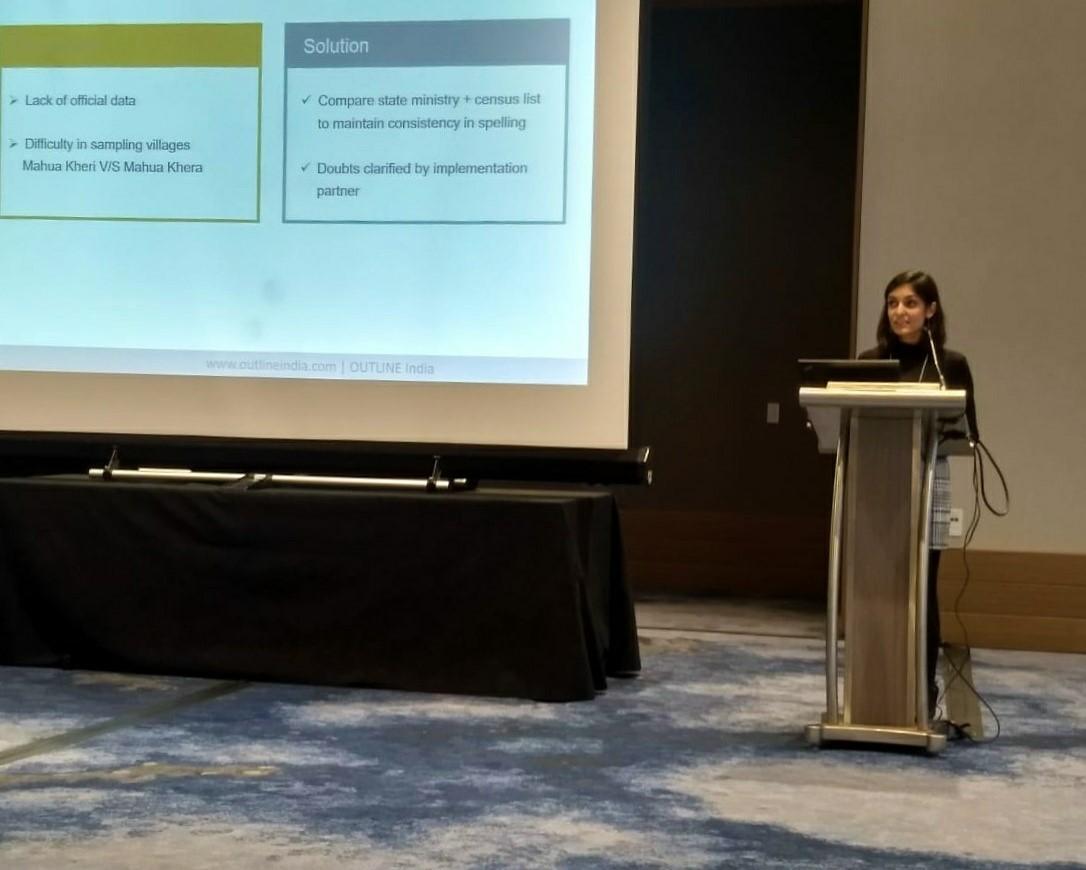
The theme of this year’s conference, Evaluation 2018 organised by the the American Evaluation Association was ‘Seeking Truth to Power’, a core belief that must be followed by evaluators. The conference recognizes the power of evaluation for nonprofits, foundations, governments and others in the social sector to understand what works and what doesn’t to improve their programs and services. We, at Outline India, strive to promote evaluations, through our upcoming self-reporting tool, Track Your Metrics. We wish to reach out to as many NGOs and donors across the country to use the evaluation platform in order to track and measure the progress being made by them and grantees, respectively.

Read More

USING DRONES FOR RESEARCH AND MONITORING – ETHICAL, SAFETY AND ACCOUNTABILITY FRAMEWORK

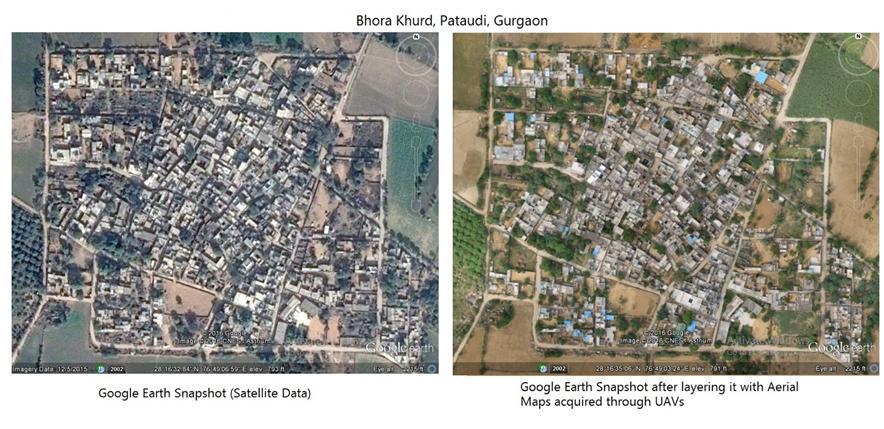
Once the preserve of the military, unmanned aerial vehicles (UAVs) are now used in A WIDE RANGE OF INDUSTRIES, from aerial surveillance of crops to search and rescue operations to the delivery of medical supplies to remote or otherwise inaccessible regions. Development sector research organizations such as Outline India are exploring the use of drones in research studies, rural infrastructure mapping and monitoring of programs and interventions. For example, in a successful pilot study Outline India used drones to produce detailed aerial maps along with elevation profile of a village through a participatory GIS mapping exercise. The STUDY helped us in obtaining accurate granular level information of community assets and infrastructure resources, as well as map and visualize topographic differences and its relation with demographic and caste-wise distribution. The study also helped the village representative in identifying the most pressing problems in the village – which in this case was lack of drainage, water stagnation and consequently water borne diseases – and troubleshoot it by devising a drainage plan to suit the elevation of the village (OUTLINE INDIA, FICCI, 2017).

Read More

THE IMPORTANCE OF AUDITS IN SOCIAL INTERVENTIONS

India is home to one of the most diverse populations in the world in terms of language, culture, class, race and ethnicity. Formulating policy and tailoring interventions that are suited to the diverse needs of this country is a mammoth task. However, it is important to note that the problem essentially lies in ensuring that these interventions targeted towards social welfare achieve their desired aim. In such a situation, monitoring and evaluation of these programmes becomes a necessity in order to gauge their impact. The use of technology to conduct these social audits has made the process easier to an extent, however the expertise of using social audit tools continues to be pose a problem. 

Read More

RIDING IN A MAN'S WORLD

13th September 2016: As a child, whenever I tried lifting a heavy suitcase or wanted to climb a tree or even when I volunteered to open the pickle jar for my grandmother, I was been told multiple times, “You cannot do this. You are not cut out for this job. You are not a man.” As I grew up, I met numerous women who questioned these gendered roles and worked towards defying each one of them. This is the story of two such women I met in Chennai last week as part of a study conducted by Outline India. The research focused on understanding the economic viability and environmental sustainability of auto rickshaw driving as a livelihood - for a study conducted by a Dutch social enterprise and funded by the European Union.


I spotted Devi and Maheshwari at the Chennai Central prepaid auto stand as they were effortlessly tugging their auto rickshaws in the line and waiting for their turn to get a passenger. I asked them if they would answer a few questions for me as part of a study, and they readily agreed. No inhibitions. No qualms. The first thing I discovered about them was that they were not the only odd ones out there. There were about 30 more women who were part of the prepaid stand at the Chennai central station and drove autos.


Devi and Maheshwari have been driving the auto for 5 - 6 years now and have grown very comfortable in their jobs. They arrive at 6 am in the morning and drive till 5 pm in the evening and are proud owners of their own autos. They boldly talk of how they enjoy the freedom they have in this occupation. As Devi rightly put it, “Auto driving is the best occupation, as I can do it at my own convenience. I am not answerable to anyone and I do not need to report to anyone. I am my own boss.” To which Maheshwari, who is lovingly called as ‘Maha’ by her fellow auto drivers, added, “When I feel like taking a leave due to an illness or for any other reason, I can just do it. No one is above me to question me.”


When the women were asked how they managed to survive in this male-dominated occupation, they coolly responded saying, “It really does not make a difference.” The women spoke of how they are treated no differently than men. The police address them in the same brash and rowdy way as they talk with men. Good or bad, the women believed that as long as they are being treated the same way, they are happy.

They shared stories of how the fellow male auto drivers were really helpful in times of crisis. The men would step up whenever the auto needed repairs or when the women did not know a particular address and lost their way. Devi said with a grin, “Actually sometimes it is especially easy for us women. Many times, the police and the customers go easy on us. Once I dropped a customer off at his house and he gave me 50 extra over the agreed price. He said it must be hard for a woman to make ends meet and thus handed over some extra money.” Most of the male passengers respect the female drivers and light a cigarette in the autos only with their permission.

In spite of all the conveniences of the occupation, there are certain challenges that the female auto rickshaw drivers grapple with. The women admitted that using public toilets was a great ordeal especially during their ‘monthly problem’. Although the women professed for equality, they definitely did not prefer doing it in the open as the men do mainly because of safety reasons. They were still stuck to a couple of gendered roles. For instance, Maheshwari could not leave her home for work until she finished her morning chores such as cooking and washing.

While most of us still make excuses for not getting equal opportunities to prosper in life, these two women are trying their best to break norms and succeed. Kudos to their indomitable spirit and hope we come across more rickshaws driven by Devis and Mahas.

Anusha Iyer is a Research Trainee at Outline India. She has completed her MA in Development Studies from Tata Institute of Social Sciences, Hyderabad and BA in Economics from St. Xavier’s College, Ahmedabad. She has also worked at a CSR consultancy firm for a year and holds a post-graduate diploma in Journalism. The following piece describes her experience on the field in an urban environment where a happy surprise awaited her.

Read More

Newsletters